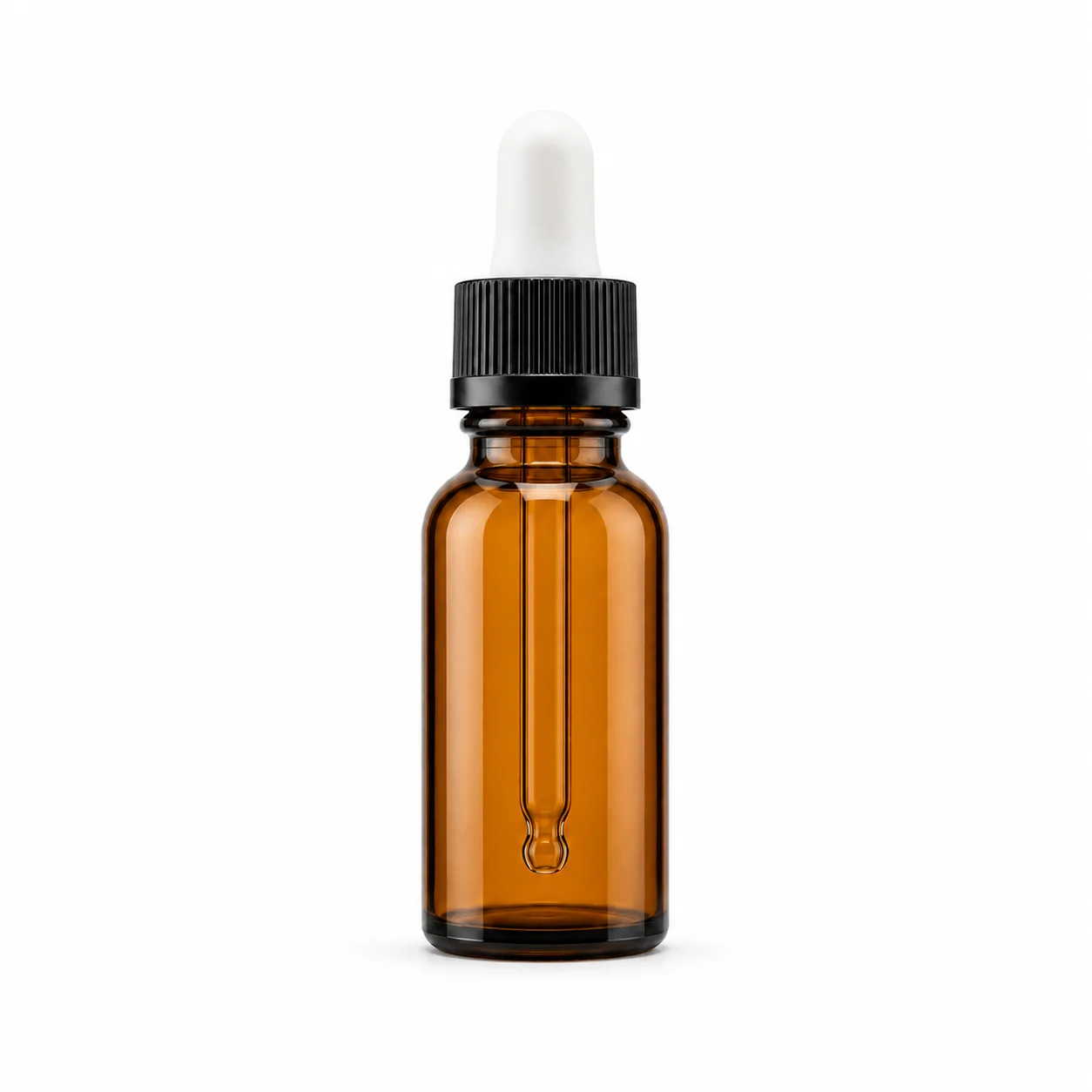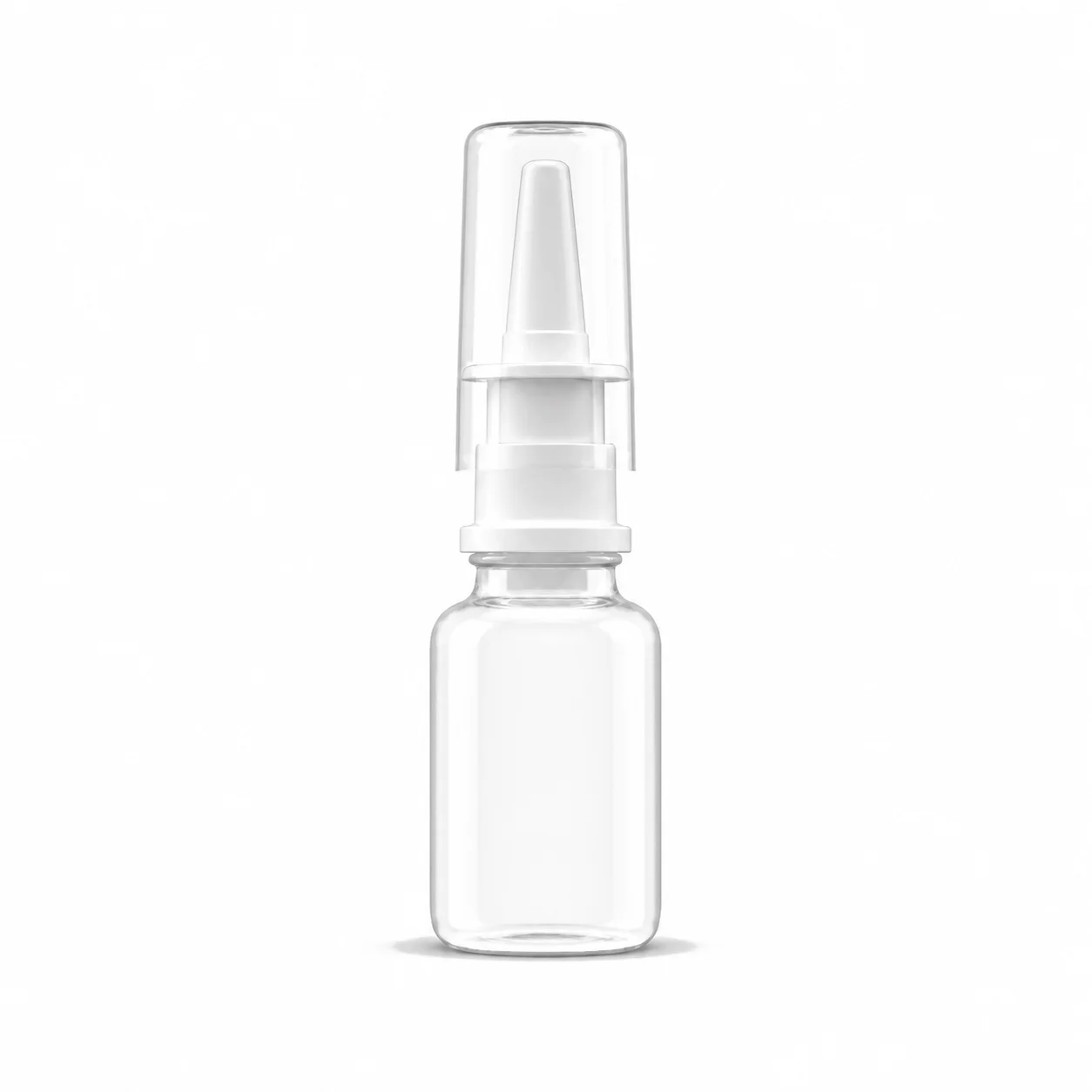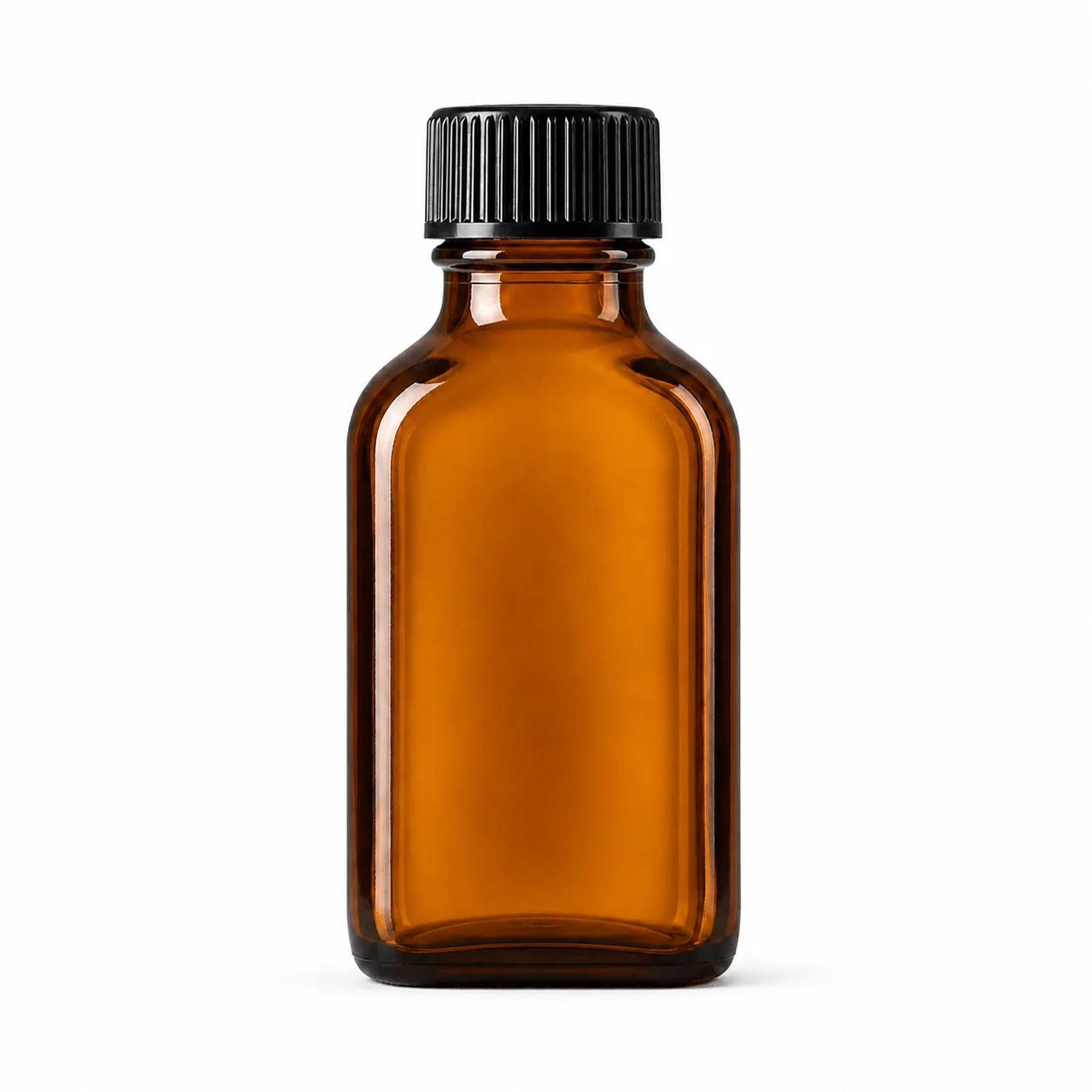
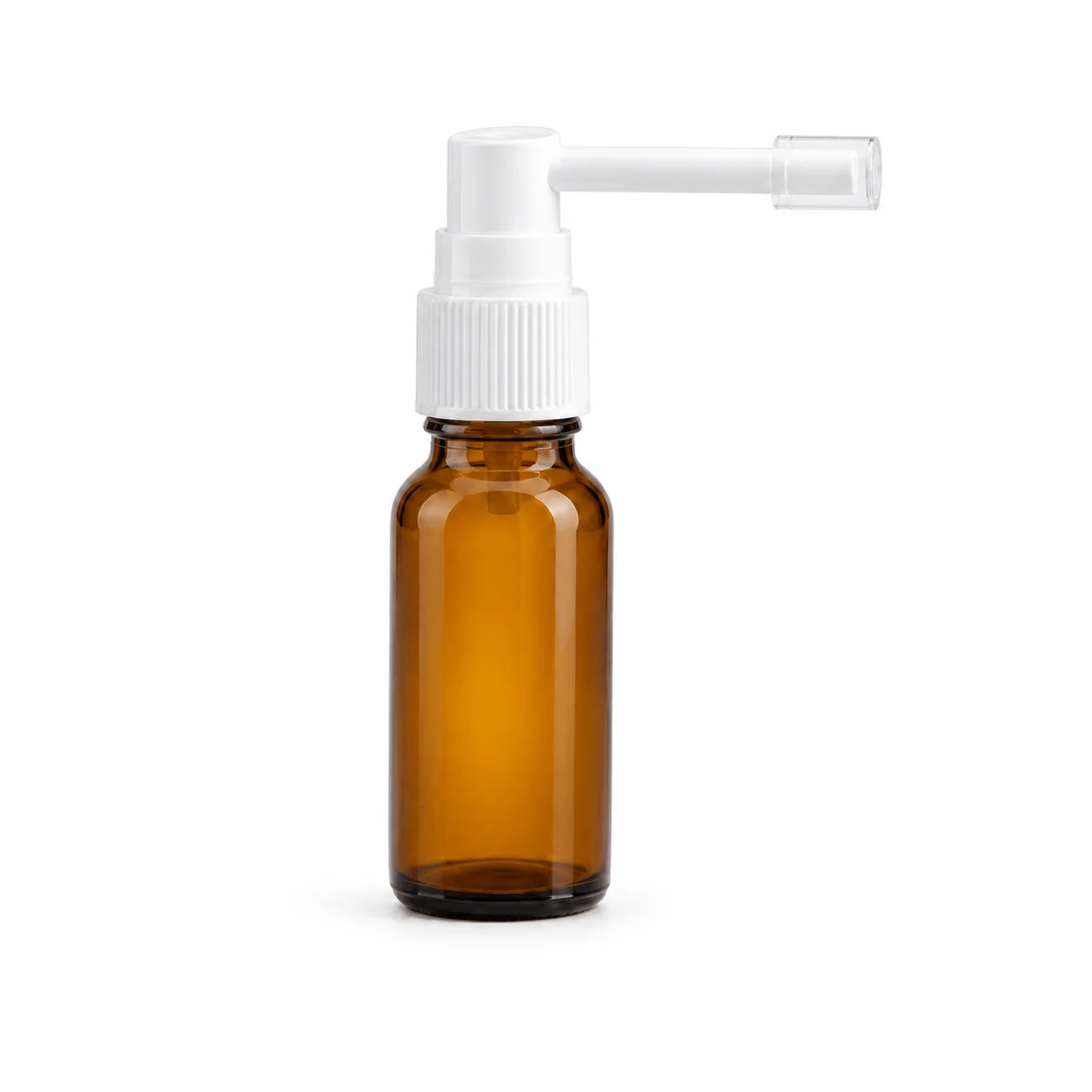
Amber straight bottle with a white ribbed pump and a long side-facing nozzle under a clear cap
Shown configuration · bottle with pump and nozzle / formulation, dip tube and label not shown

Oropharyngeal delivery

Throat Spray Bottle

A throat spray bottle carrying a pump with an extended nozzle, so the spray is delivered past the tongue to the back of the mouth rather than onto it.

Extended reach nozzleDirectional sprayLarger dose than nasal
Stock status
In stock
Lead time
2–3 weeks
FOB price / pc
$0.15 - $0.40
MOQ
10,000 pcs

Final availability, dimensions, materials, assembled components and commercial terms are confirmed against the selected drawing and approved sample.

Reach past the tongue

Extension puts the plume where it is needed

Aimed, not inhaled

Directed spray, breath held, no deep plume

Taste is part of the design

Formulation and dose meet on the tongue

Throat Spray Bottle profile

The whole design problem is getting past the tongue.

Nozzle reach, plume direction & patient experience

Five design choices that follow from where the dose has to land.

A throat spray has to place a dose on the oropharynx, which sits beyond a tongue that gets in the way and a gag reflex that objects. That is why the format uses an extended, directional nozzle rather than the short conical tip of a nasal pump, and why dose volume, plume and taste are all designed around a single awkward moment.

01

The extension is the defining component

A rigid tube several centimeters long, often angled, carries the outlet past the tongue and toward the posterior wall. Its length and angle set what the patient can reach without triggering a gag reflex, and they differ for an adult product and a pediatric one. The extension is chosen before the pump and the bottle.

02

A directed plume, not a fine mist

Nasal sprays aim for a plume that deposits over a cavity; a throat spray aims a comparatively coarse, directional spray at a small target. Fine droplets here risk being inhaled rather than deposited, which is undesirable for both efficacy and safety. Nozzle design therefore pushes toward larger droplets and a tighter cone than a nasal actuator would.

03

Dose volume is larger and the count is lower

Throat sprays commonly deliver more per actuation than nasal pumps, and a course is a handful of sprays a day for a few days rather than a chronic regimen. That changes the pack: fill volumes are modest, overfill for priming matters proportionally more, and the container is often sized for a single episode of illness.

04

Taste and mouthfeel are packaging-adjacent problems

The dose lands where the patient tastes it, so an unpleasant formulation is felt immediately and compliance suffers. That pushes fill and dose volume down, and it means anything the container contributes — residual cleaning agents, closure extractables, a nozzle that drips after use — is noticed in a way it never would be in an injectable.

05

The nozzle is handled, so it has to be cleanable

Unlike a nasal tip, a throat spray nozzle goes into the mouth and is then capped and carried in a bag. It picks up saliva and residue, and it needs a cap that keeps it clean and a geometry that can be wiped. A nozzle that traps residue in a recess becomes unpleasant within days of daily use.

06

The extension has to be cleanable or replaceable

A tube that enters the mouth collects saliva and product at its tip and is used again the next day. Either the material and geometry allow it to be wiped and dried, or the design accepts that it cannot be cleaned and provides a cover that keeps it off surfaces between uses.


Application guide

A side-angled nozzle exists to reach the back of the throat.

Oropharyngeal sprays are aimed around a curve most pumps cannot manage, which is why the nozzle turns sideways and often extends. Direction of the plume is the defining specification. These are development directions confirmed with the actual formulation.

Throat Spray Bottle used for sprays aimed into an open mouth in a self-administration setting

Self-administration

Sprays aimed into an open mouth

For someone opening their mouth wide, aiming a nozzle toward the back of the throat and pressing while trying not to gag. The side-directed tip lets the plume turn the corner that a straight nozzle cannot, and the angle has to be right for both an adult and a child holding the same bottle.

  • Confirm the plume reaches the target area
  • Check the angle suits adults and children
  • Test one-handed use in a mirror
Throat Spray Bottle used for a product that lands on the tongue in a taste and dosing setting

Taste and dosing

A product that lands on the tongue

Unlike a nasal or topical spray, everything actuated here is tasted immediately and often swallowed, so plume volume affects both the experience and the dose received. Overdelivery is unpleasant enough that patients under-use the product, which is its own compliance problem.

  • Size the plume to a tolerable volume
  • Review taste at the delivered dose
  • Confirm output stays even at low fill
Throat Spray Bottle used for bottles kept in a bag through a cold in a carried packs setting

Carried packs

Bottles kept in a bag through a cold

Throat sprays are carried for days at a time in pockets and handbags, where the extended nozzle is the part most likely to be knocked or contaminated. The tip cover has to stay on reliably, and the amber body has to protect a formulation over that handling.

  • Test tip-cover retention in a bag
  • Protect the extended nozzle
  • Confirm the amber suits the formulation

Applications describe development directions. Spray characteristics, oropharyngeal suitability, dose, sterility and regulatory outcomes are confirmed for the selected program.

Common questions

Throat Spray Bottle questions

Everything here follows from delivering a dose past a tongue that is in the way.

Why the long nozzle?

To get past the tongue. A rigid tube several centimeters long, often angled, carries the outlet toward the posterior wall of the mouth. Its length and angle determine what a patient can reach without triggering a gag reflex, and they differ between adult and pediatric products. The extension is chosen before the pump and the bottle.

Should the spray be as fine as a nasal spray?

No. A nasal spray deposits a plume over a cavity; a throat spray aims a directional spray at a small target, and fine droplets risk being inhaled rather than deposited. Nozzle design therefore pushes toward larger droplets and a tighter cone than a nasal actuator, which is a deliberate difference rather than a lower specification.

Why does taste matter to the packaging?

Because the dose lands where the patient tastes it, so anything unpleasant is noticed immediately and compliance drops. That pushes dose volume down and makes container contributions — residual cleaning agents, closure extractables, a nozzle that drips after use — matter in a way they never would in an injectable that nobody tastes.

Does the nozzle need special hygiene features?

It goes into the mouth and is then capped and carried in a bag, so yes. It picks up saliva and residue, needs a cap that keeps it clean and a geometry that can be wiped. A nozzle with a recess that traps residue becomes unpleasant within days of daily use, which is a design failure rather than a maintenance issue.

Does the extension need to be cleanable?

Cleanable or replaceable — it goes in the mouth. A fixed nozzle that cannot be wiped becomes a hygiene objection on a product used repeatedly during an illness. Design for cleaning or supply the extension as a replaceable part.

Next step

Send us the Throat Spray Bottle brief.

Tell us the product, fill volume, closure preference and destination market. We will come back with the matching drawings, available configurations and a sample plan before anything is quoted.

  • 01Send the briefProduct, volume, closure and market
  • 02Get the optionsMatching drawings and configurations
  • 03Approve the sampleConfirm the pack before production