
Dosing, field handling & container disposal
Six requirements that come from the field rather than the factory.
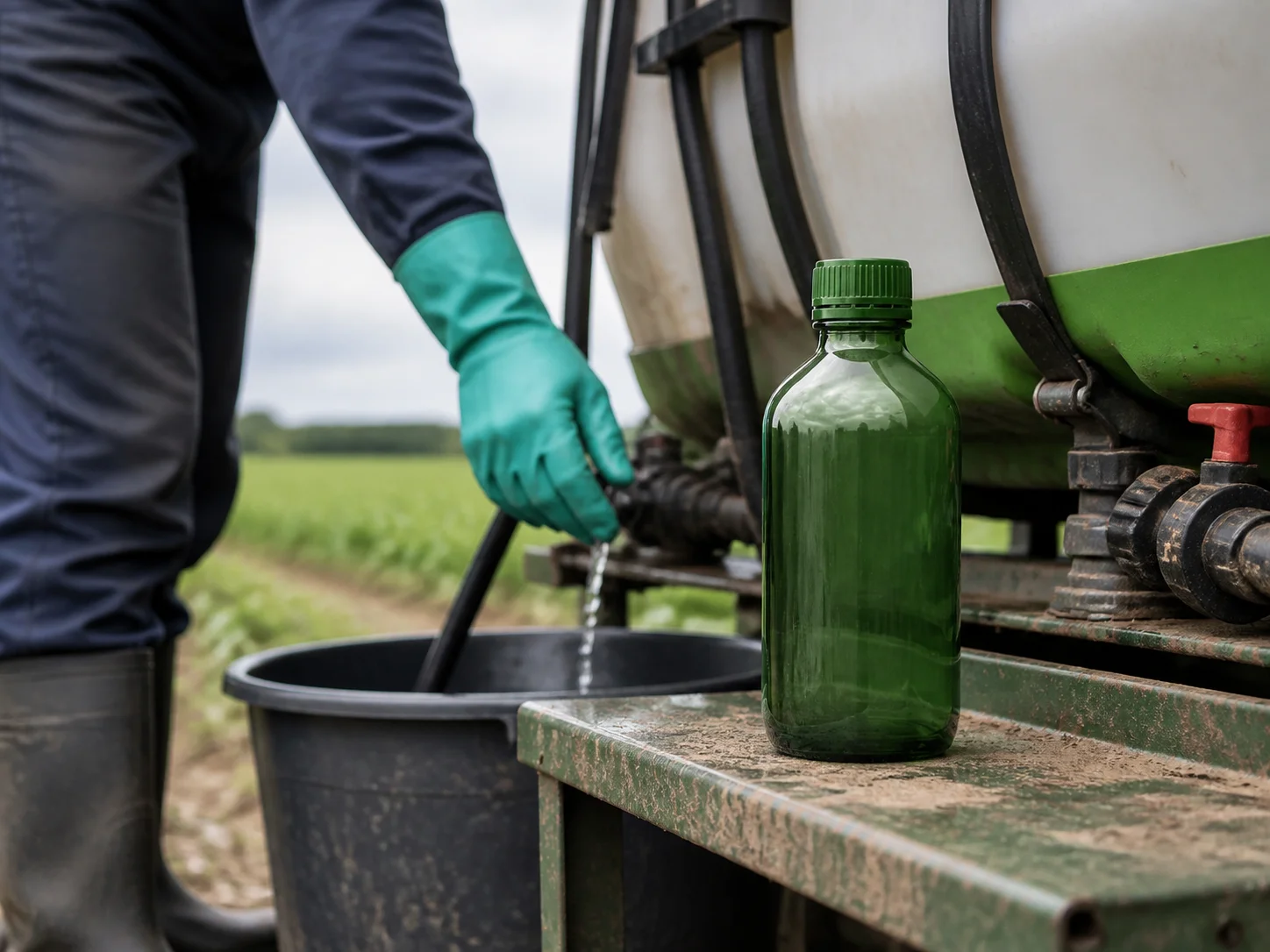
A crop protection bottle is opened at the edge of a field, measured into a spray tank, rinsed and disposed of, often in one morning. Every part of the specification follows that sequence: how the dose is measured, how the closure behaves in gloves, whether the bottle drains, and what the empty container is expected to become.
Concentrates are measured, not estimated
Application rates for concentrates are small relative to the tank, so a measurement error of ten percent is an agronomic and a regulatory problem at once. Packs therefore carry a measuring cup, a graduated neck chamber or a dosing closure. Which of the three is used decides the neck format, and it is chosen before the bottle shape is drawn.
Closures are opened in gloves, in the wind
A cap that needs a firm dry grip is the wrong cap for a wet glove at six in the morning. Ribbed skirts, larger diameters and closures that break their band audibly all help. Where child-resistant closures are required, the field usability of that specific closure is worth testing with the people who will use it rather than assuming compliance is the end of the question.
Drainage geometry is a residue question
Concentrate left clinging to a shoulder is product the grower paid for, dose that never reached the tank, and residue that has to be rinsed out before the container can be disposed of. Smooth internal transitions and a shoulder that drains matter more here than on almost any other pack, and they are visible in a simple drain test on filled samples.
Triple rinsing assumes a rinsable container
The standard field practice for empty containers is rinsing three times with the rinsate going into the tank. That only works if the neck admits water freely, the shoulder does not trap it and the label survives the process. A pack designed without it produces containers that cannot be cleared for the collection scheme they were meant to enter.
The label is a regulated document, not decoration
Crop protection labels carry approved text, and the panel area is fixed by how much has to appear. That constrains the bottle before any design decision is made: a shape that cannot carry the label is not usable, however well it performs otherwise. Panel dimensions are the first thing to check against the approved artwork.
The pack is usually certified as a combination, not as a bottle
Many agricultural concentrates travel as dangerous goods, and the approval that permits that covers the bottle, the closure, the cushioning and the outer box together as one tested design. Changing any one of them can invalidate it. That is why a change of liner or carton on this kind of pack is a regulatory decision rather than a purchasing one.