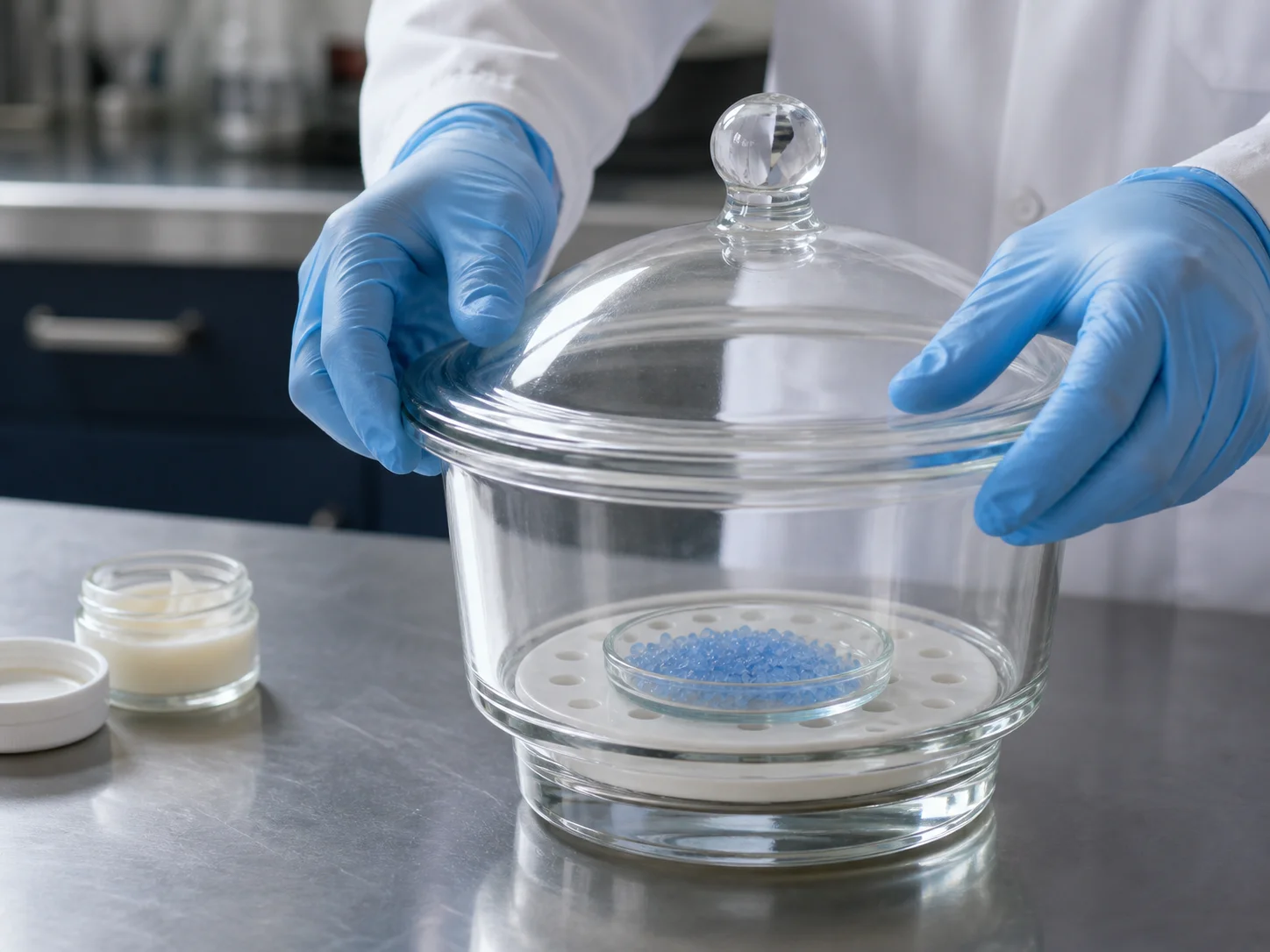
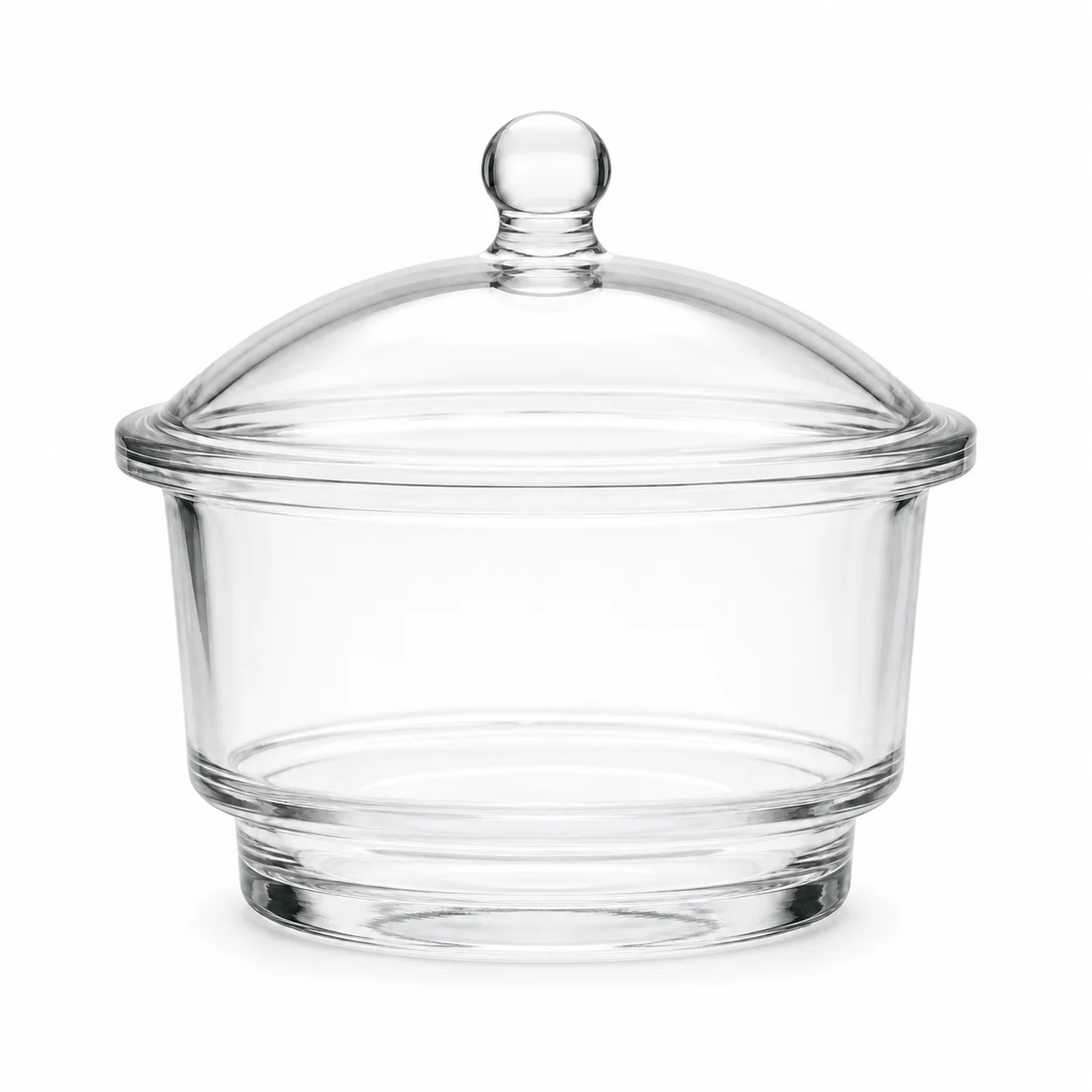
Wide glass desiccator body with a domed cover, knob handle and broad ground contact rim
Shown configuration · body and cover / desiccant, plate and samples not shown

Drying & storage apparatus

Desiccator

A heavy glass desiccator with a ground flange and domed lid, holding a perforated plate above a desiccant charge so samples cool and store in dry air.

Ground flange sealPlate above the desiccantVacuum versions with a stopcock
Stock status
In stock
Lead time
2–3 weeks
FOB price / pc
$0.90 - $1.20
MOQ
2,000 pcs

Final availability, dimensions, materials, assembled components and commercial terms are confirmed against the selected drawing and approved sample.

Slide, never lift

The lid is unsealed by sliding it sideways

Desiccant is a consumable

Silica gel is regenerated or replaced

Vacuum types are guarded

Evacuated glass carries stored energy

Desiccator profile

A sealed glass box whose seal is a film of grease spread over a very wide flange.

Flange sealing, desiccant management & vacuum use

Five practices that separate a working desiccator from a decorative one.

A desiccator keeps dried samples dry between the oven and the balance. The seal is a wide ground flange with a thin film of grease, the drying is done by a desiccant charge below a perforated plate, and the whole thing works only as long as the lid is handled, and the desiccant maintained, the way the design assumes.

01

The lid slides; it does not lift

A greased ground flange holds by adhesion over a large area, and pulling upward either fails to open it or opens it suddenly enough to disturb the contents. Sliding sideways breaks the film progressively and controls the air that rushes in. On a vacuum desiccator the same applies after venting, and lifting a still-evacuated lid is not possible at all.

02

Grease is a consumable with a correct amount

A thin, even film on the flange gives a seal that is transparent when the lid is seated. Too little and the desiccator breathes; too much and grease creeps onto the samples and into the desiccant, and picks up grit that scores the ground surfaces. Regreasing on a schedule, with the flange cleaned first, is part of maintaining the apparatus.

03

Desiccant that has stopped working looks the same

Silica gel saturates gradually and silently, and a desiccator with spent desiccant is simply a glass box holding room air against your samples. Indicating grades change color and are worth the small extra cost for that reason alone. Regeneration in an oven restores capacity, and a recorded change interval prevents the slow failure nobody notices.

04

Hot samples are not put straight in

A crucible or weighing bottle straight from a furnace warms the air inside, which then contracts as it cools and can pull the lid down hard enough to make it difficult to open. It also drives moisture off the desiccant back into the chamber. Letting items cool briefly first, and venting once after loading, avoids both.

05

Vacuum desiccators are guarded glassware

The version with a stopcock in the lid is evacuated, and an evacuated glass vessel of that size stores real energy. It is used inside a guard or behind a screen, inspected for scratches beforehand and vented slowly through the stopcock rather than by cracking the lid. The same body without the stopcock is not intended for vacuum at all.

06

One desiccator, one purpose

Everything inside a desiccator shares an atmosphere, so a volatile solvent evaporating from one dish reaches every other sample in the chamber. Drying a hygroscopic solid alongside anything that off-gasses contaminates it quietly. Laboratories that care about the result keep separate chambers rather than separate shelves.
Application guide

A sealed chamber that keeps moisture away from a sample.

A desiccator holds a drying agent below a perforated plate and a ground rim seal above, creating an enclosure where samples can cool or be stored without taking up water from the air. These are development directions confirmed with the actual method.

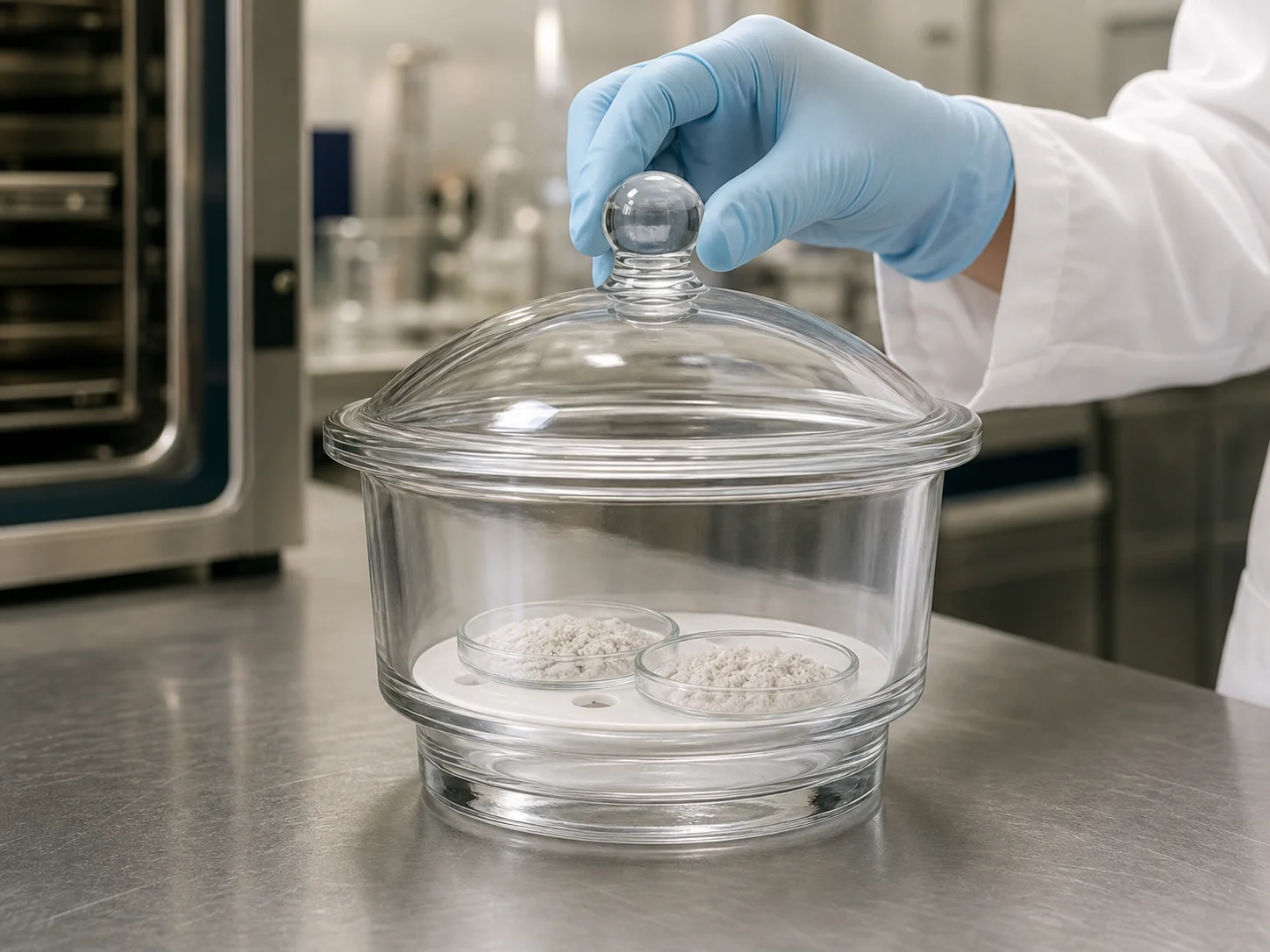
Desiccator used for samples cooled without regaining moisture in a cooling after drying setting

Cooling after drying

Samples cooled without regaining moisture

For material taken from an oven that would immediately reabsorb water while cooling on an open bench, corrupting a gravimetric result. The chamber lets it reach room temperature in dry air, which is why it appears in essentially every loss-on-drying procedure.

  • Confirm the seal holds while cooling
  • Allow full cooling before weighing
  • Keep the chamber closed between uses
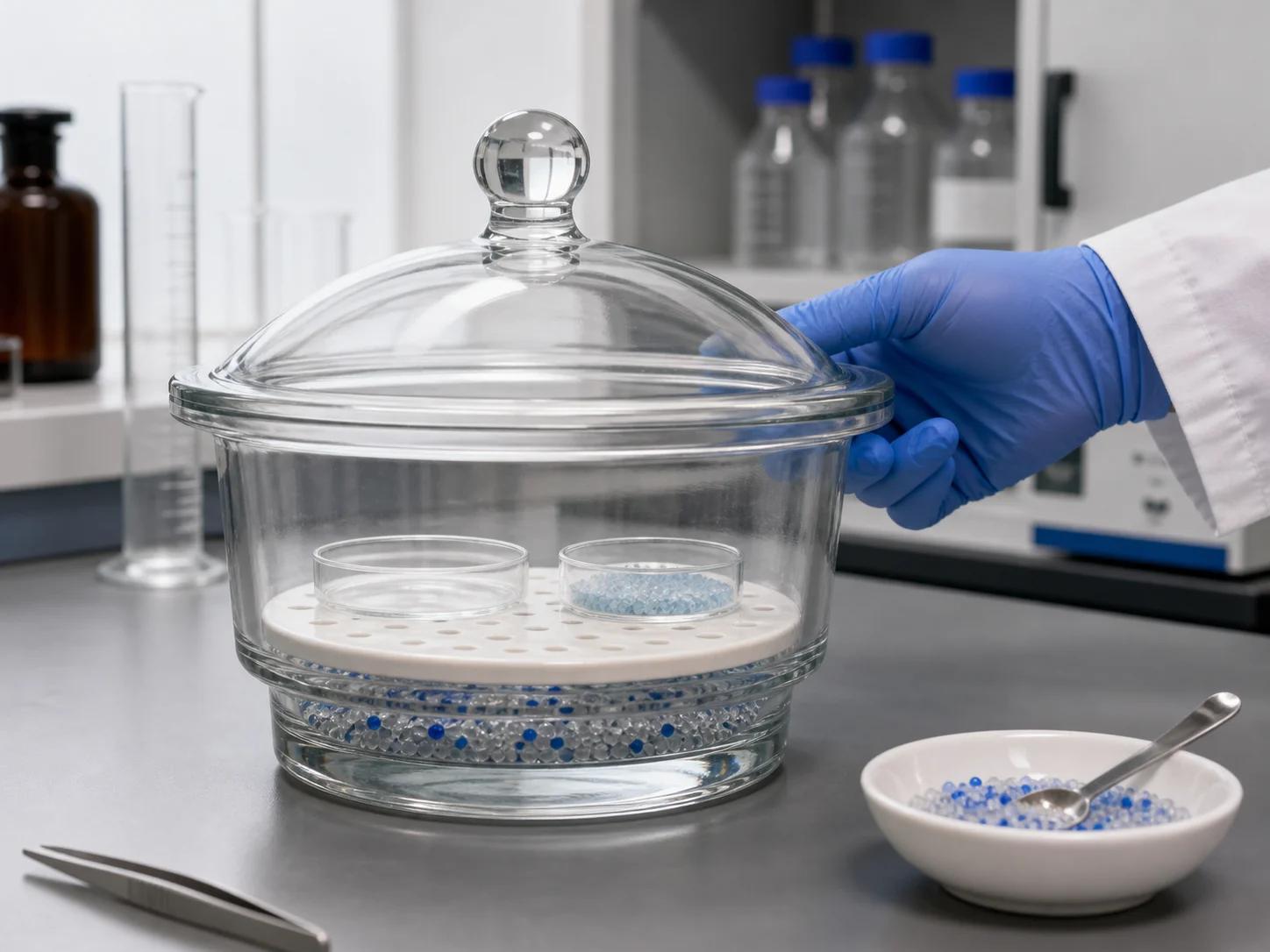
Desiccator used for a drying agent that becomes exhausted in a desiccant management setting

Desiccant management

A drying agent that becomes exhausted

The chamber only works for as long as the desiccant sitting below the perforated plate is still active, and exhausted material stops protecting anything without giving any outward sign that it has. Indicating desiccants that change color as they saturate are used precisely because that failure would otherwise be completely invisible.

  • Use an indicating desiccant
  • Define a replacement routine
  • Check the indicator before each use
Desiccator used for a heavy lid on a greased rim in a the ground seal setting

The ground seal

A heavy lid on a greased rim

The lid seals against a ground flange, usually with grease, and is slid rather than lifted to open. That heavy glass lid is a handling risk, and a chipped flange means the chamber no longer seals however carefully it is closed.

  • Slide the lid rather than lifting
  • Inspect the flange for chips
  • Maintain the grease film

Applications describe workflow directions. Method suitability, moisture control and laboratory outcomes are confirmed for the selected program.

Common questions

Desiccator questions

Desiccators fail slowly and invisibly. These questions are the maintenance points.

Why will the lid not come off?

Because it is meant to slide rather than lift. A greased ground flange holds by adhesion over a large area, and pulling upward either does nothing or releases suddenly and disturbs the contents. Slide it sideways to break the film progressively. On a vacuum desiccator, a lid that will not move sideways either usually means it is still evacuated.

How do we know when the desiccant is spent?

You often cannot, which is the problem. Silica gel saturates gradually and silently, and a desiccator with exhausted desiccant is a glass box holding room air against your samples. Indicating grades change color and are worth the small premium for that alone. Regenerate in an oven and record the change interval rather than relying on memory.

Can we put crucibles straight from the furnace into it?

Better not. Hot items warm the air inside, which contracts as it cools and can pull the lid down hard enough to be difficult to open, and the heat drives moisture off the desiccant back into the chamber. Let items cool briefly first and vent the desiccator once after loading. Both take seconds and prevent a stuck lid.

Should one desiccator serve several purposes?

No — dedicate it. Mixing samples, desiccants and duties in one vessel cross-contaminates and makes it impossible to know the internal condition. One desiccator, one purpose, labeled, is the arrangement that stays reliable.

Next step

Send us the Desiccator brief.

Tell us the product, fill volume, closure preference and destination market. We will come back with the matching drawings, available configurations and a sample plan before anything is quoted.

  • 01Send the briefProduct, volume, closure and market
  • 02Get the optionsMatching drawings and configurations
  • 03Approve the sampleConfirm the pack before production