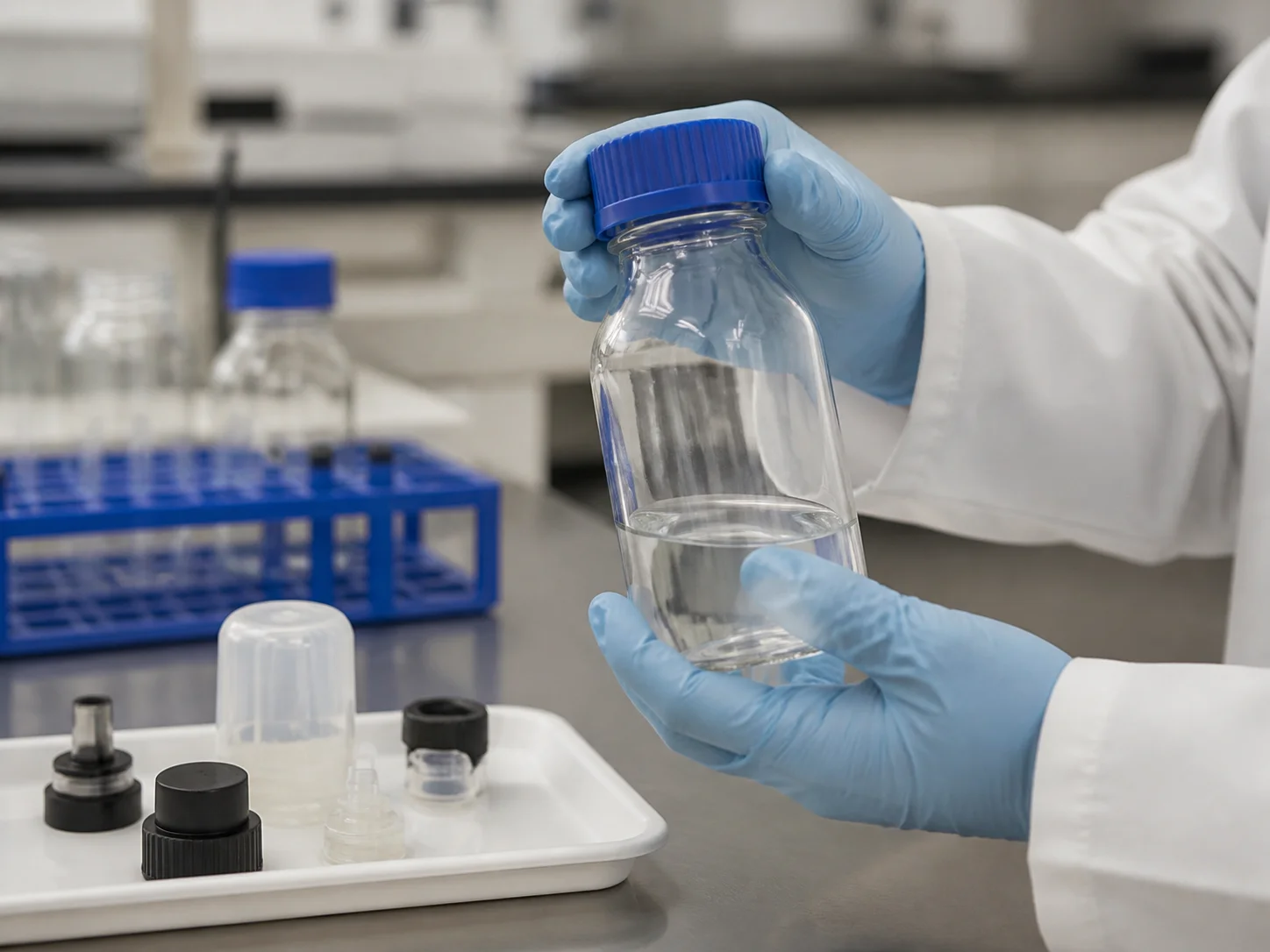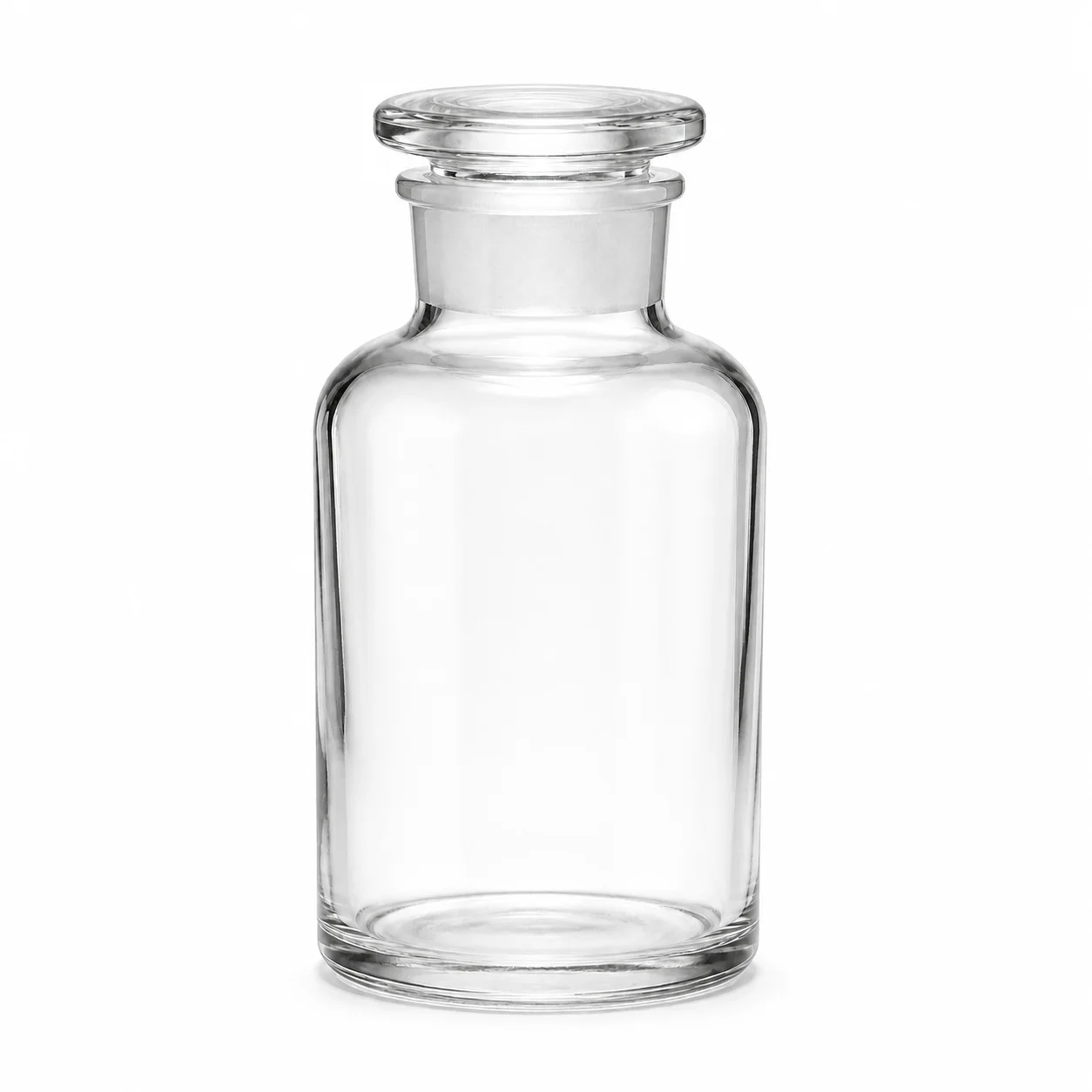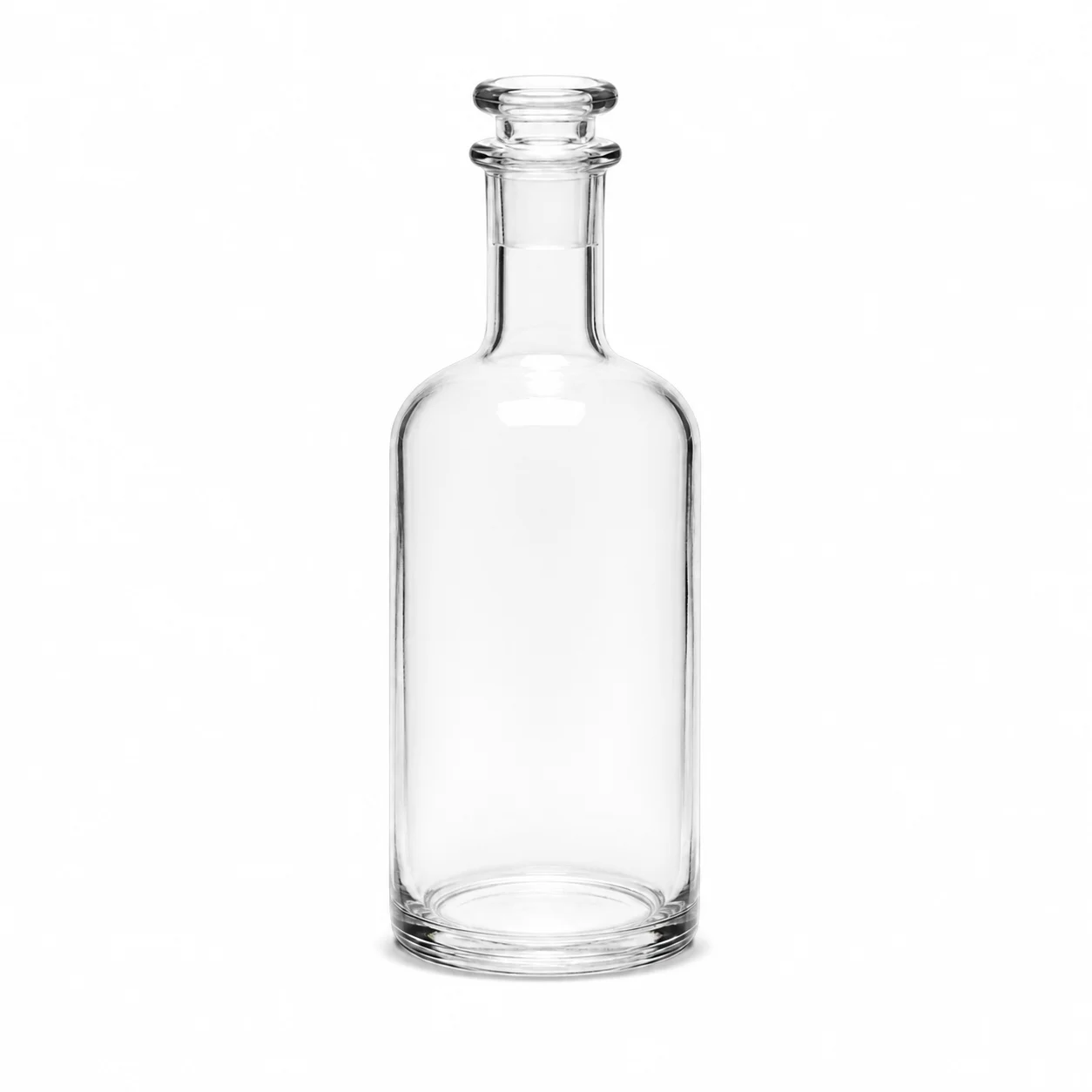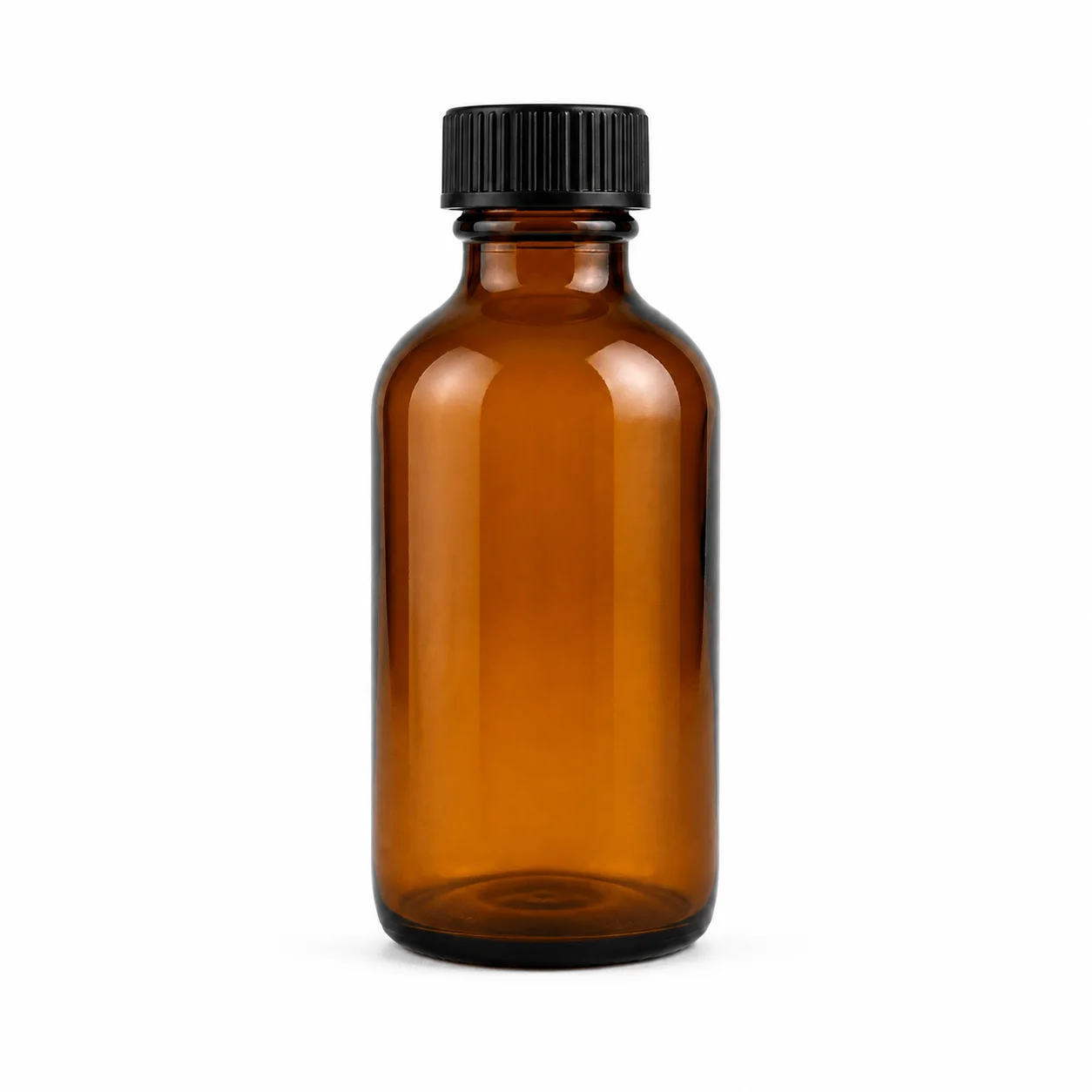
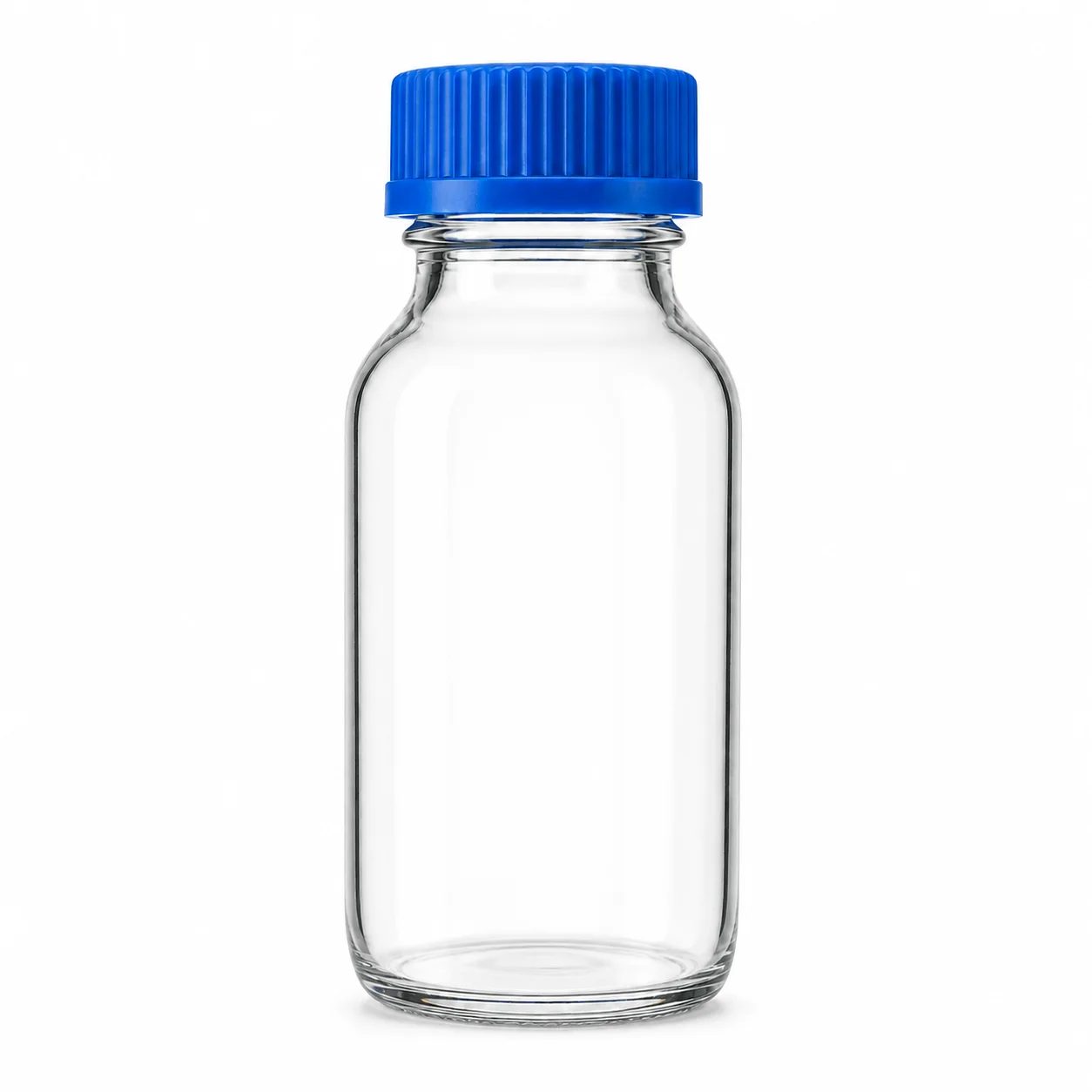
Clear graduated laboratory bottle with a GL 45 neck, blue screw cap and white enamel scale
Shown configuration · bottle with cap and ring / contents and marking-field text not shown

Media & laboratory storage bottles

Blue Cap Storage Bottle

A GL 45 screw-neck laboratory bottle to ISO 4796-1 in borosilicate 3.3, supplied with a polypropylene cap rated to 140 °C and a drip-free pouring ring.

GL 45 on DIN 168-1Autoclavable at 121 and 134 °CCap rated to 140 °C
Stock status
In stock
Lead time
2–3 weeks
FOB price / pc
$0.50 - $0.80
MOQ
10,000 pcs

Final availability, dimensions, materials, assembled components and commercial terms are confirmed against the selected drawing and approved sample.

One thread across a range

GL 45 from 100 mL upward on the same cap

Pours without running

Ring breaks the stream at the lip

Scale and marking field

Fired enamel, survives the washer

Blue-cap Storage Bottle profile

Three parts that only work as a set, and a thread that made them a standard.

Thread standard, autoclaving & the three-part set

What the GL 45 system actually guarantees, and where it stops.

The laboratory bottle, its cap and its pouring ring were designed together. The bottle is borosilicate 3.3 with a GL 45 thread to DIN 168-1, the cap is polypropylene rated well above autoclave temperature, and the ring turns a straight glass lip into something that pours cleanly. Substituting any one of the three is where problems begin.

01

GL 45 is a thread standard, and that is its whole value

The DIN 168-1 GL thread series means a cap, a ring, a dispensing insert or a membrane closure from any conforming supplier will fit a conforming bottle. That interchangeability is why the format spread across laboratories. It also means the number alone says nothing about the glass, so a GL 45 bottle in soda-lime and one in borosilicate 3.3 look identical on a shelf.

02

Autoclave with the cap loose, always

The bottle and cap tolerate 121 °C and 134 °C cycles, but a tightly closed bottle becomes a pressure vessel as it heats and a vacuum vessel as it cools. Standard practice is to autoclave with the cap resting loosely and tighten afterwards. Membrane caps exist precisely so that a bottle can be closed during sterilization while still equalizing pressure.

03

The pouring ring is doing real work

A plain glass thread finish pours badly: liquid follows the outside of the neck and runs down the label. The ring presents a thin drawn lip that breaks the stream cleanly. It is also the part most often lost in a washer, after which the same bottle acquires a reputation for dripping that belongs to the missing component rather than to the glass.

04

Fired enamel is what survives the wash cycle

The graduated scale and the marking field are fired ceramic enamel rather than printed ink, which is why they last through years of alkaline washing at temperature. Printed scales on cheaper bottles fade within a term, leaving glassware that looks serviceable and reads nothing. It is worth verifying which one is being quoted, because the price difference is smaller than the replacement cost.

05

Graduations are working marks, not a calibration

The scale is there to make up media and see the level at a glance, not to report a volume. Where a concentration matters, the solution is made up in a volumetric flask and transferred. Treating the bottle scale as a measurement is a habit that appears in busy laboratories and quietly widens the tolerance on everything prepared that way.

06

The cap chemistry limits the system, not the glass

Borosilicate 3.3 resists nearly everything below hydrofluoric acid and hot concentrated alkali. Polypropylene does not: some solvents swell it, and it has a lower temperature ceiling than the glass. Where an aggressive solvent is stored long term, the review starts with the cap and its liner rather than with the bottle, which is usually the part nobody questions.
Application guide

The blue cap is how a lab tells its bottles apart.

Colored screw caps on laboratory storage bottles are used as a coding system, letting staff identify contents, hazard class or ownership at a glance across a crowded shelf. These are development directions confirmed with the actual contents.

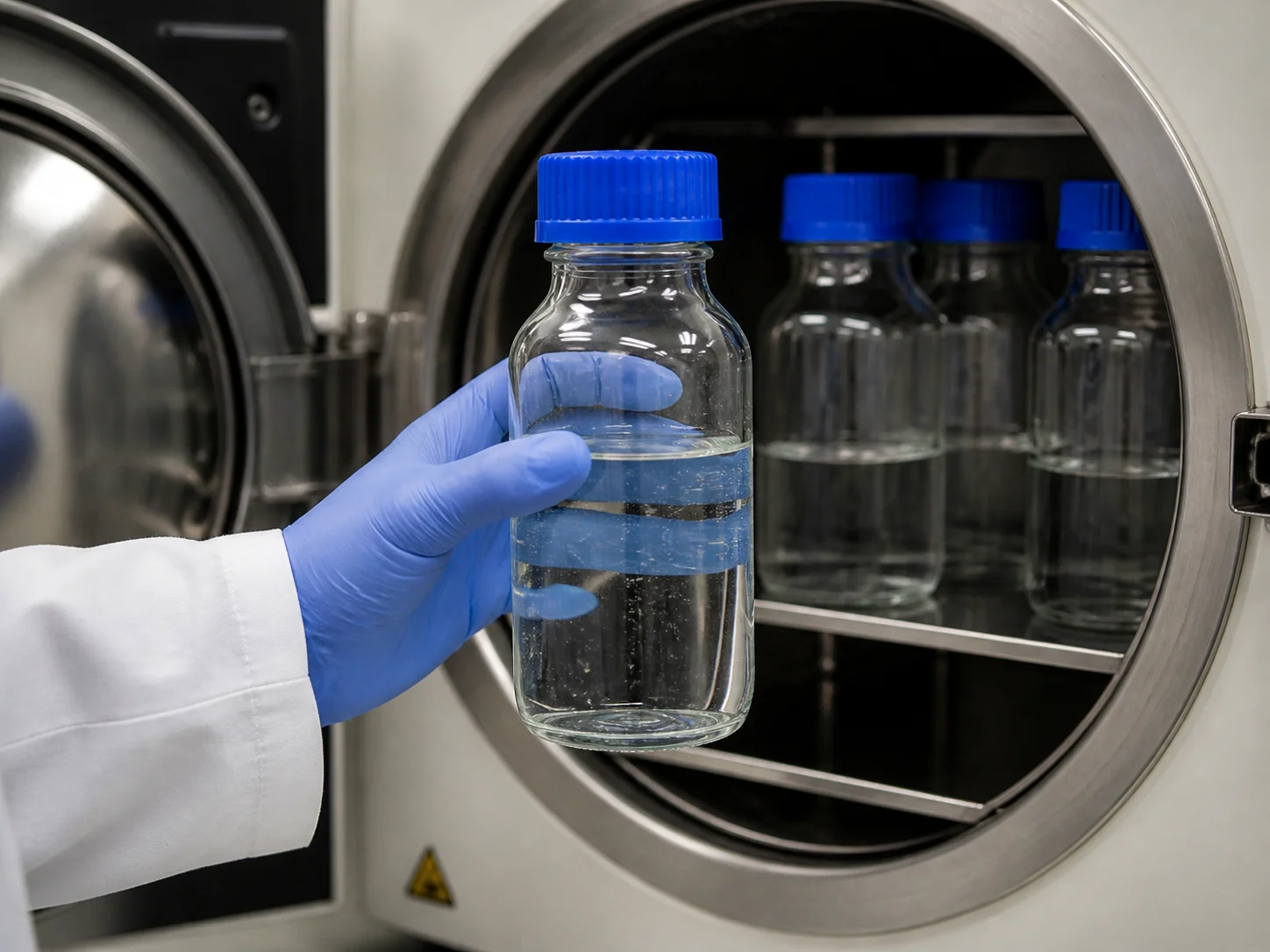
Blue Cap Storage Bottle used for bottles stored, autoclaved and reused in a media and solutions setting

Media and solutions

Bottles stored, autoclaved and reused

For prepared media, buffers and working solutions that are made up, stored and often sterilized in the same bottle. The cap is removed and replaced constantly, so thread durability and the ability to survive repeated autoclaving matter more than any single-use consideration.

  • Confirm the cap survives autoclaving
  • Check the thread after many cycles
  • Loosen caps before sterilizing
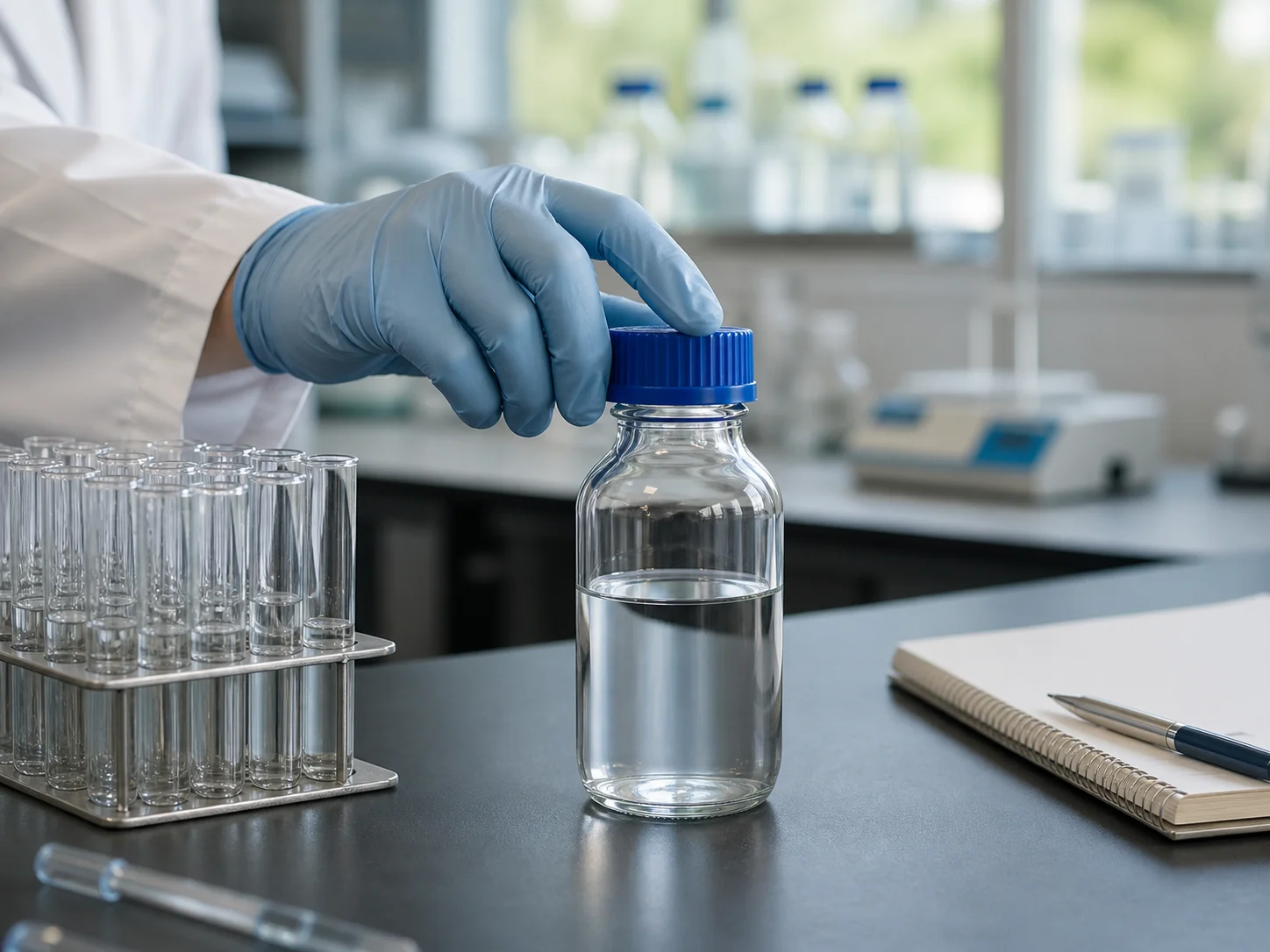
Blue Cap Storage Bottle used for a cap read without reading a label in a busy benches setting

Busy benches

A cap read without reading a label

For technicians who reach for the blue cap because that is what the group agreed blue means, at a bench where nobody stops to read every bottle. A lot that arrives a different shade quietly breaks that habit, so cap color has to hold across suppliers and the coding has to be written down somewhere.

  • Hold cap color consistent across lots
  • Document the coding system
  • Confirm color between suppliers
Blue Cap Storage Bottle used for accessories that change how it is used in a pouring and rings setting

Pouring and rings

Accessories that change how it is used

Many of these bottles accept pouring rings and dip tubes that alter the neck interface, and those accessories have to match the specific thread. Confirming compatibility before ordering avoids a shelf of bottles that cannot take the fittings the laboratory already owns.

  • Confirm accessory thread compatibility
  • Check pouring ring fit
  • Match to fittings already in use

Applications describe development directions. Contents suitability, chemical compatibility and laboratory outcomes are confirmed for the selected program.

Common questions

Blue-cap Storage Bottle questions

The GL 45 system is interchangeable by design. These questions cover where that stops.

Our bottles drip when pouring. What changed?

Almost certainly the pouring ring went through the washer and did not come back. A plain glass thread finish pours badly because liquid follows the outside of the neck; the ring provides a thin drawn lip that breaks the stream. Rings are cheap and easy to stock, and their absence gets blamed on the bottle far more often than on the missing part.

Can we use the printed scale to make up solutions?

For media and rough dilutions, yes; for anything reported, no. The scale exists so you can see the level at a glance, not to certify a volume. Where concentration matters, make up in a volumetric flask and transfer. Busy laboratories drift into measuring in the bottle, and it quietly widens the tolerance on everything prepared that way.

We are storing a solvent long term. What limits the pack?

The cap, not the glass. Borosilicate 3.3 resists nearly everything short of hydrofluoric acid and hot concentrated alkali, while polypropylene swells in some solvents and has a lower temperature ceiling. Start the compatibility review at the closure and its liner. It is the component nobody questions and the one that usually fails first.

Why are the graduations fired on?

Because printing does not survive the wash. A fired enamel scale is fused into the glass and comes back from repeated caustic cycles and autoclaving intact, where a printed or applied mark fades. On bottles that go through a washer, that is the difference between a usable vessel and a blank one.

Next step

Send us the Blue Cap Storage Bottle brief.

Tell us the product, fill volume, closure preference and destination market. We will come back with the matching drawings, available configurations and a sample plan before anything is quoted.

  • 01Send the briefProduct, volume, closure and market
  • 02Get the optionsMatching drawings and configurations
  • 03Approve the sampleConfirm the pack before production