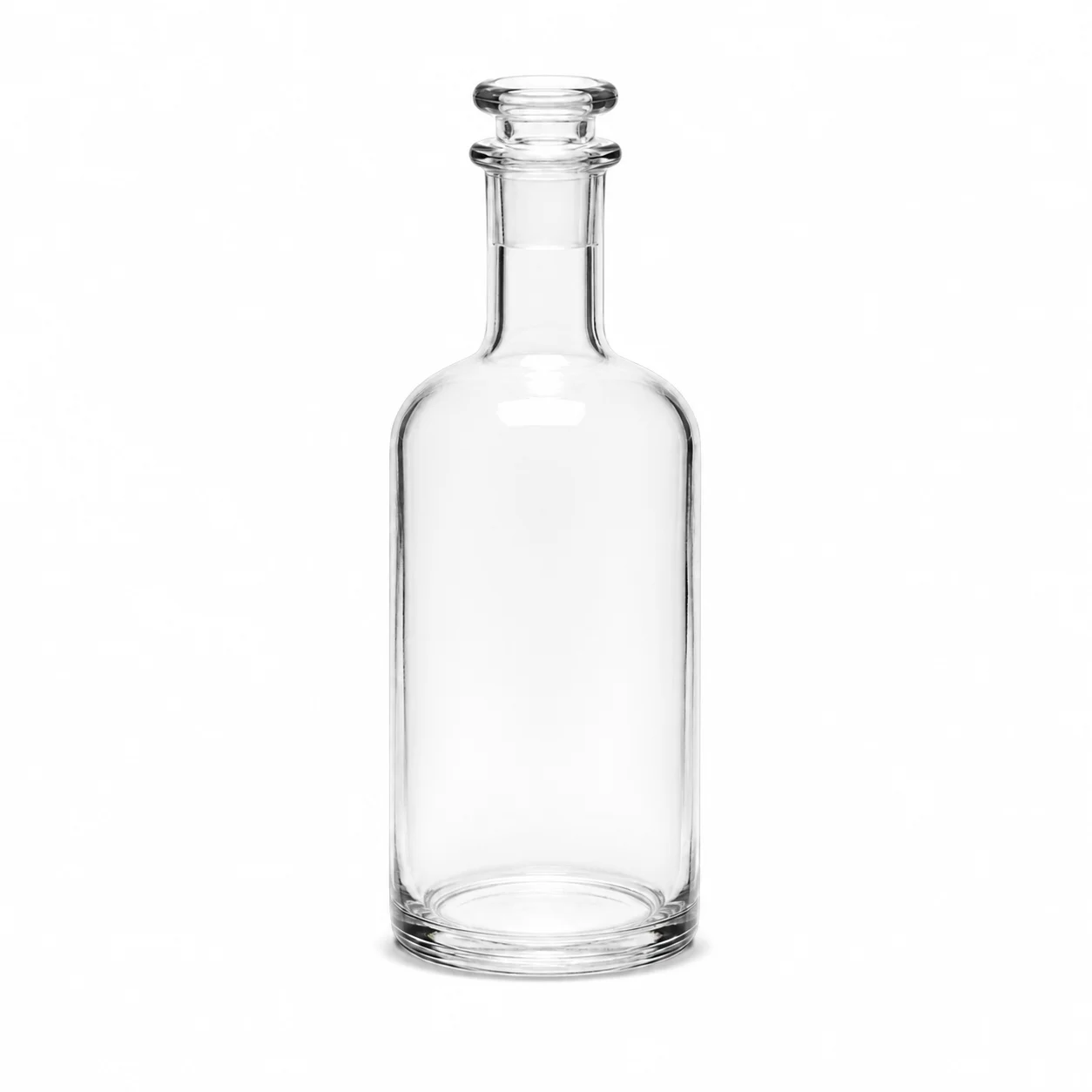
Neck geometry, stoppers & storage behavior
Where a narrow mouth earns its keep, and where it becomes an obstacle.
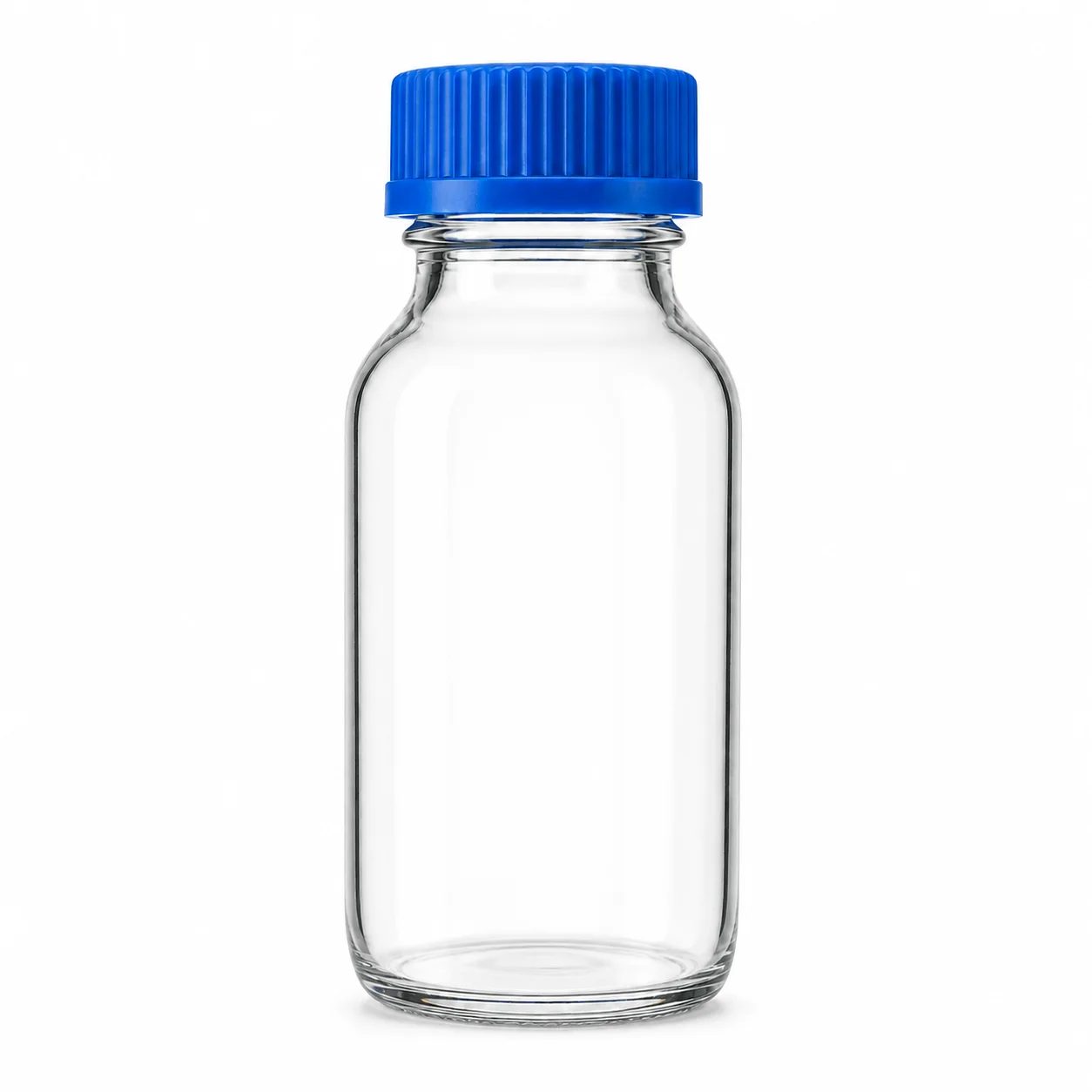
A narrow-mouth bottle exists to hold liquids that are poured and that should not evaporate between uses. The small opening restricts vapor loss and gives a controlled stream when tipped. Everything else about the format — the ground stopper, the shoulder profile, the labeling area — follows from those two working requirements.
Evaporation scales with the opening, not the volume
A bottle loses solvent through the area it exposes when open and through the seal when closed. Halving the neck diameter cuts the exposed area to a quarter, which is why volatile reagents live in narrow-mouth bottles even when a wide mouth would be more convenient to fill. Over a year of daily access, that geometry is worth more than any closure improvement.
The pour is the reason for the shoulder
A narrow neck breaks the stream cleanly if the shoulder curve leads into it without a sharp step. That is a molding decision, and it separates a bottle you can decant from one that dribbles down the label whatever you do. When comparing suppliers, pouring water from a full bottle tells you more than any dimension on the drawing.
Ground stoppers seal without a liner
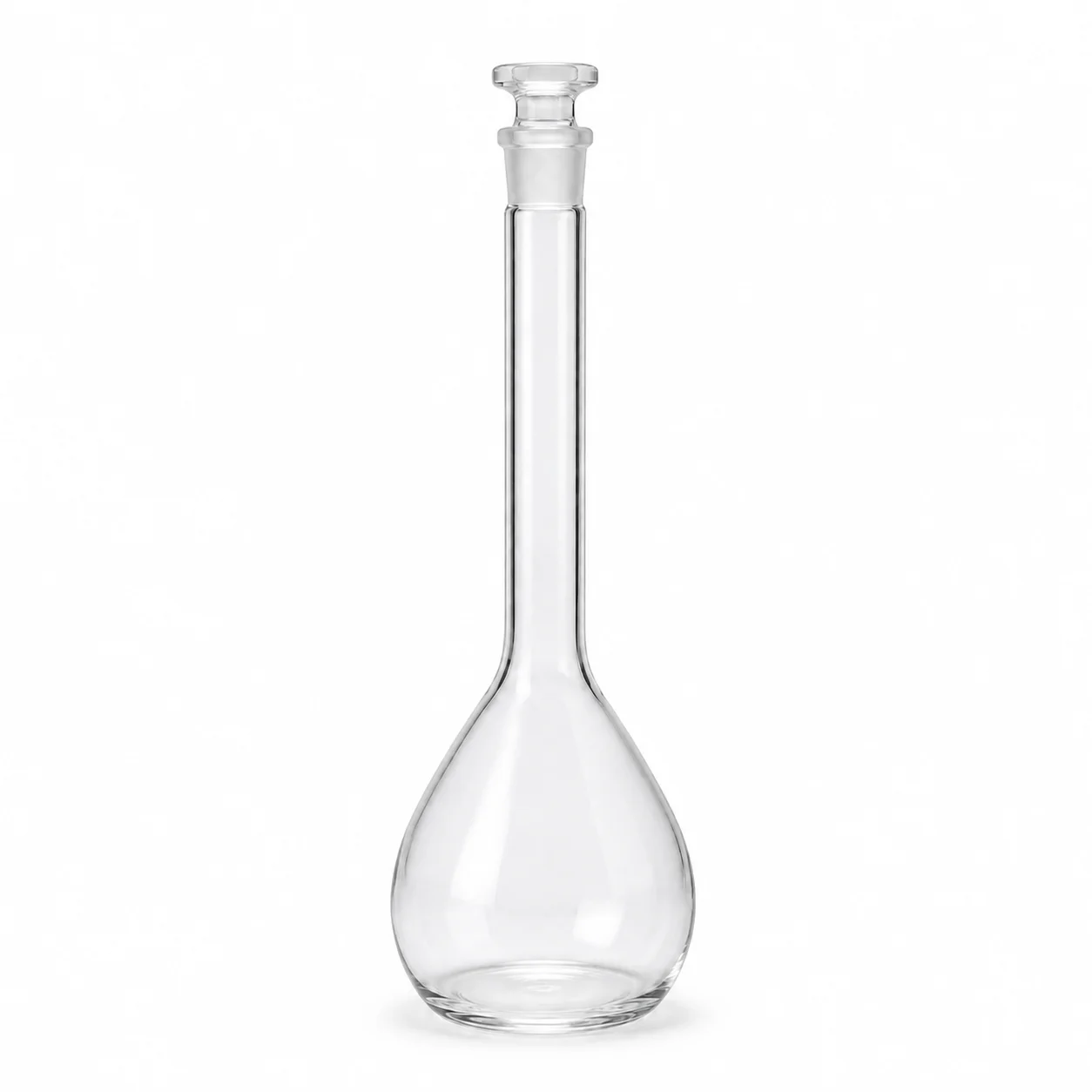
An ISO 383 conical stopper contacts glass on glass over the whole ground band, so there is no elastomer for a solvent to attack and nothing to replace. Because the taper is standardized, any stopper of the same joint size fits the neck, but a stopper that stands in strong alkali will seize. Screw closures avoid seizing at the cost of introducing a liner.
Choose the glass for the chemistry, not the label
Soda-lime bottles are adequate for aqueous solutions at room temperature and are the sensible economy across a stockroom. Borosilicate 3.3 is specified where thermal shock, solvents or long-term storage of an aggressive reagent are involved. The two are indistinguishable at a glance, so the glass type has to be recorded on the label rather than assumed from the shelf it sits on.
Filling a narrow mouth is a funnel problem
The same neck that protects the contents makes decanting into the bottle awkward and makes a spill likely. Where a stockroom refills bottles routinely, a matched funnel and a bottle-top dispenser thread are worth specifying at the outset. Retrofitting a dispensing closure to bottles chosen only for storage often means changing the neck format entirely.
Label area is designed, not left over
A narrow-mouth bottle usually carries a straight body panel precisely so a reagent label, a hazard diamond and a date fit without wrapping onto the curve. Losing that panel to a bottle with more shoulder means labels that will not lie flat, which in a stockroom means labels that come off. It is worth checking against the label you actually use.