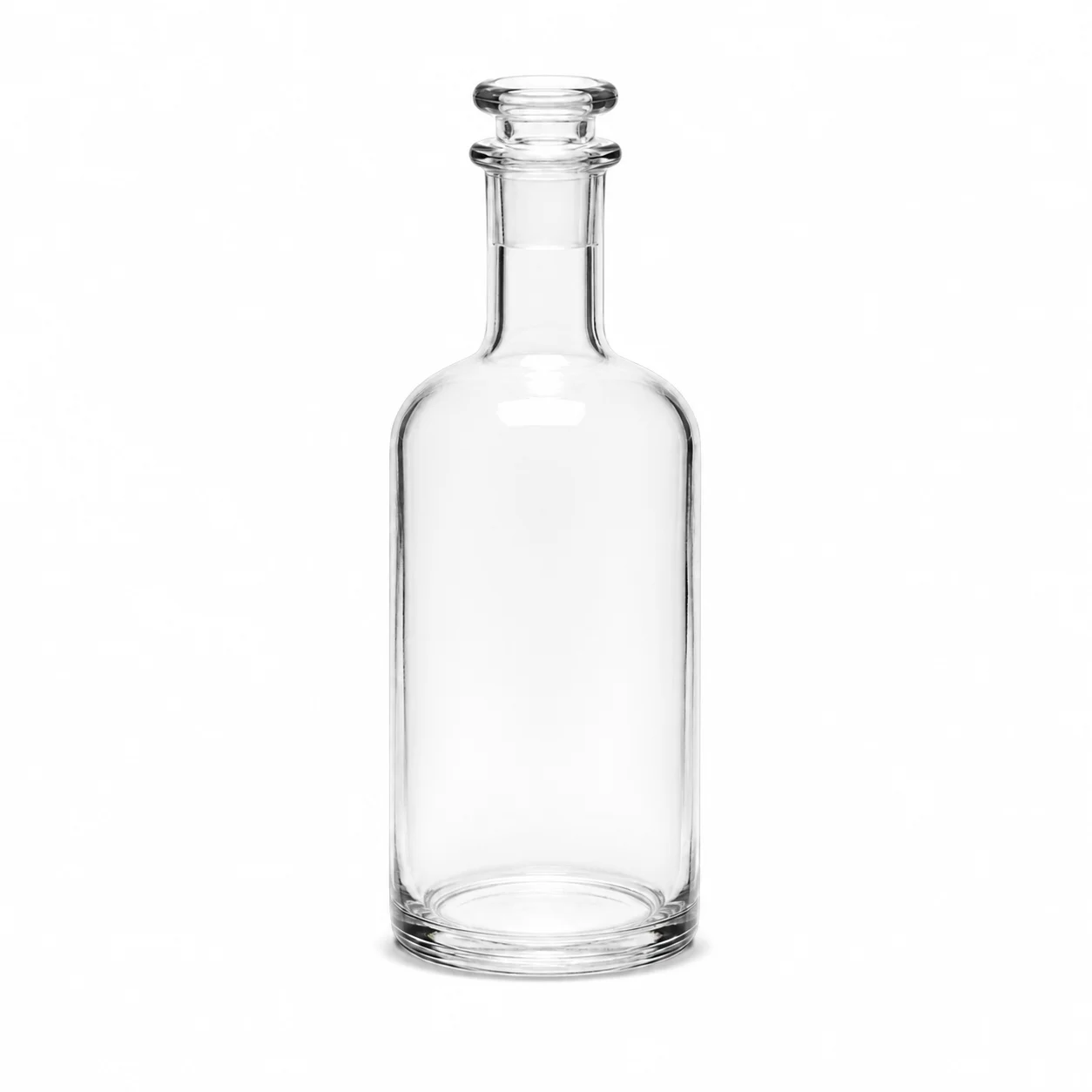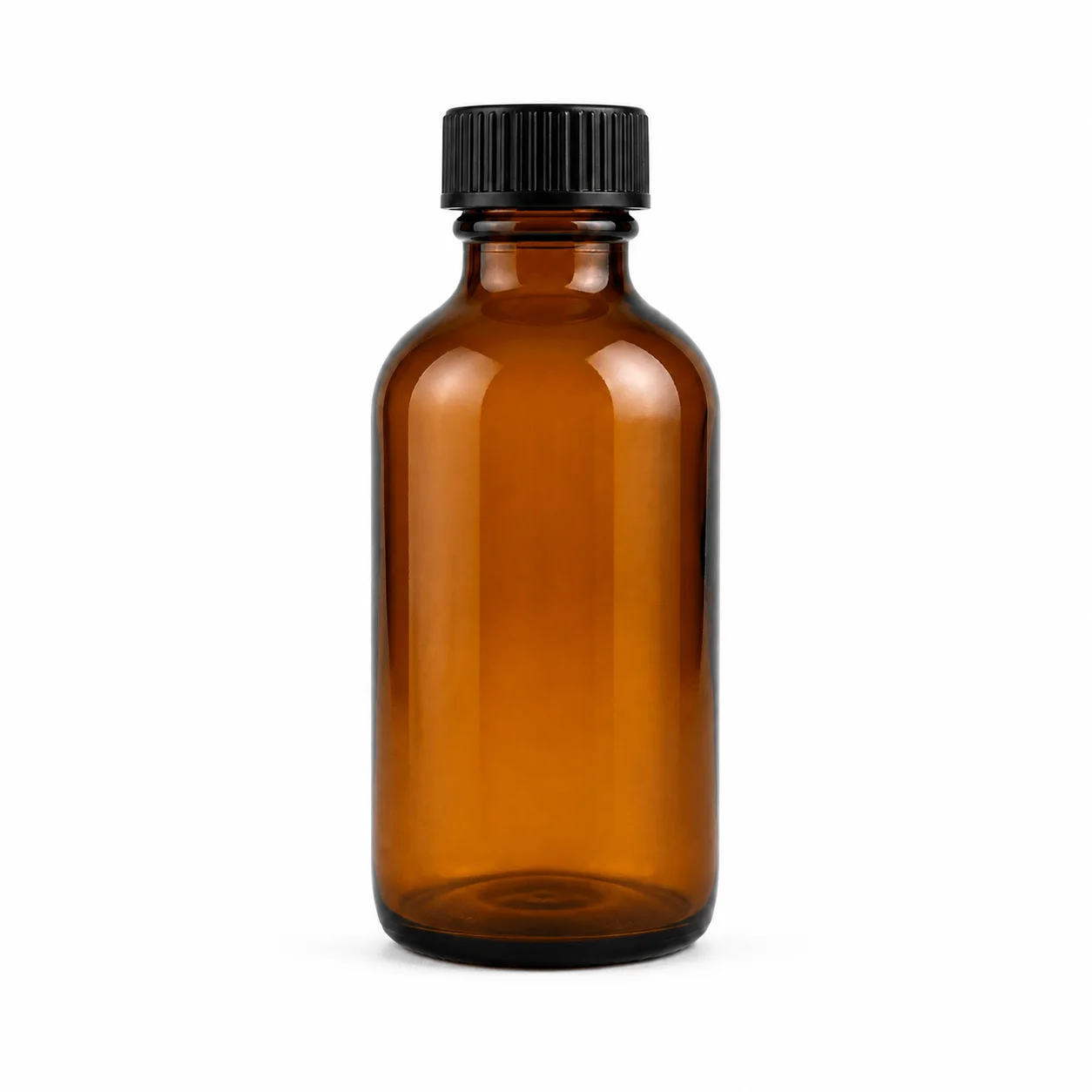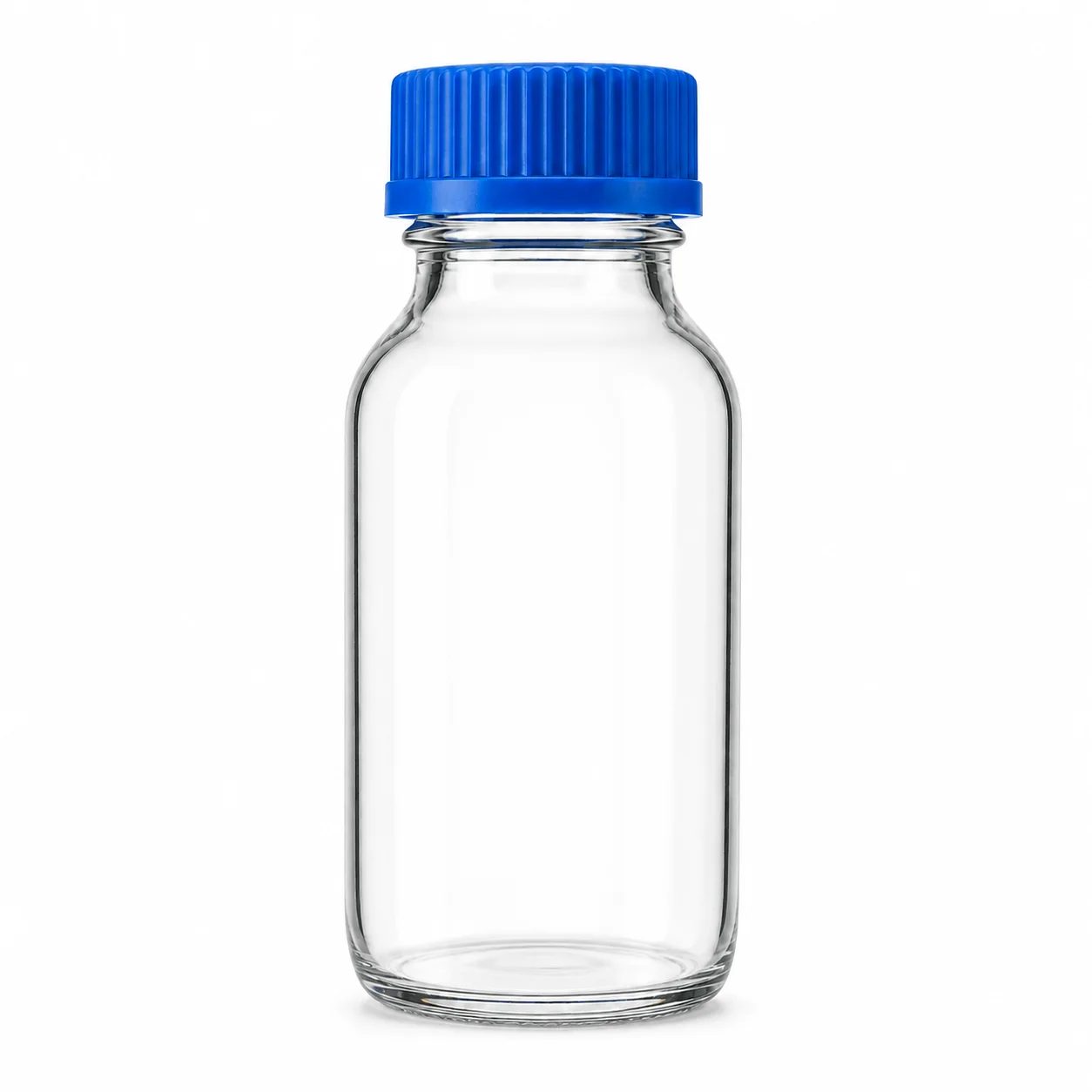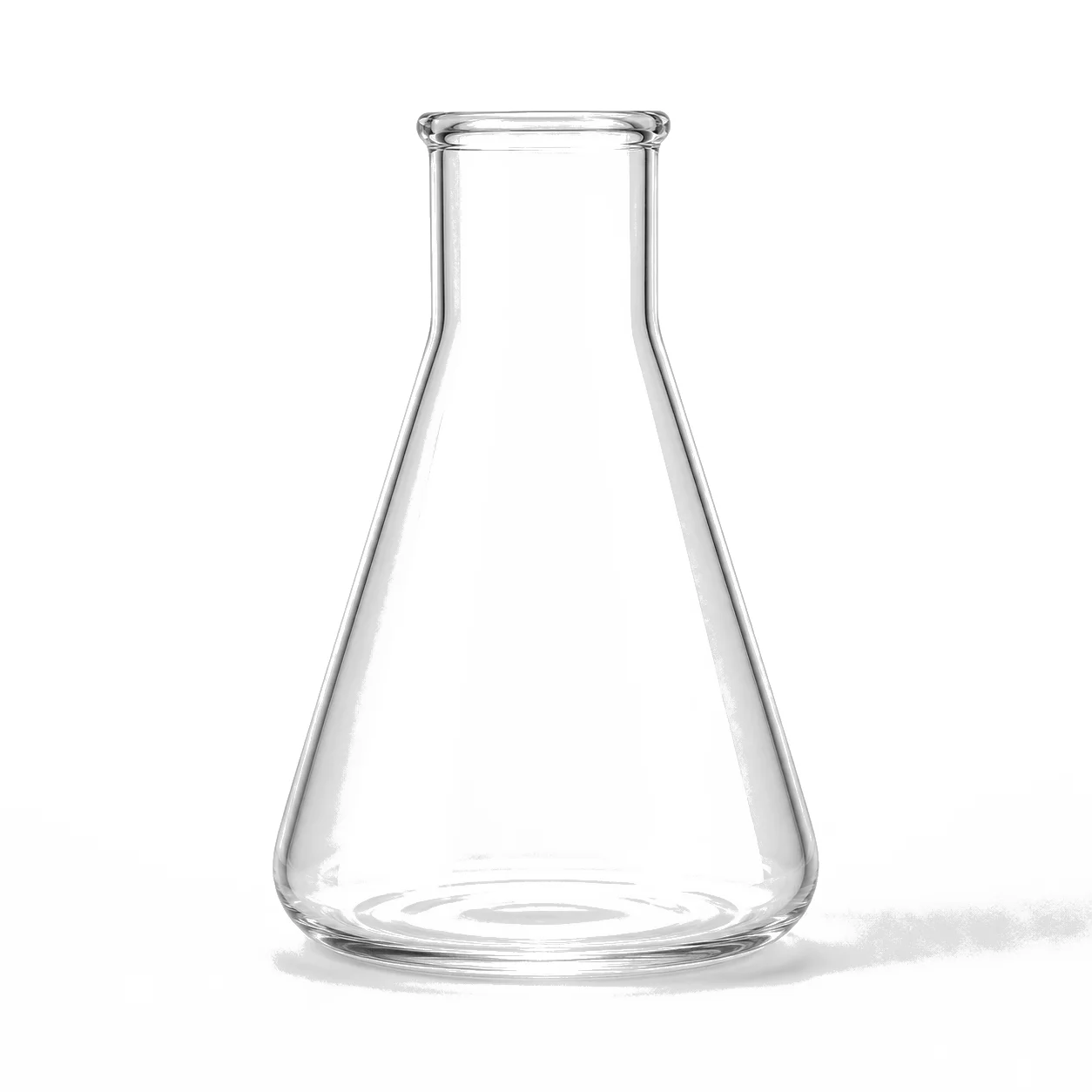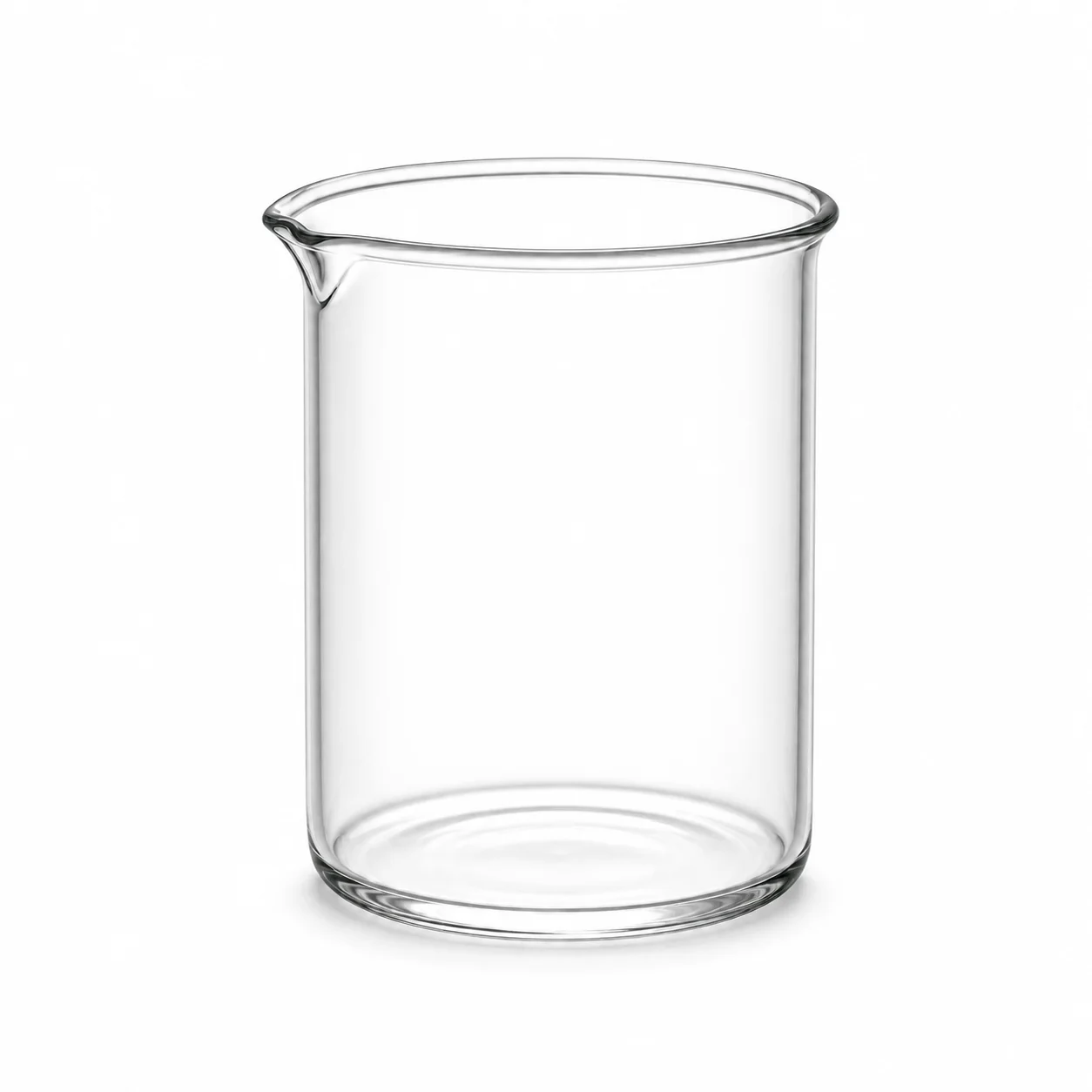

Clear wide-mouth reagent bottle with a straight body, broad shoulder and flat ground stopper
Shown configuration · bottle with stopper / label, contents and liner not shown

Reagent storage

Wide-mouth Reagent Bottle

A wide-mouth reagent bottle for solids and viscous materials, with a neck opening wide enough to take a spatula, a scoop or a caked salt without decanting.

Spatula accessFlat stopper or GL threadFlint and amber
Stock status
In stock
Lead time
2–3 weeks
FOB price / pc
$0.35 - $0.75
MOQ
2,000 pcs

Final availability, dimensions, materials, assembled components and commercial terms are confirmed against the selected drawing and approved sample.

Solids come out whole

No funnel, no scraping through a narrow neck

Sees its own contents

Caking and moisture are visible at the surface

Cleans properly

A brush reaches the wall and the base

Wide-mouth Reagent Bottle profile

The format exists because you cannot get a spatula into a narrow neck.

Access, moisture pickup & cleaning

What a wide mouth buys, and the bill that comes with it.

Powders, crystals, pastes and anything that cakes need a bottle you can reach into. A wide mouth buys that access and pays for it in exposed surface area every time the bottle is opened. Knowing what that trade costs — in moisture pickup, in evaporation, in contamination risk — is what makes the choice deliberate rather than habitual.

01

Access changes how a solid is dispensed

A hygroscopic salt in a narrow-mouth bottle is tapped out, spilled and eventually decanted through a funnel that contaminates it. In a wide mouth it is lifted out with a clean spatula, which is both more accurate and far less wasteful. For anything weighed by difference, the format directly affects how much reagent reaches the balance rather than the bench.

02

Every opening exposes the whole surface

The same wide neck that admits a spatula exposes several times the surface area to room air. For a hygroscopic or oxidizable solid, that is the dominant route of degradation across a stockroom's life, not the seal. Bottles for such materials are opened briefly, closed immediately, and often kept inside a desiccator rather than relying on the closure alone.

03

Flat ground stoppers behave differently from conical ones

Wide-mouth bottles often take a flat or mushroom-form ground stopper bearing on a ground rim rather than a conical band. That seals well against dust and vapor and is easy to lift with one hand, but it offers little resistance to being knocked off. Where a bottle is transported or stored on its side, a threaded closure is the safer format.

04

Cleaning is the quiet argument for a wide mouth

A bottle that a brush can reach into gets properly cleaned; one that cannot gets rinsed and reused. In a laboratory where glassware is recirculated between reagents, that difference shows up as cross-contamination that is very hard to trace. Where bottles are reused across different materials, the wide format is worth the evaporation penalty.

05

Caking is visible, and that matters

A solid that has taken up moisture forms a crust at the surface, and in a wide-mouth bottle it is seen the moment the stopper comes off. In a narrow-mouth bottle it is discovered when something will not pour. Early visibility means the material is dried or discarded before it is weighed into an experiment on the assumption it was dry.

06

Match the closure liner to the solid, not to habit

Threaded wide-mouth bottles take a liner, and the default supplied is often a general-purpose foam that suits liquids. Solids that sublime, hygroscopic materials and anything that will be stored for years usually want a PTFE-faced liner instead. It is a small line on an order and the difference between a reagent that survives storage and one that has to be rebought.


Application guide

A wide neck exists so solids can get in and out.

Reagent bottles come in two mouths for one reason: narrow for pouring liquids accurately, wide for handling anything that has to be spooned, scraped or scooped. These are development directions confirmed with the actual contents.

Wide-mouth Reagent Bottle used for powders, crystals and granular materials in a solid reagents setting

Solid reagents

Powders, crystals and granular materials

For solids a technician removes with a spatula rather than pouring, where a narrow neck makes the operation impossible without spilling. The wide mouth admits a spatula at any fill level and lets the bottle be emptied and cleaned properly between different materials.

  • Confirm a spatula reaches the base
  • Check the mouth suits the material
  • Review cleaning between contents
Wide-mouth Reagent Bottle used for a bottle opened at a balance in a solids weighed out setting

Solids weighed out

A bottle opened at a balance

For technicians spooning a hygroscopic solid onto a balance and putting the stopper straight back. Ground glass seals without a liner, which is why it is used where a polymer would be attacked or would contaminate the reagent, but the same joint seizes if powder is left in it and the fit belongs to that one bottle.

  • Keep stopper and bottle together
  • Watch for seizing with hygroscopic solids
  • Confirm no liner is needed
Wide-mouth Reagent Bottle used for a shelf of bottles that look the same in a shared stores setting

Shared stores

A shelf of bottles that look the same

For a laboratory store where several people take bottles down and put them back and nobody remembers who decanted what. A mislabeled reagent is worse than an empty shelf because someone will use it, so labels have to survive solvent splashes and washing and stay with the liquid they describe.

  • Test labels against solvent splash
  • Confirm a durable marking route
  • Keep identification with the contents

Applications describe development directions. Contents suitability, chemical compatibility and laboratory outcomes are confirmed for the selected program.

Common questions

Wide-mouth Reagent Bottle questions

Wide-mouth storage is a trade. These questions are both sides of it.

Are flat ground stoppers as good as conical ones?

For sealing against dust and vapor on a shelf, yes, and they lift off one-handed which matters when the other hand holds a spatula. What they do not do is resist being knocked off. A bottle that will be carried, shipped or stored anywhere it can tip belongs under a threaded closure instead of a ground stopper.

Which liner should threaded wide-mouth bottles have?

Not the general-purpose foam that usually ships as standard, if the contents are solids. Materials that sublime, hygroscopic salts and anything stored for years generally want a PTFE-faced liner. It is one line on the order and it is often the difference between a reagent that is still usable in three years and one that has to be rebought.
Does the wide mouth help with cleaning?

It is arguably the strongest argument for it. A bottle a brush can reach gets cleaned; a bottle it cannot gets rinsed and reused. Where glassware is recirculated between different reagents, that distinction shows up later as cross-contamination which is extremely hard to trace back to its source.

Does caking show up before it becomes a problem?

That is one of the wide mouth's quiet advantages. A solid that has drawn moisture is visible the moment the bottle is opened, so the material can be dried or discarded before it is weighed into an experiment. A narrow neck hides the same condition.

Next step

Send us the Wide-mouth Reagent Bottle brief.

Tell us the product, fill volume, closure preference and destination market. We will come back with the matching drawings, available configurations and a sample plan before anything is quoted.

  • 01Send the briefProduct, volume, closure and market
  • 02Get the optionsMatching drawings and configurations
  • 03Approve the sampleConfirm the pack before production