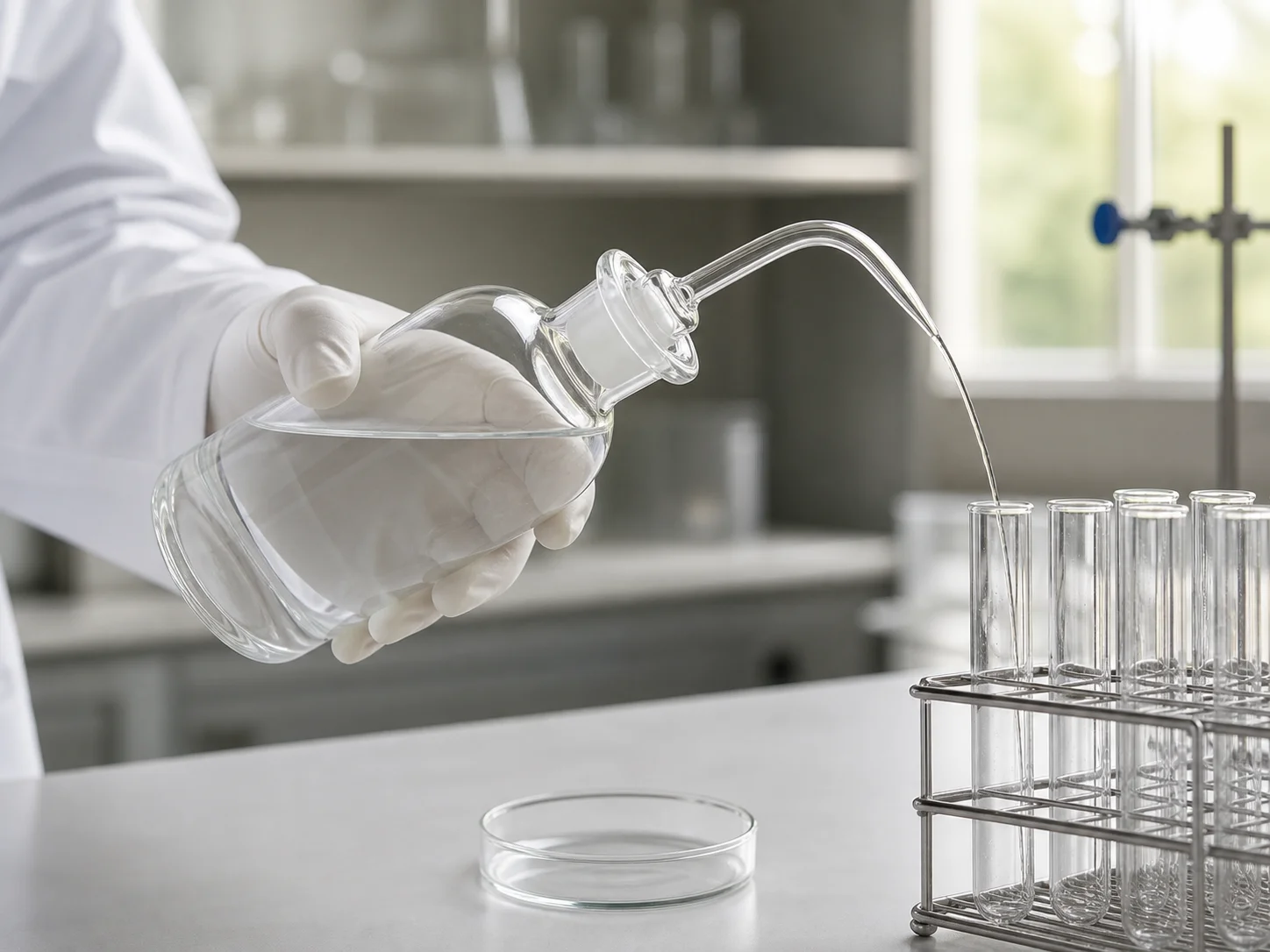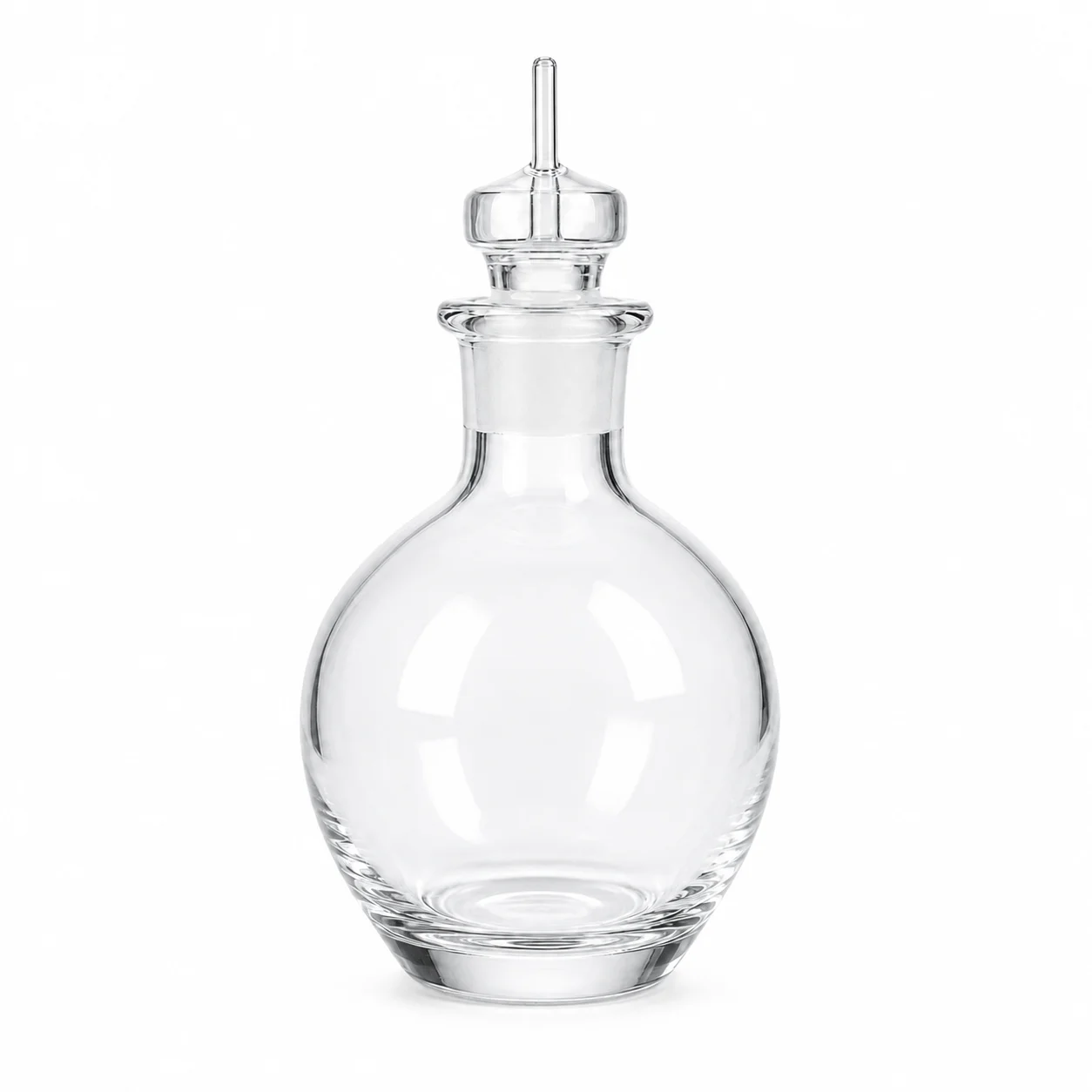
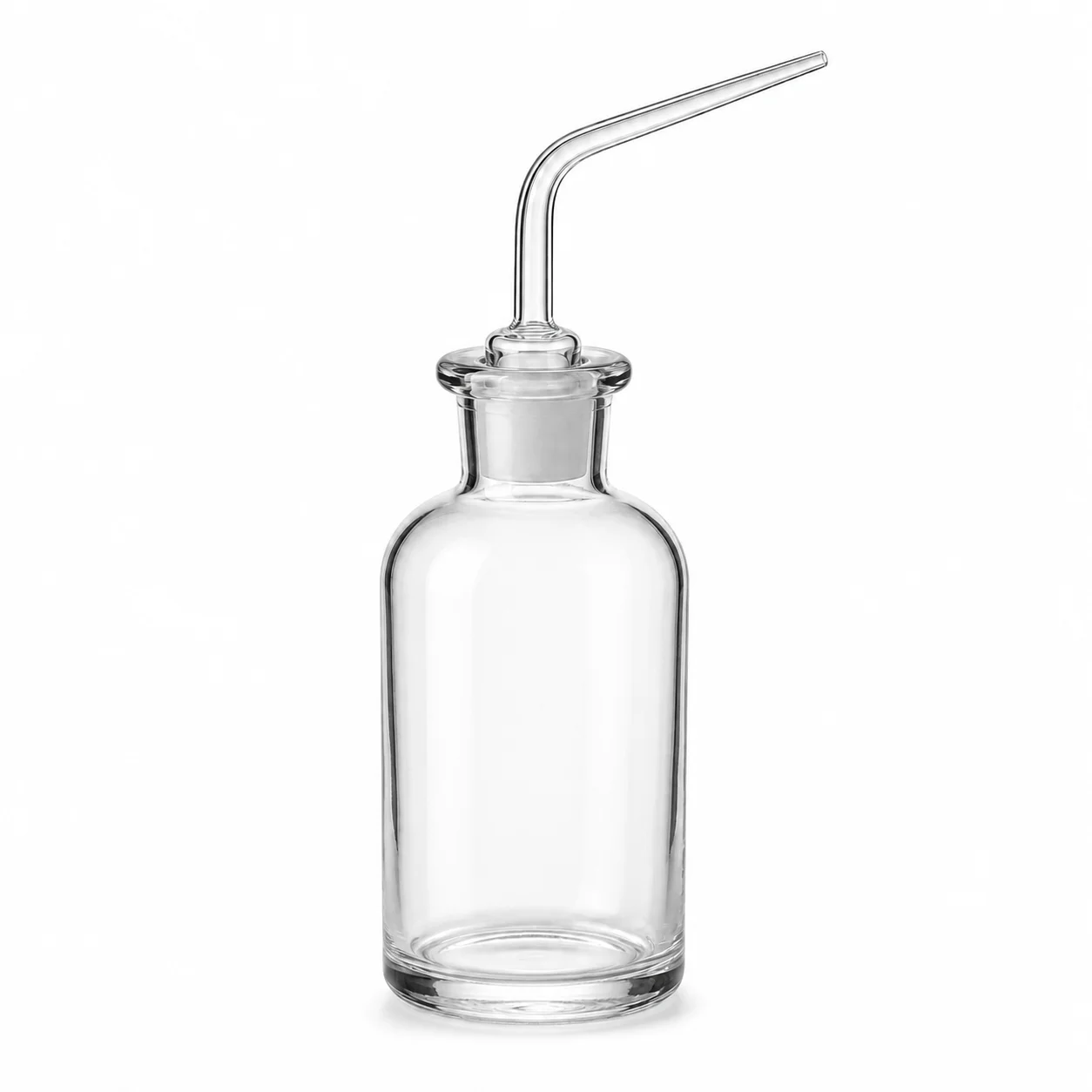
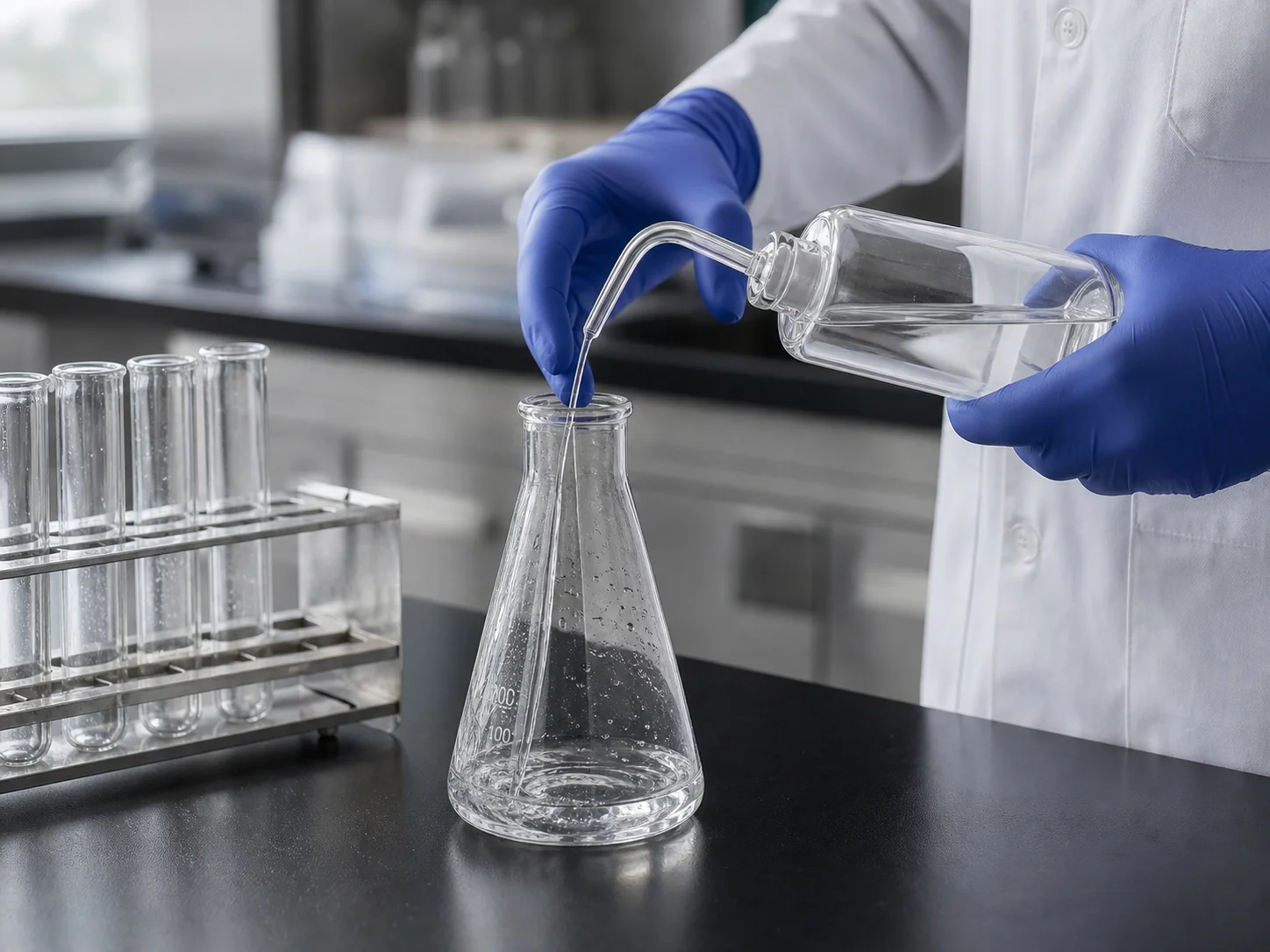
Straight-sided glass bottle with a stoppered head and a long curved delivery tube
Shown configuration · bottle with head and tube / solvent, label and stand not shown

Rinsing & transfer

Wash Bottle

A glass wash bottle with a stoppered head and a drawn delivery tube, delivering a controlled jet of solvent for rinsing glassware and washing precipitates quantitatively.

Drawn jet tubeGlass throughout the solvent pathLabeled for one solvent
Stock status
In stock
Lead time
2–3 weeks
FOB price / pc
$0.85 - $1.10
MOQ
10,000 pcs

Final availability, dimensions, materials, assembled components and commercial terms are confirmed against the selected drawing and approved sample.

Jet reaches into corners

Drawn tip directs a fine stream

No plastic in the path

Solvent meets only glass

One bottle, one solvent

Labeled and never refilled with another

Wash Bottle profile

The vessel that decides whether a quantitative transfer is actually quantitative.

Jet control, solvent segregation & glass versus plastic

Five reasons the glass version persists in a world of squeeze bottles.

Rinsing is not tidying. In gravimetric and volumetric work, what stays on the wall of a beaker is the difference between the result you report and the result that was there. A wash bottle exists to move that residue into the receiving vessel with a directed jet, using a solvent chosen for the sample rather than whatever is nearest.

01

The jet does the work, not the volume

A drawn tip converts a modest flow into a stream that can be aimed into the corner of a beaker, along a stirring rod or around the rim of a funnel. That directionality is what lifts residue rather than merely diluting it. A wide, unformed outlet floods the vessel and washes less, using more solvent to achieve a poorer transfer.

02

Glass keeps the solvent path inert

Polyethylene squeeze bottles are convenient, and some solvents swell them, extract additives or permeate the wall over weeks. Where a rinse solvent must not pick anything up — trace analysis, chromatography, anything reported at low concentration — the glass bottle removes that variable entirely. That is the argument for the format, and it is a narrow but real one.

03

One solvent per bottle, labeled, permanently

A wash bottle refilled with a different solvent carries the previous one in its tube and head. In a laboratory running water, ethanol and acetone bottles side by side, mislabeled or reused bottles quietly contaminate every rinse. The label is part of the equipment, and the discipline of never repurposing a bottle is worth more than any design feature.

04

Delivery is by air pressure, so the head has to seal

Glass wash bottles are worked by blowing into a second tube or by a bulb, which means the stopper assembly has to be gas-tight against modest pressure. A loose or damaged ground head leaks air, gives a weak jet and lets solvent vapor out around it. The head is the part that determines whether the bottle is pleasant to use.

05

Volatile solvents change the handling rules

A bottle of acetone or ether warms in the hand and builds pressure, and a wash bottle left standing in sunlight can dribble from the jet without being touched. Filling to leave headspace, storing away from heat and venting before use are the practical answers. It is the same reason such bottles are kept in a hood rather than on an open bench.

06

The draw tube decides how much solvent is usable

A tube cut short leaves solvent below it that will never be delivered, and a tube cut square can seal itself against the base and stop the flow entirely. Cutting the end at an angle and setting the length just clear of the base is what makes the last of the bottle available.

Application guide

A directed stream for rinsing the last of something out.

A wash bottle exists to aim a controlled jet of solvent exactly where it is needed, rinsing residue from glassware or washing a precipitate down into a filter. These are development directions confirmed with the actual liquid.

Wash Bottle used for rinsing every trace into the receiving vessel in a quantitative transfer setting

Quantitative transfer

Rinsing every trace into the receiving vessel

For transfers where anything left clinging to the walls is lost from the measurement, so the vessel is rinsed several times and every rinse goes into the flask. The curved outlet directs the stream around the interior wall, which is what makes that rinse complete rather than approximate.

  • Confirm the stream reaches the walls
  • Check the outlet directs where aimed
  • Review rinse volume against the method
Wash Bottle used for glass where a polymer bottle would fail in a solvent compatibility setting

Solvent compatibility

Glass where a polymer bottle would fail

Glass wash bottles are specified for solvents that would swell, cloud or dissolve the plastic bottles used for water. The outlet tube and any stopper still have to suit that solvent, so the whole assembly is checked rather than just the body.

  • Confirm every part suits the solvent
  • Check the stopper and tube material
  • Label the contents clearly
Wash Bottle used for how the liquid is pushed out in a delivery setting

Delivery

How the liquid is pushed out

A rigid glass body cannot be squeezed, so delivery depends on whatever pressure arrangement the design uses, and that differs fundamentally from a plastic wash bottle. Understanding how it is meant to be operated matters before it reaches a bench.

  • Confirm how delivery is achieved
  • Brief users on the operating method
  • Check the outlet does not drip

Applications describe workflow directions. Method suitability, chemical compatibility and laboratory outcomes are confirmed for the selected program.

Common questions

Wash Bottle questions

Why a glass wash bottle still exists, and how to keep one useful.

Why not just use a polyethylene squeeze bottle?

For most rinsing, you should — they are cheaper and easier. The glass version earns its place where the solvent must not pick anything up: some solvents swell polyethylene, extract additives or permeate the wall over weeks. In trace analysis and chromatography that is a real variable, and a glass path removes it completely.

What makes one wash bottle rinse better than another?

The jet. A drawn tip turns a modest flow into a stream that can be aimed into a corner, along a stirring rod or around a funnel rim, which lifts residue instead of diluting it. A wide unformed outlet floods the vessel, uses more solvent and transfers less. Tip geometry is the whole functional difference.

Can we refill a bottle with a different solvent?

Not without carrying the old one into the new work. Residual solvent sits in the tube and head, and in a laboratory running water, ethanol and acetone side by side that contaminates every rinse from that bottle onward. Label each bottle for one solvent and keep it there permanently. The discipline matters more than any feature.

Ours dribbles on its own with acetone in it. Why?

Vapor pressure. A volatile solvent warms in the hand or in sunlight and pushes liquid out of the jet without anyone squeezing anything. Leave headspace when filling, store the bottle away from heat, vent it before use and keep volatile solvents in a hood. It is behavior of the solvent rather than a fault in the bottle.

How much of the solvent can actually be used?

Whatever the draw tube reaches. A tube cut short leaves solvent that cannot be drawn, which on an expensive solvent is a real cost per bottle. Check the tube against the base before standardizing on a supplier.

Next step

Send us the Wash Bottle brief.

Tell us the product, fill volume, closure preference and destination market. We will come back with the matching drawings, available configurations and a sample plan before anything is quoted.

  • 01Send the briefProduct, volume, closure and market
  • 02Get the optionsMatching drawings and configurations
  • 03Approve the sampleConfirm the pack before production