One-mark and graduated types, delivery mode & class
Six distinctions that matter more than the price difference between them.
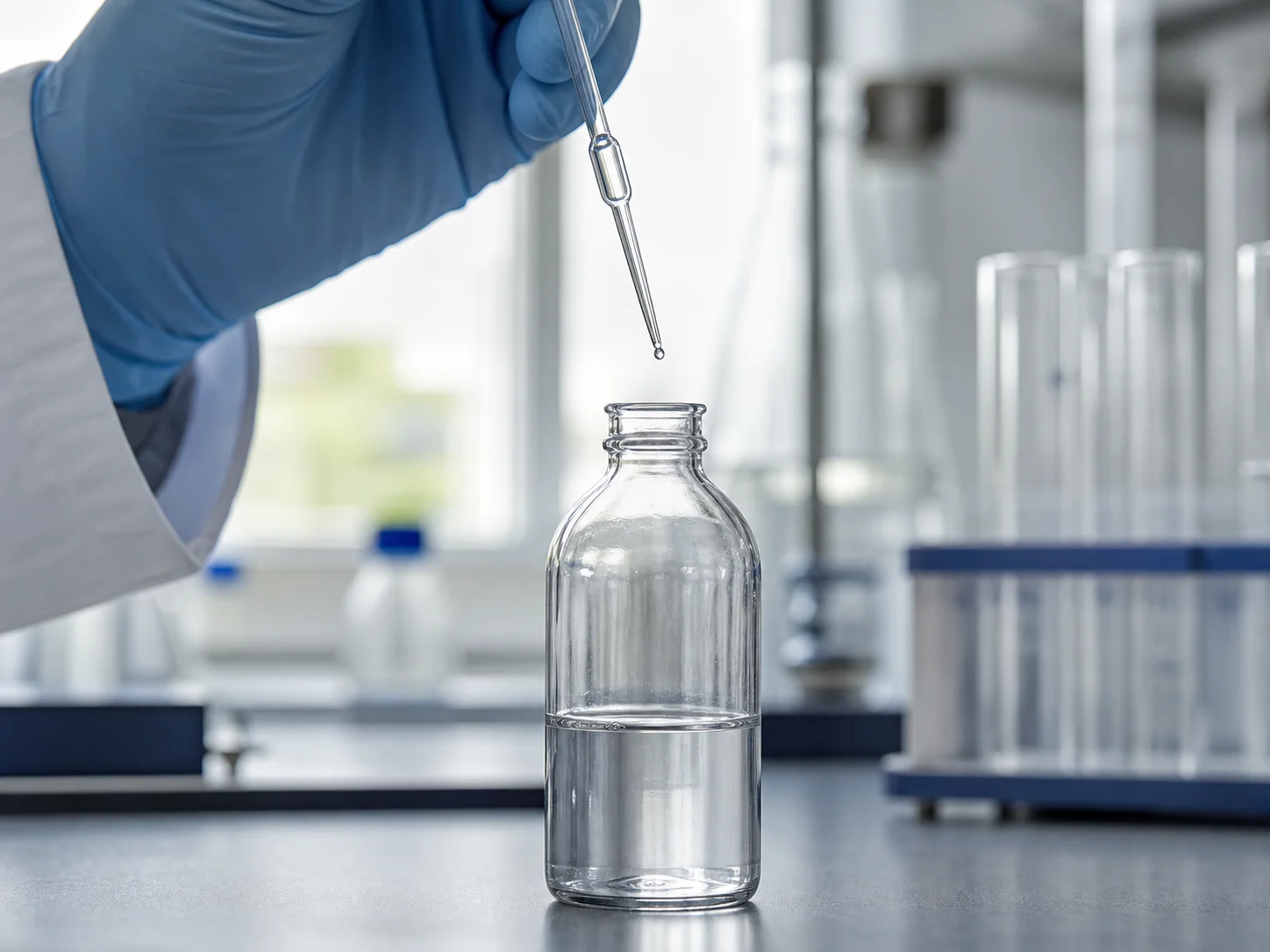
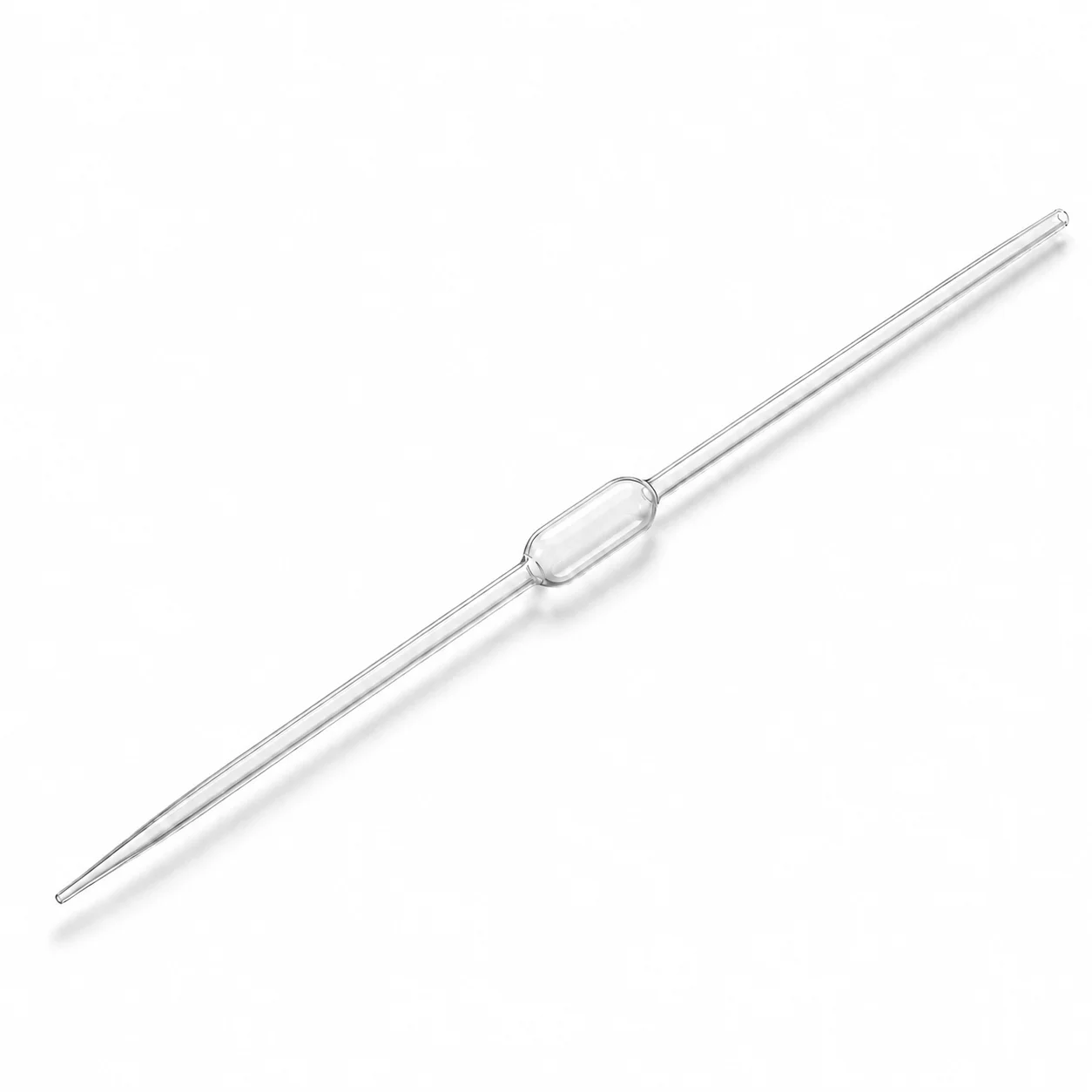
A one-mark pipette concentrates its whole capacity in a bulb and leaves only a narrow stem at the mark, so the meniscus is set precisely and the delivered volume is reproducible. Graduated pipettes trade that precision for flexibility. Knowing which of the two a method needs, and whether it is drain-out or blow-out, prevents most pipetting error.
One-mark and graduated pipettes are different instruments
A one-mark transfer pipette under ISO 648 delivers a single volume to Class A limits of ±0.020 mL at 10 mL and ±0.030 mL at 25 mL. A graduated pipette under ISO 835 delivers any volume within its range and carries a wider tolerance for doing so. Using a graduated pipette to deliver its full nominal volume gives away accuracy for flexibility that the method did not ask for.
Drain-out and blow-out are not interchangeable
Most pipettes are calibrated to drain, with the small amount remaining in the tip excluded from the stated volume; blowing that residue out over-delivers. Blow-out types, marked with frosted bands at the top, include it and must be blown out. Reading which type is in your hand takes a second and is the single commonest source of systematic pipetting bias.
Delivery time is part of the calibration
The tip is drawn so that free delivery takes a defined period, and rushing it by tilting or forcing leaves more liquid on the wall than the calibration assumes. Standard practice is to hold the pipette vertical, let it run freely, touch the tip to the wall of the receiving vessel and wait the specified moment before withdrawing.
Fillers changed the risk profile of the job
Mouth pipetting is not acceptable practice in any modern laboratory, and every specification here assumes a bulb or a pipette filler. This has practical consequences for the glass: the stem has to fit the filler cone, and a pipette that is too short for a deep vessel becomes a hazard when someone reaches for it with an unsuitable adapter.
Wetting behavior beats nominal tolerance in dirty glass
A pipette delivers its calibrated volume only if the liquid drains as an even film. Grease, fingerprints or dried residue break that film into droplets and cost far more than the ±0.03 mL of the class limit. Cleaning to a wettable surface, and rinsing with the solution before the working delivery, does more for accuracy than upgrading from Class B to Class A.
The calibration belongs to one temperature
Volumetric glassware is calibrated at a stated reference temperature, and both the liquid and the glass change volume away from it. Delivering a cold solution from a pipette calibrated at 20 °C introduces an error larger than the tolerance class the pipette was bought for, which is why the temperature of the liquid is recorded rather than assumed.