
Fill ratio, sealing & thermal behavior
What separates a reproducible headspace method from a drifting one.
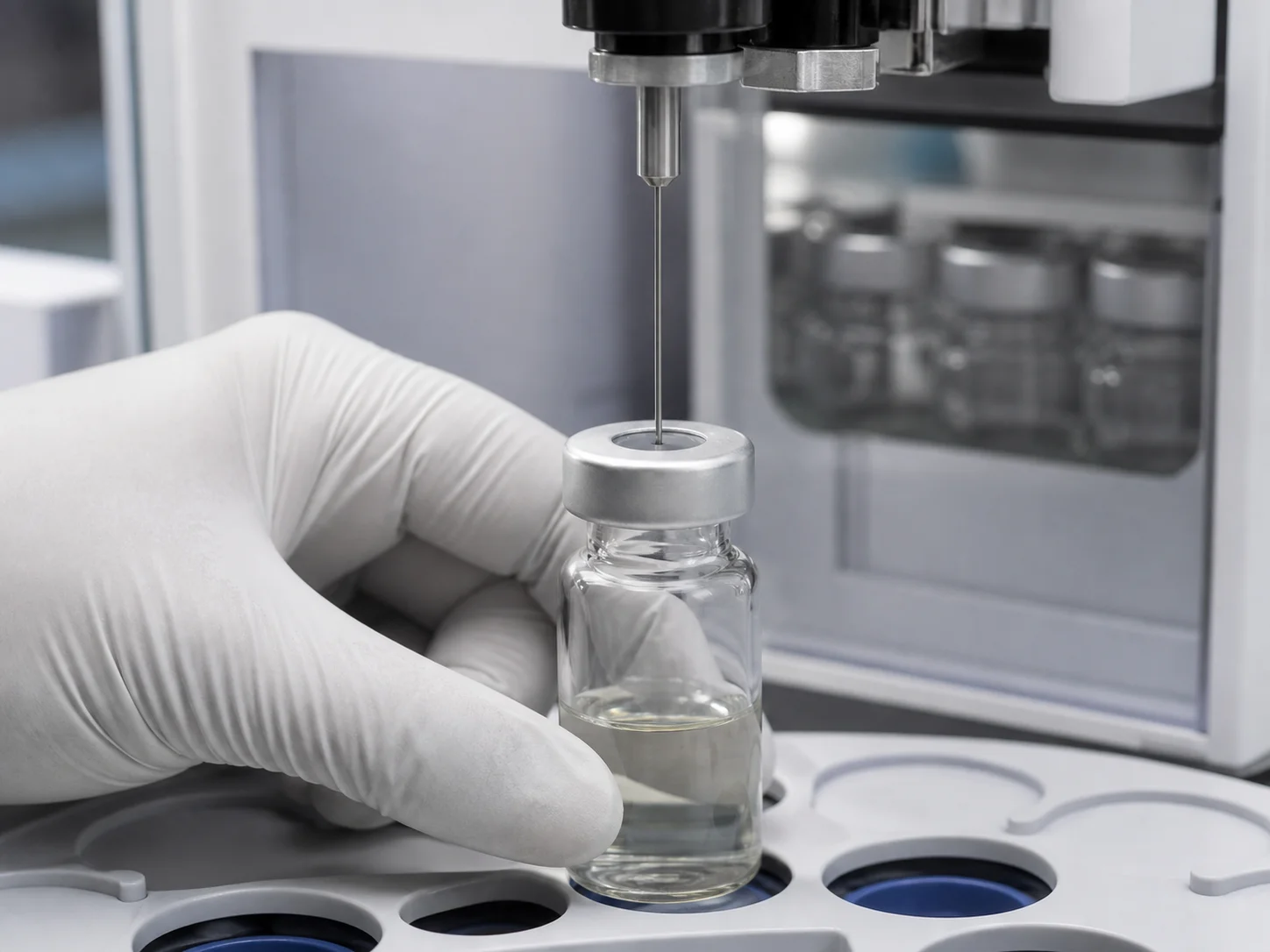
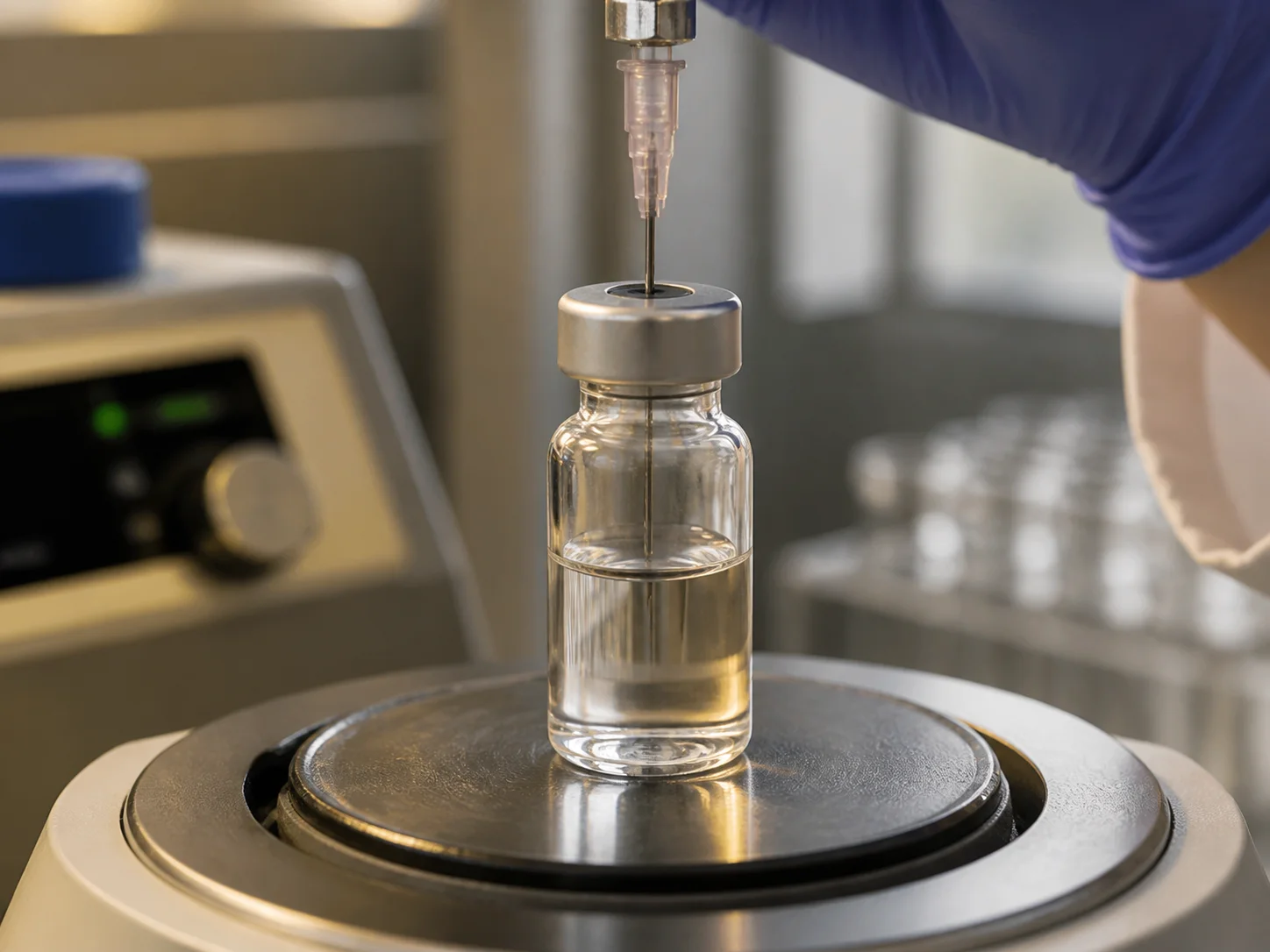
In headspace analysis the sample is sealed in the vial and then held at temperature until the volatiles reach equilibrium with the gas above them. That means the vial is pressurized during the run, that the seal has to hold hot, and that the volume of gas above the sample is part of the measurement rather than an incidental space.
The phase ratio is part of the method
How much sample goes into a 20 mL vial determines the volume of gas above it, and that ratio sets how much analyte partitions into the phase you actually sample. Changing fill volume between samples and standards changes the answer even when everything else is identical, which is why fill volume is written into the method rather than left to whoever prepares the tray.
The crimp bears on a narrow rim, so rim quality matters
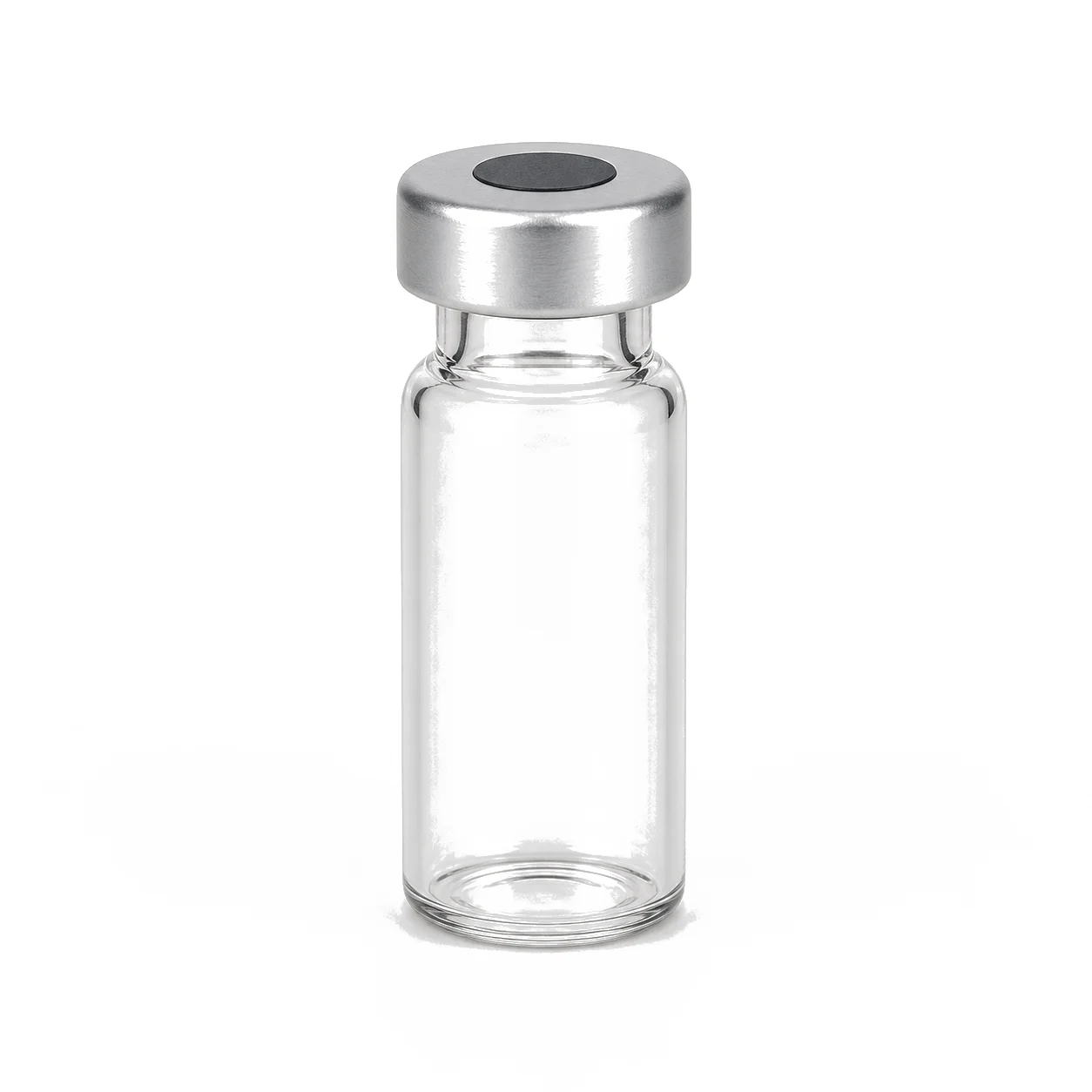
An 18 or 20 mm crimp cap seals a septum against a small ground annulus at the mouth. A rim with a chip, a mold seam or an uneven grind leaves a path that only reveals itself when the vial is hot and pressurized. Headspace vials are therefore a case where inspecting the sealing surface on incoming stock genuinely pays for itself.
A hot vial is a pressurized vial
Thermostatting an aqueous sample at 80 or 90 °C raises the internal pressure well above ambient, and solvent samples raise it further. A poorly crimped cap vents slowly and the result drifts low across a sequence; a badly damaged vial can fail in the oven. Crimping force is set and checked with a gauge rather than judged by the sound of the tool.
Septum choice is a temperature decision first
PTFE-faced silicone handles most work and reseals after the needle. Butyl and other elastomers appear where a specific solvent attacks silicone. What decides the choice is the thermostatting temperature and dwell time: a septum that is fine for a five-minute equilibration can bleed detectable siloxane after forty minutes at 90 °C, and that appears as ghost peaks nobody can source.
Flat bottoms and rounded shoulders are functional
The flat base gives even contact in a heated block or oven tray so the sample reaches temperature predictably, and the rounded shoulder helps the vial release from a gripper. Both are dimensioned to instrument trays, which is why vial geometry is specified to the analyzer rather than chosen by appearance or capacity alone.
Magnetic caps exist for the robot, not the seal
Where an autosampler lifts vials with a magnetic gripper, the cap has a steel disc and the vial format is unchanged. Ordering magnetic caps for a non-magnetic sampler wastes money; ordering plain caps for a magnetic one leaves vials in the tray. It is a small detail that halts an overnight sequence, and it belongs on the order line rather than in someone's memory.