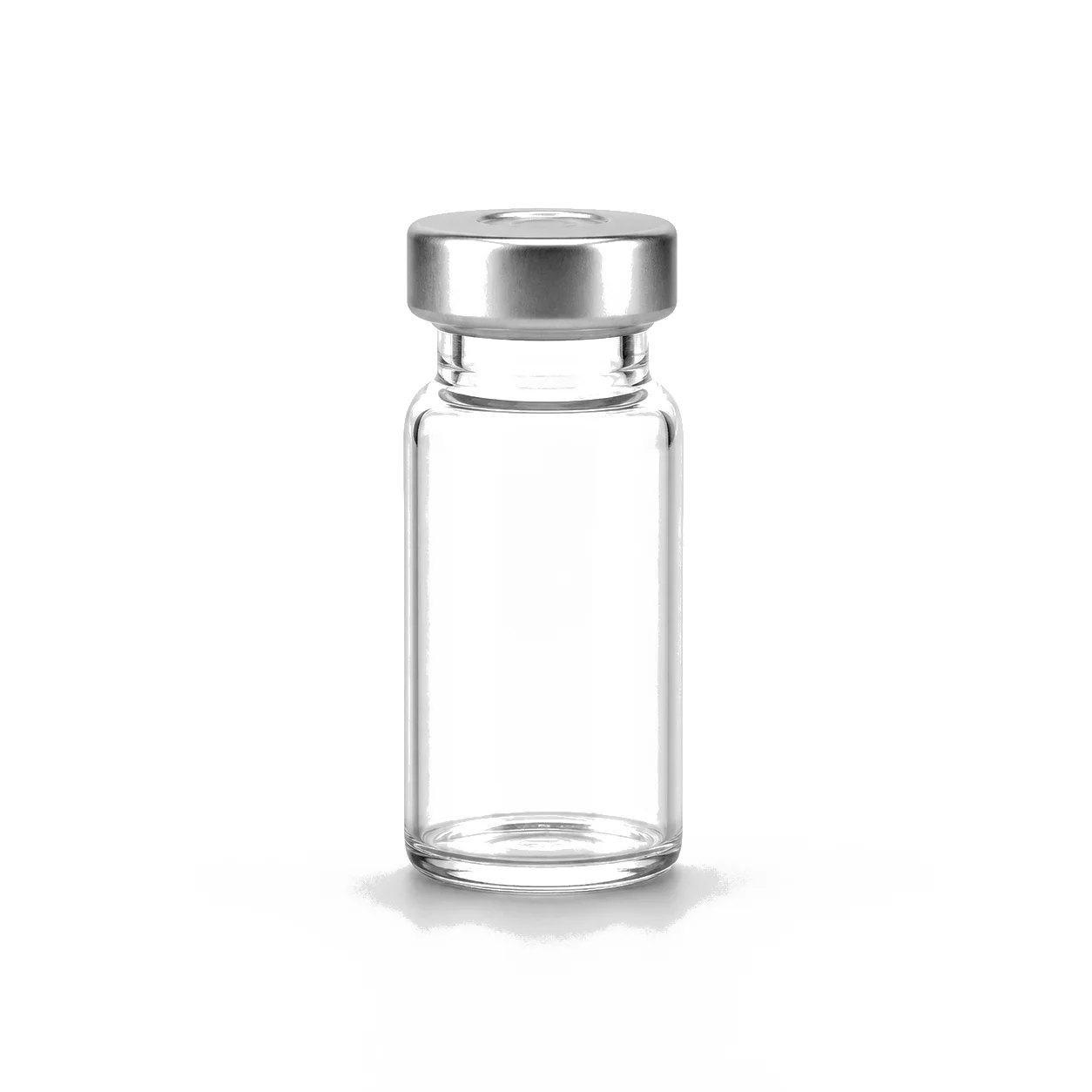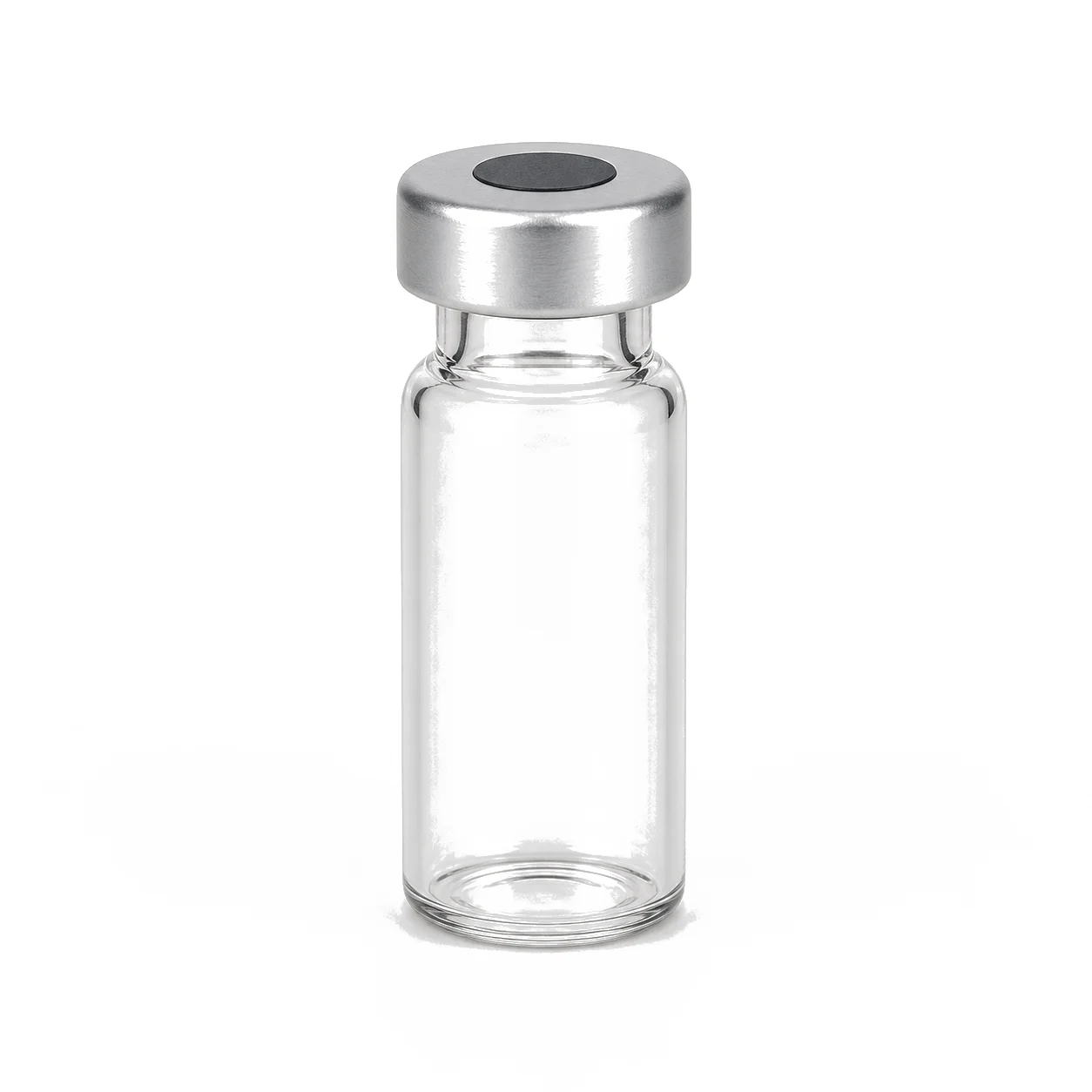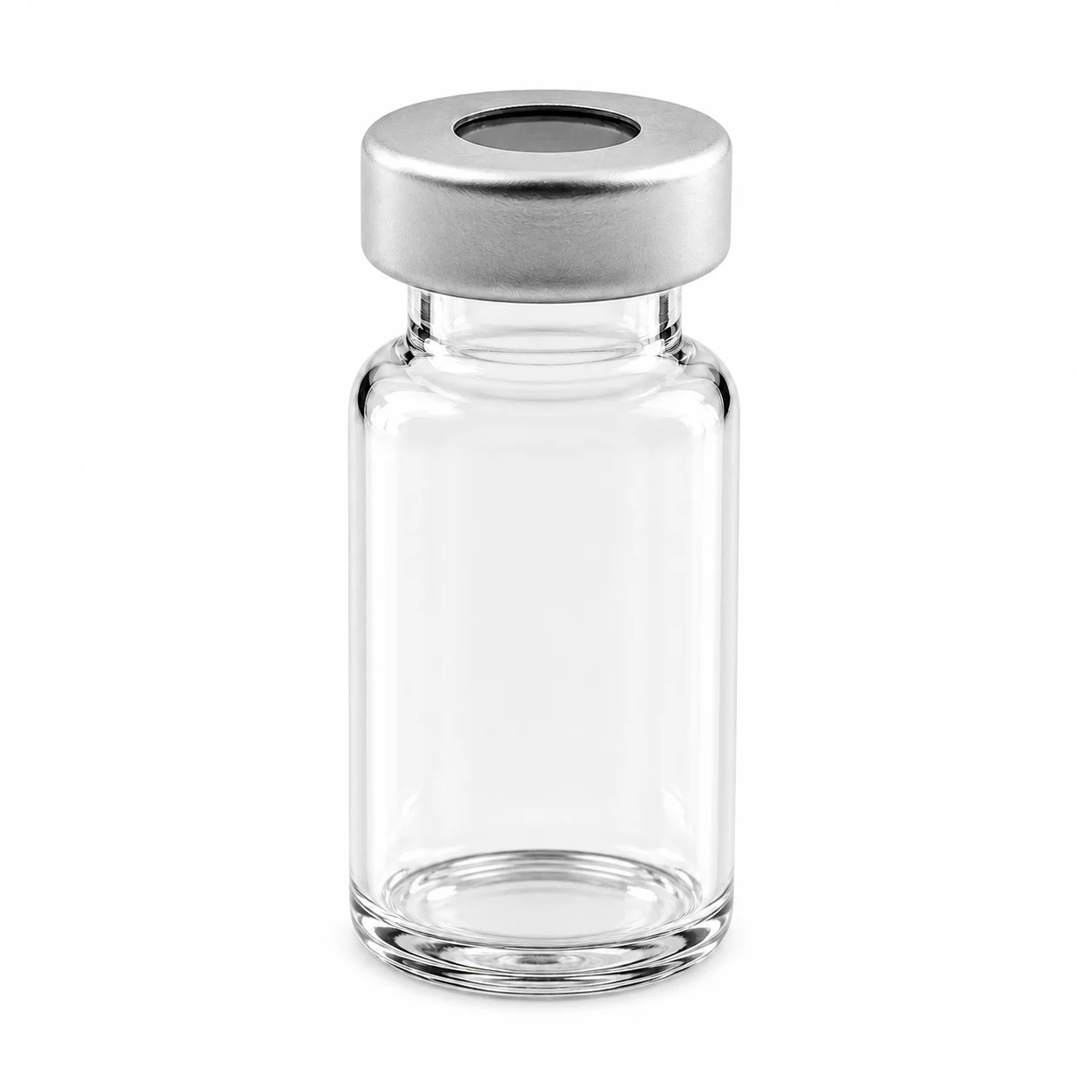
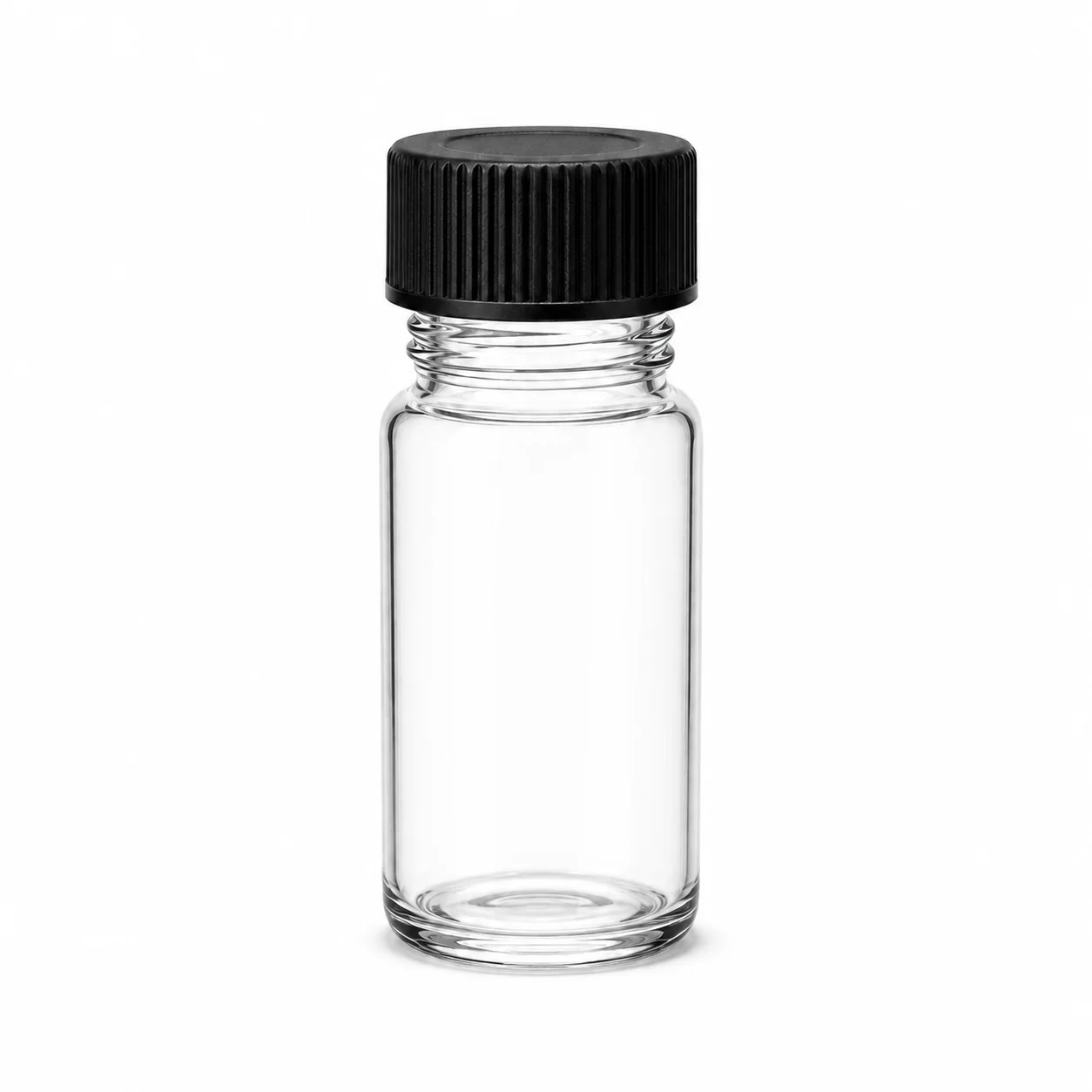
Small clear vial with a visible external thread and a black ribbed screw cap
Shown configuration · vial with cap / liner, septum, sample and label not shown

Sample storage vials

Screw-thread Vial

A threaded storage vial in the 8-425 to 24-400 range, holding 1 mL to about 60 mL, closed with a solid cap or an open-top cap over a septum.

8-425 to 24-400 finishes1–60 mL capacitiesSolid or open-top caps
Stock status
In stock
Lead time
2–3 weeks
FOB price / pc
$0.65 - $0.95
MOQ
10,000 pcs

Final availability, dimensions, materials, assembled components and commercial terms are confirmed against the selected drawing and approved sample.

The liner is the barrier

Cap material rarely touches the sample

Two cap architectures

Solid closure or open-top over a septum

Racks before it ships

Body diameter has to suit your storage

Screw-thread Vial profile

A storage vial is a liner with a glass container attached to it.

Finish sizes, liner selection & long-term storage

Five decisions that decide what is in the vial when it is opened again.

Screw-thread vials hold samples, standards and small volumes of reagent for weeks or years. The glass is inert enough for almost anything; what determines whether the sample survives is the disc inside the cap, the tightness of the thread and whether the vial spends its life somewhere warm. None of that is visible from the outside.

01

Read the finish as diameter plus series

Codes such as 8-425, 13-425, 15-425 and 24-400 give the nominal neck diameter in millimeters followed by a finish series. Vials of the same capacity appear on more than one finish, so ordering caps by capacity is how a laboratory ends up with a box of closures that will not seal. The finish is the number that has to travel between vial and cap.

02

Solid caps and open-top caps do different jobs

A solid cap presses a liner onto the rim and is the right closure for storage. An open-top cap has a hole in the panel so a needle can pass through a septum without removing the closure, which suits sampling and instrument work. Buying open-top caps for pure storage exposes the septum to the atmosphere for no benefit.

03

The liner is where compatibility lives

PTFE-faced liners are the default because the sample sees only fluoropolymer. Rubber and pulp-backed liners cost less and are appropriate for aqueous samples that will be used within days. For anything stored for months, or any solvent, the PTFE face is what keeps liner extractables out of the sample and the sample out of the liner.

04

Long storage is a thermal problem before a chemical one

A vial that seals perfectly on a bench will breathe if it spends nights in a cold store and days in a warm laboratory. Each cycle draws a little air past the liner. Where samples are archived, keeping them at a stable temperature does more for integrity than upgrading the closure, and the two together do more than either alone.

05

Racks, boxes and label area come before the glass

Vial diameter has to suit the racks, freezer boxes and trays already in use, and the straight body panel has to take the label a laboratory actually prints. Both are dimensional decisions that are trivially easy to check before ordering and expensive to discover afterwards, when several thousand vials will not fit the storage they were bought for.

06

Fill volume and needle reach are not the same number

An autosampler needle stops short of the base, so a nominally full vial can still leave sample the instrument cannot draw. Where the available volume is small, a conical insert raises the liquid into the needle path. Working that out before the run is easier than explaining a set of failed injections afterwards.

Application guide

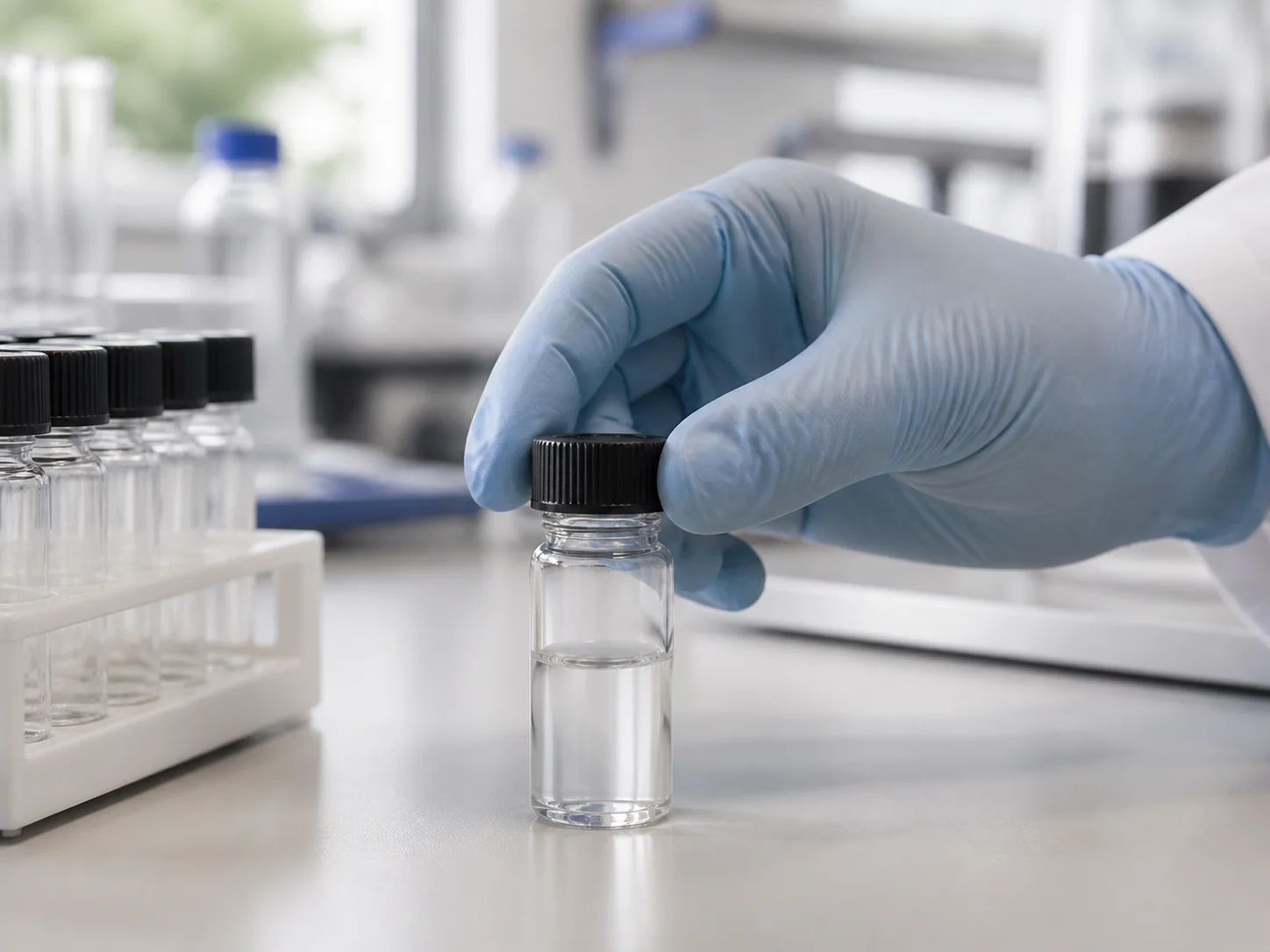
A thread means it can be opened and closed again.

Screw-thread vials trade the absolute seal of a crimped closure for the ability to reopen, which suits samples accessed more than once and laboratories that do not want a crimping tool on the bench. These are development directions confirmed with the actual workflow.

Screw-thread Vial used for vials opened more than once in a repeat access setting

Repeat access

Vials opened more than once

For samples subsampled several times, or standards drawn on repeatedly over a period of weeks. A crimped vial has to be destroyed to open, whereas a threaded cap allows controlled access, provided the seal is re-established properly each time it is closed.

  • Confirm the seal re-establishes on closing
  • Check the septum after repeat piercing
  • Limit the number of accesses
Screw-thread Vial used for closures applied by hand in a no tooling setting

No tooling

Closures applied by hand

Threaded vials need no crimper, which removes a tool, a training requirement and a common source of inconsistent seals from the workflow. The trade is that torque applied by hand varies between people, and torque is what makes the seal.

  • Standardize the closing torque
  • Confirm hand-applied seals are adequate
  • Brief staff on consistent closing
Screw-thread Vial used for peaks an analyst cannot account for in a unexplained blanks setting

Unexplained blanks

Peaks an analyst cannot account for

For the afternoon someone spends chasing a contaminant that turns out to have come from the septum rather than the sample. That disc is what the liquid actually touches and what a needle pierces, so its material is chosen against the analytes in the method and confirmed by running the blanks.

  • Select the liner for the analytes
  • Confirm piercing behavior if required
  • Watch for extractables in blanks

Applications describe workflow directions. Sample suitability, closure integrity and laboratory outcomes are confirmed for the selected program.

Common questions

Screw-thread Vial questions

Vial storage failures divide into the wrong finish, the wrong liner and the wrong shelf.

Why will our caps not seal on vials of the same capacity?

Because capacity does not identify a finish. Codes such as 13-425 and 15-425 give the neck diameter and a finish series, and vials of one volume are made on more than one finish. Order caps against the finish code rather than the volume; it is the number that has to match between the two halves of the closure.

Which liner should we specify?

PTFE-faced for anything stored more than a few days or containing solvent, because the sample then only ever touches fluoropolymer. Rubber and pulp-backed liners are cheaper and fine for aqueous samples used within the week. The liner is where compatibility actually lives — the glass is inert to almost everything you are likely to put in it.

Does vial diameter matter?

More than most orders allow for. The body has to sit in the racks, freezer boxes and trays you already own, and the straight panel has to take the label your laboratory prints. Both are easy to check against a sample and expensive to find out afterwards, when several thousand vials will not fit the storage bought for them.

Is the fill volume the same as the needle reach?

No, and confusing them costs injections. A vial can hold enough sample and still leave the level below where the needle draws, particularly with an insert. Check the needle depth against the actual fill rather than against the vial capacity.

Next step

Send us the Screw-thread Vial brief.

Tell us the product, fill volume, closure preference and destination market. We will come back with the matching drawings, available configurations and a sample plan before anything is quoted.

  • 01Send the briefProduct, volume, closure and market
  • 02Get the optionsMatching drawings and configurations
  • 03Approve the sampleConfirm the pack before production