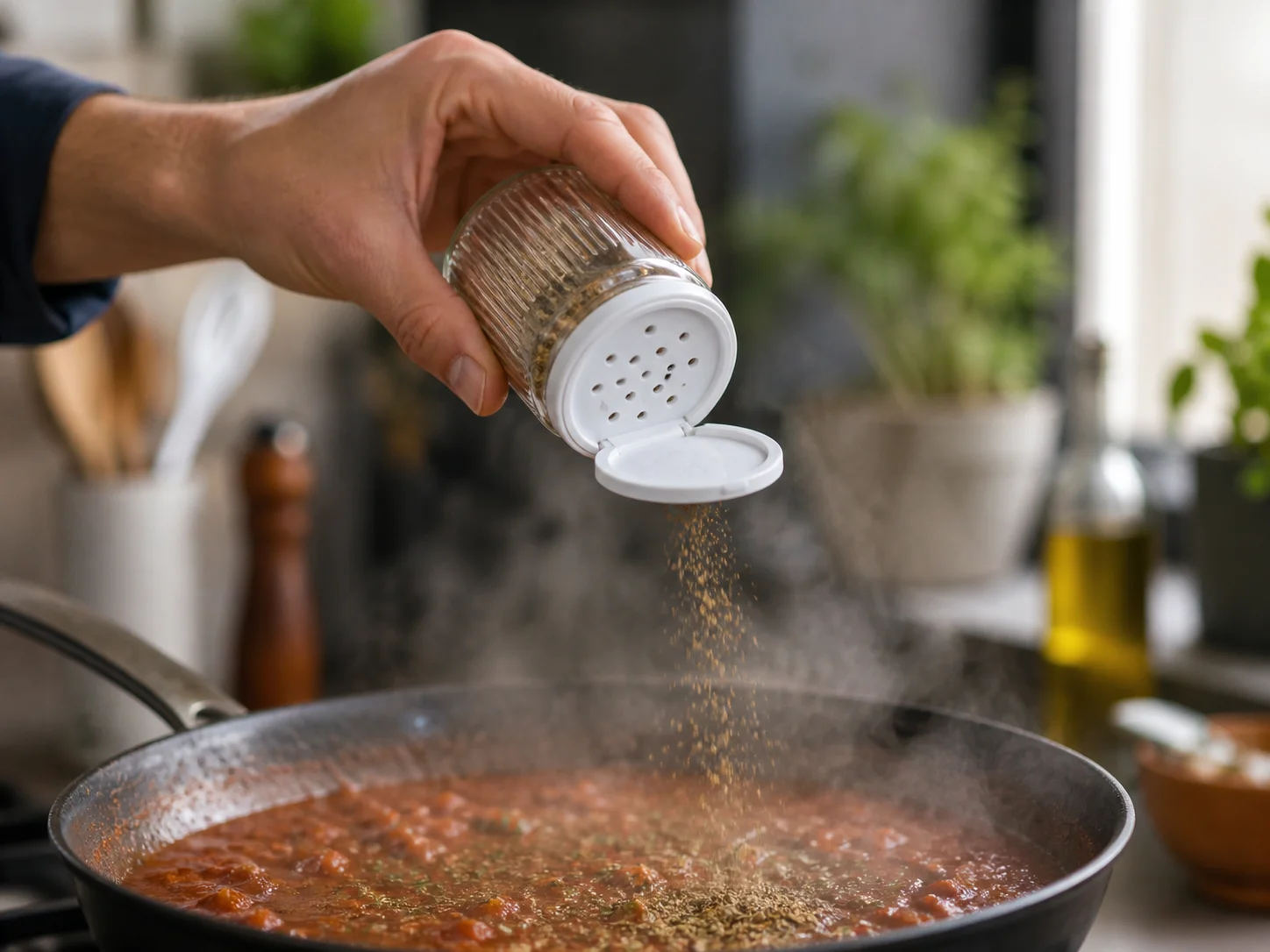
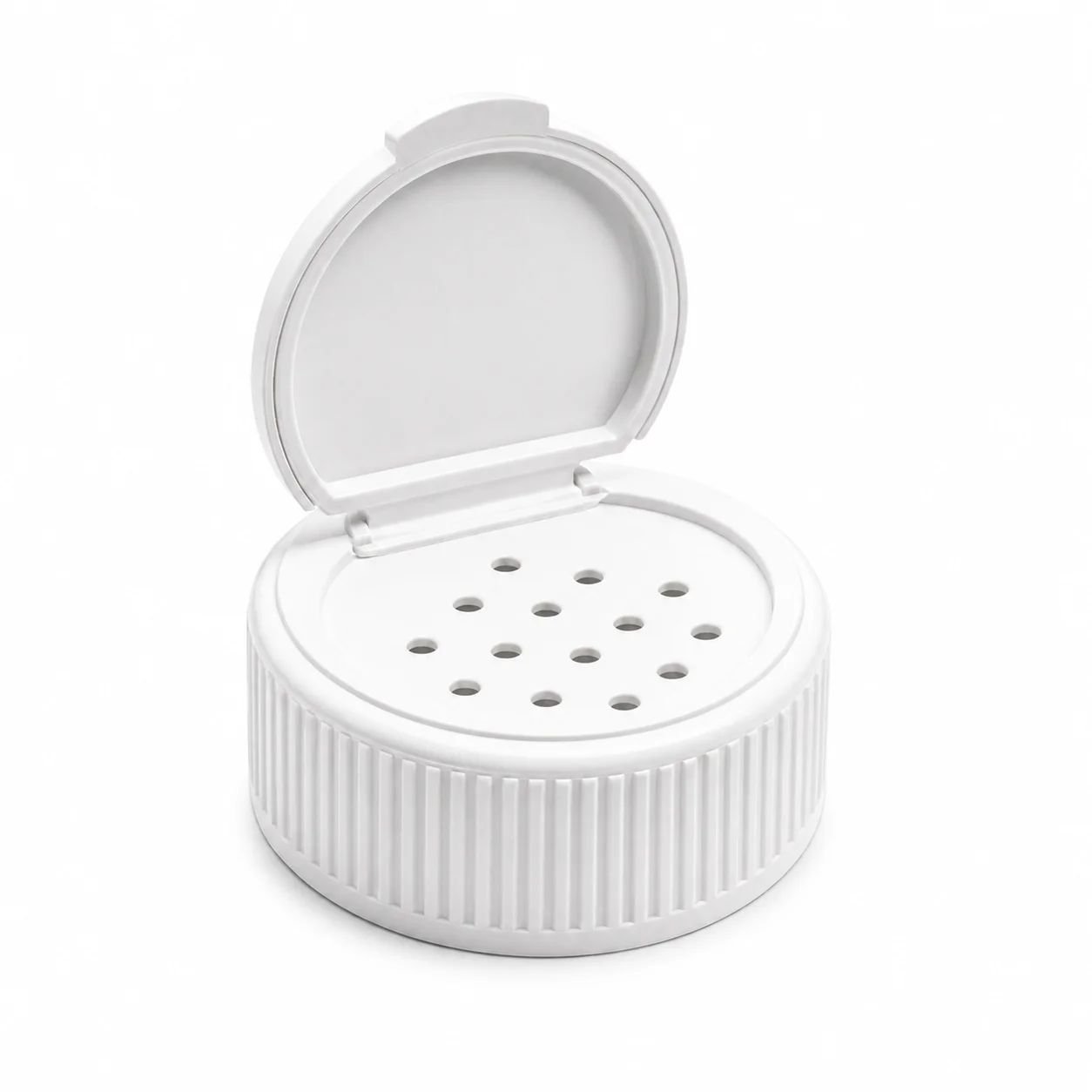
White ribbed spice cap with the hinged flapper door swung open, showing the perforated deck beneath
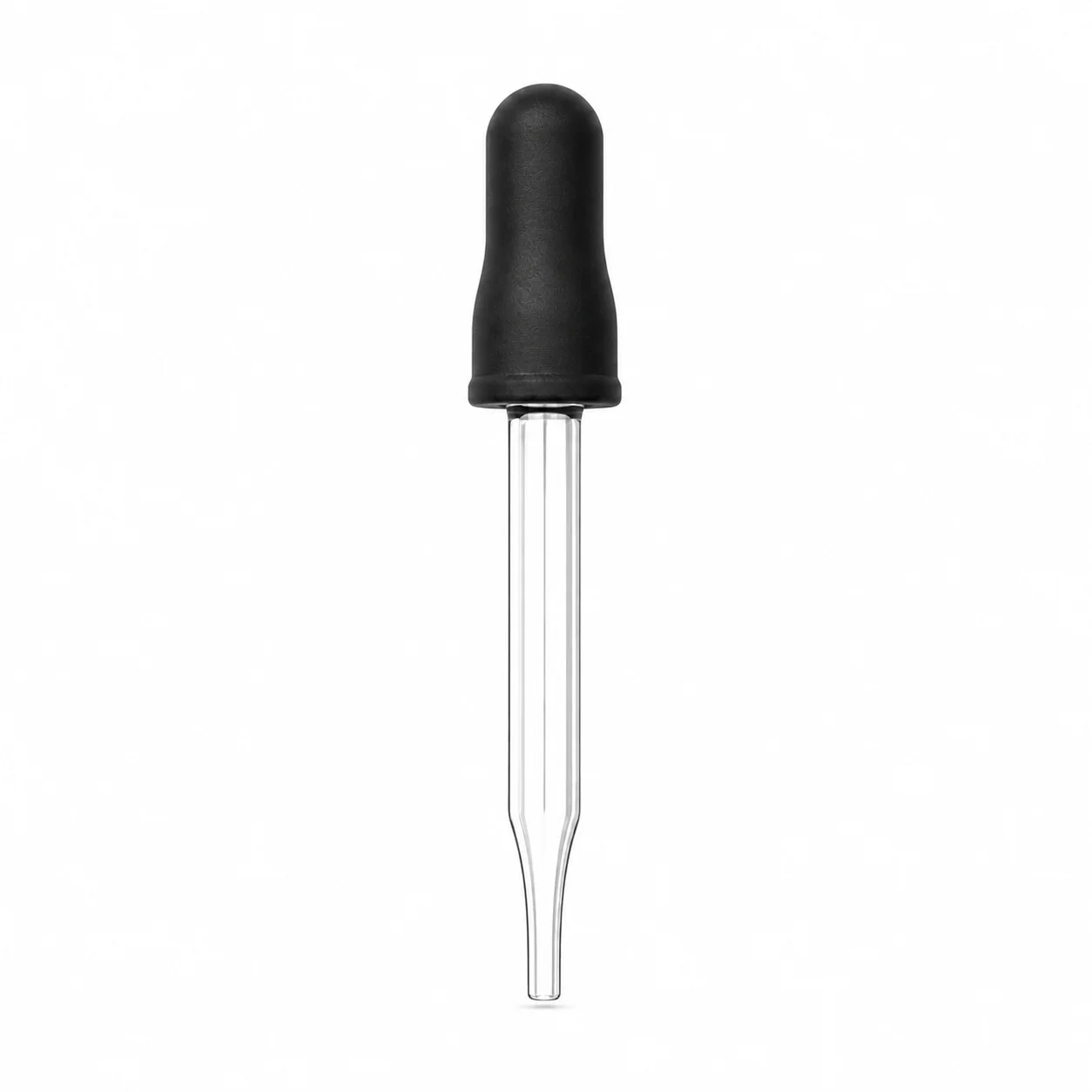
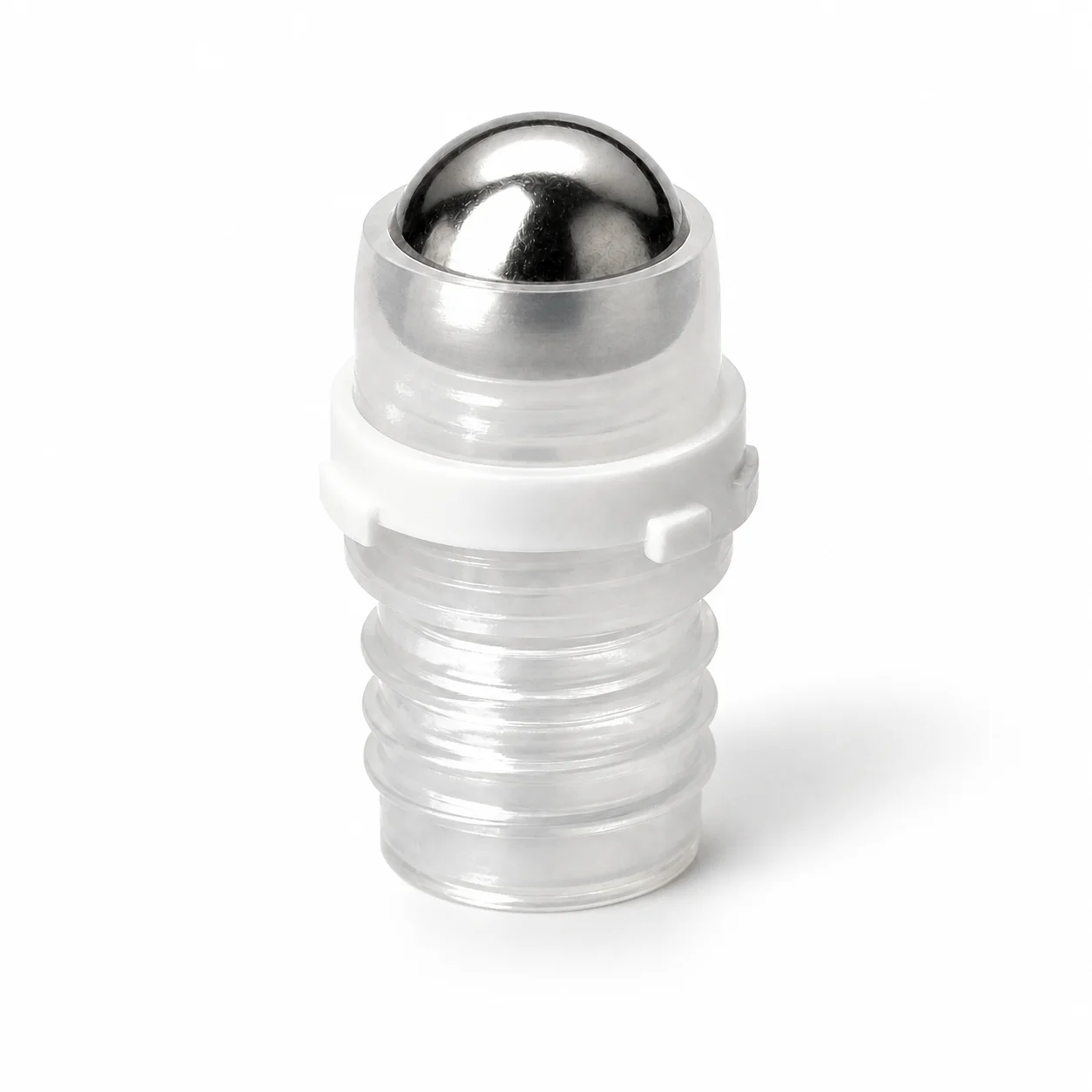
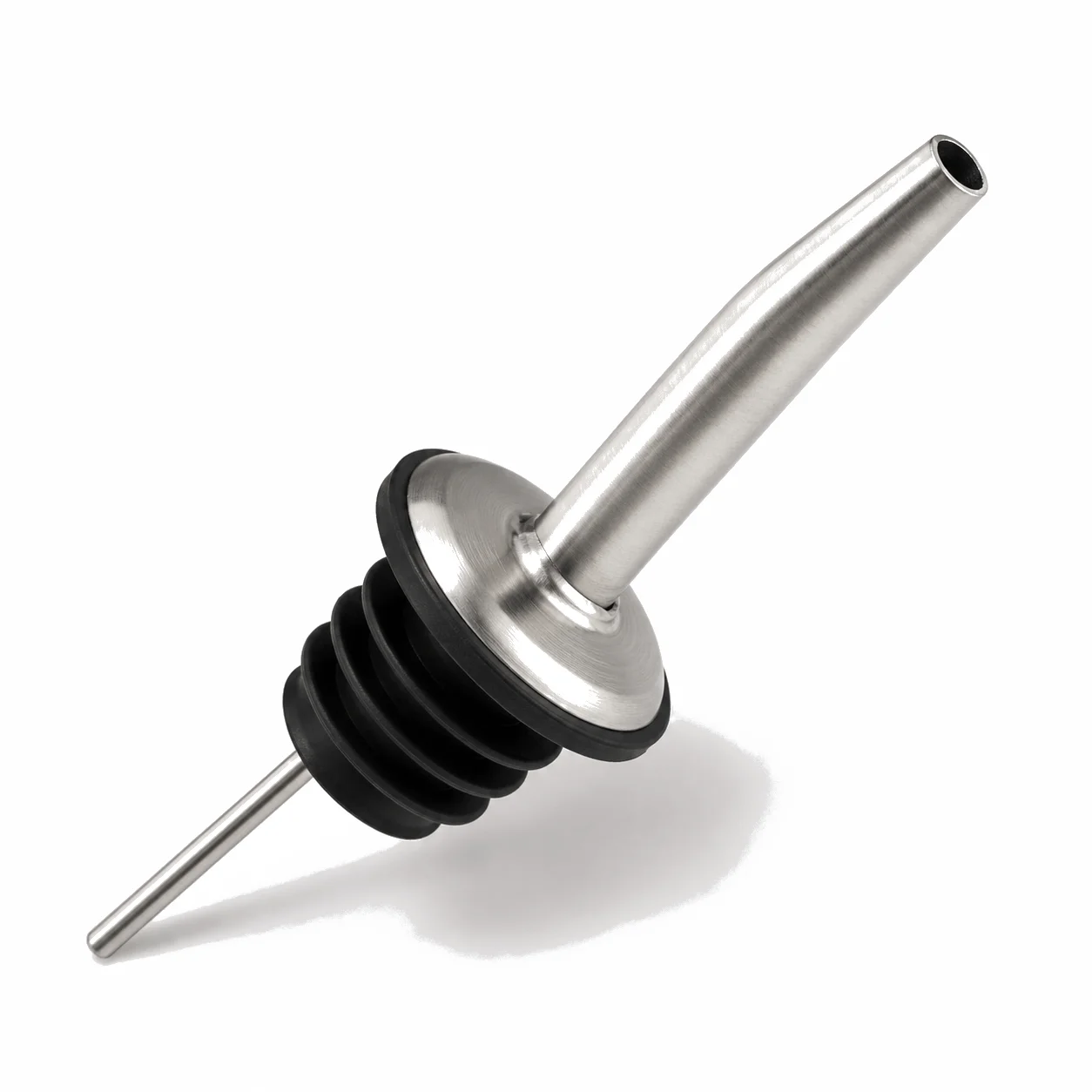
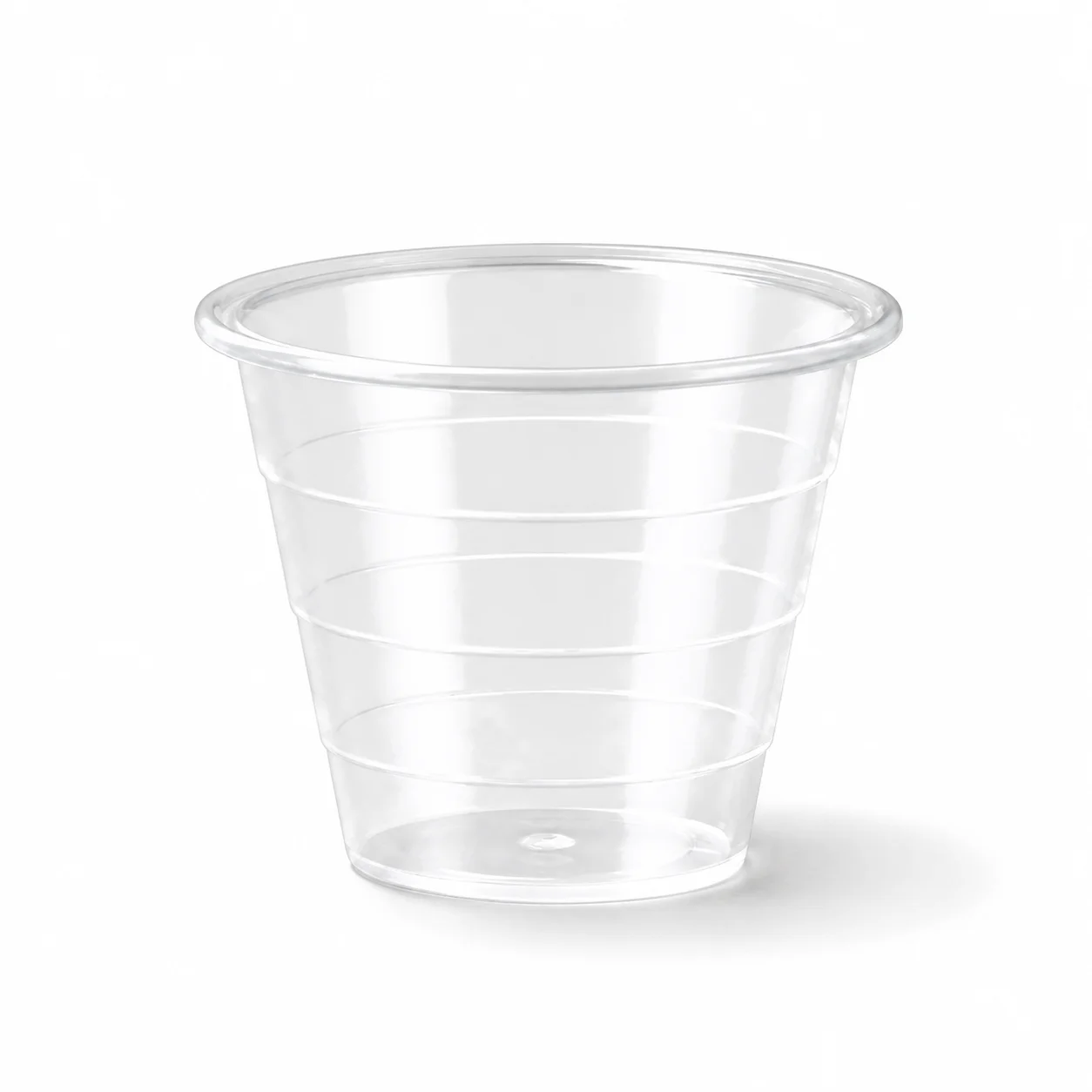
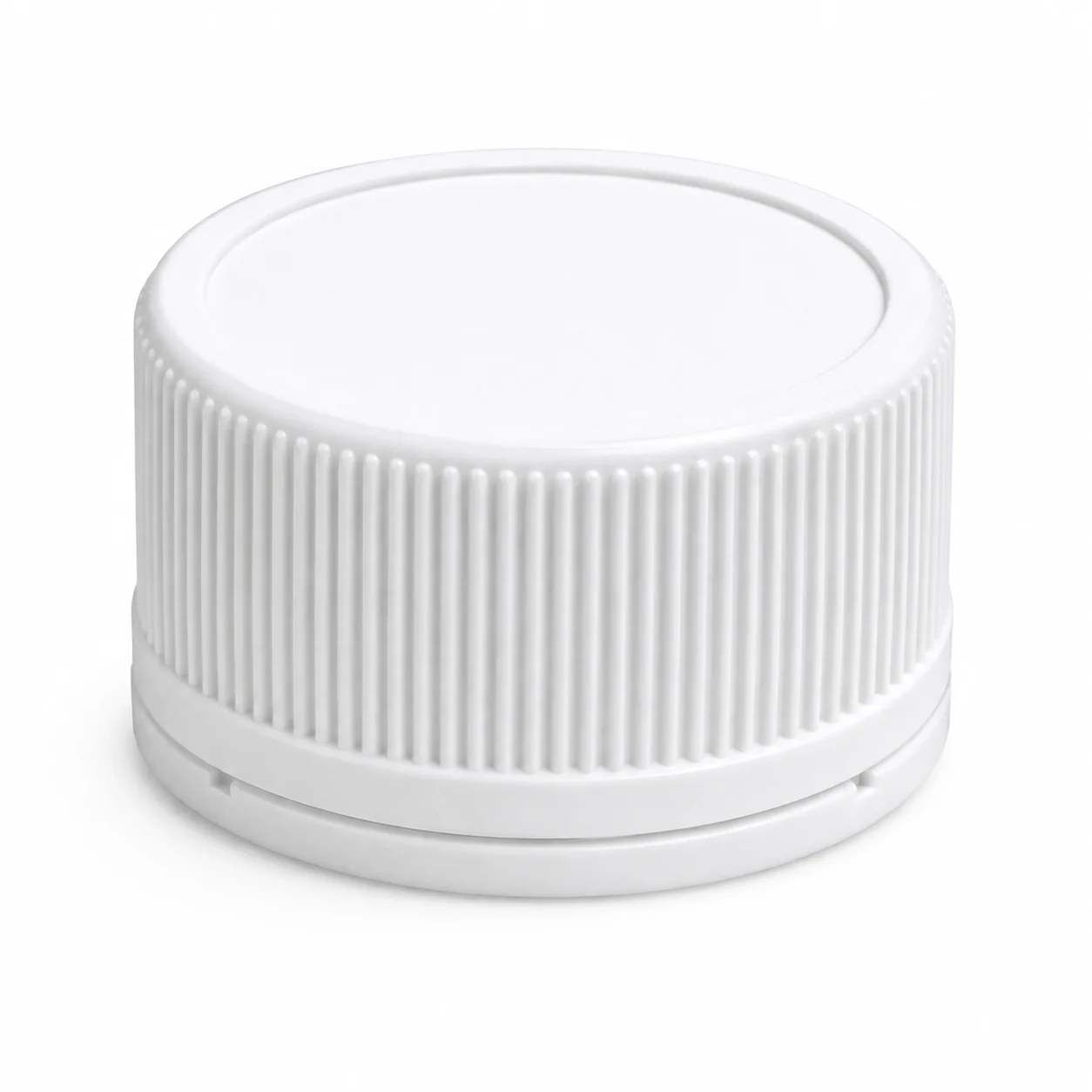
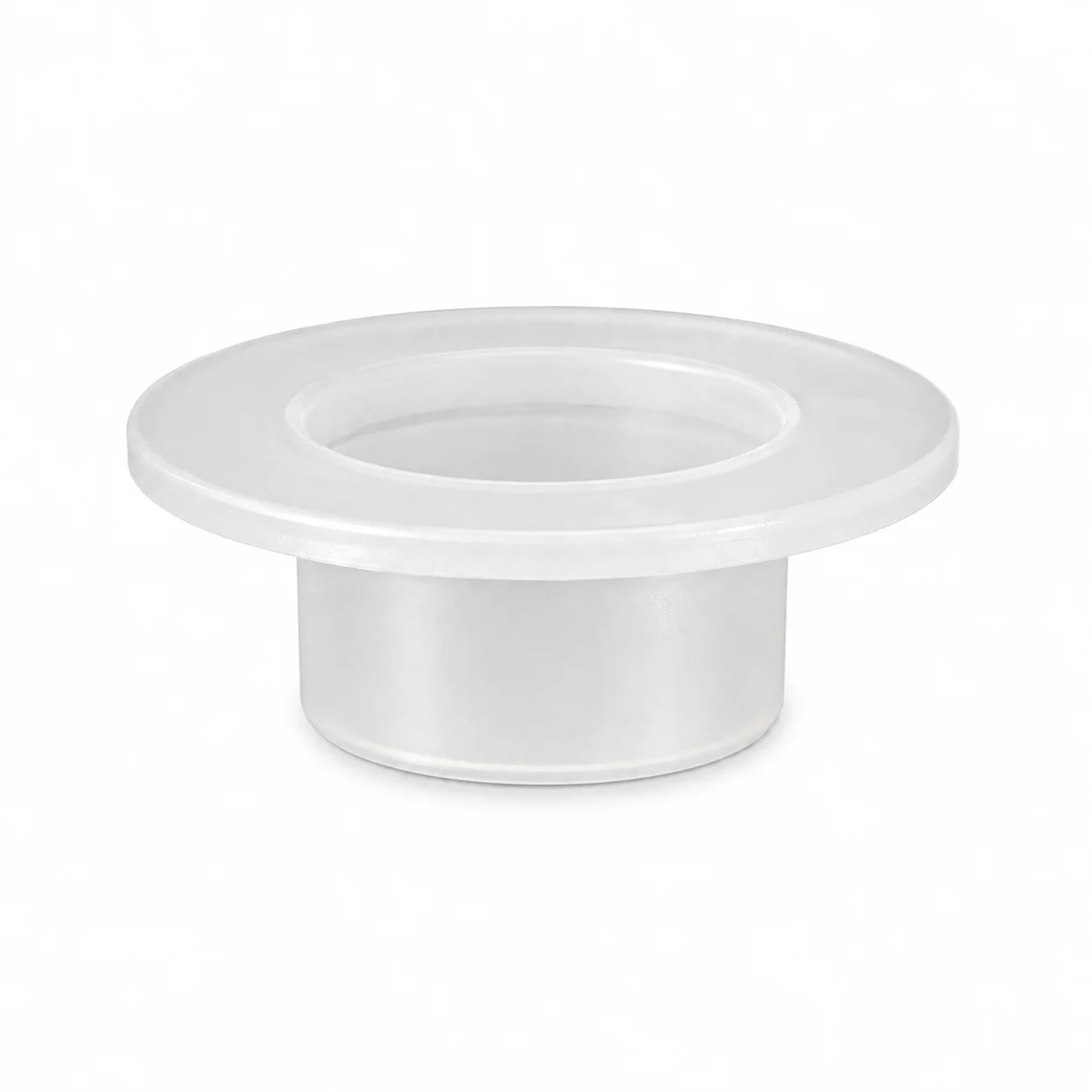
Shown configuration · cap with door open / jar, liner and separate sifter fitment not shown

Spice & dry-product dispensing

Shaker Cap

A flapper spice cap on the 485 finish, molded in polypropylene with a hinged door over a perforated deck for salt, herbs, flakes and ground spice.

43-485 and 48-485Three, five or eleven holesHinged flapper door
Stock status
In stock
Lead time
2–3 weeks
FOB price / pc
$0.50 - $0.80
MOQ
2,000 pcs

Final availability, dimensions, materials, assembled components and commercial terms are confirmed against the selected drawing and approved sample.

Two ways to serve

Shake through holes or open a spoon aperture

Fitment or one-piece

Deck molded in, or a separate sifter under a plain cap

Foam liner available

Pressure-sensitive discs for shipping and shelf

Shaker Cap profile

The hole pattern is a recipe decision made in a mold shop.

The 485 finish, hole patterns & sifter fitments

Why spice jars use a finish of their own, and what to fix before tooling.

A shaker cap is a threaded closure carrying a perforated deck and a hinged door. Everything a customer notices about it — whether oregano falls out freely, whether salt clumps behind the holes, whether the door stays shut in a drawer — is set by the hole count, the deck geometry and the 485 finish it threads onto.

01

The 485 finish exists to carry a deck

Spice closures run on 43-485 and 48-485 rather than the 400 or 410 series used elsewhere. The 485 finish gives a shallow thread and a wide, flat land, because the cap has to support a perforated deck and a door hinge rather than just compress a liner. A 43-400 jar and a 43-485 jar look interchangeable across a table and are not.

02

Count the holes against the grind, not the spice

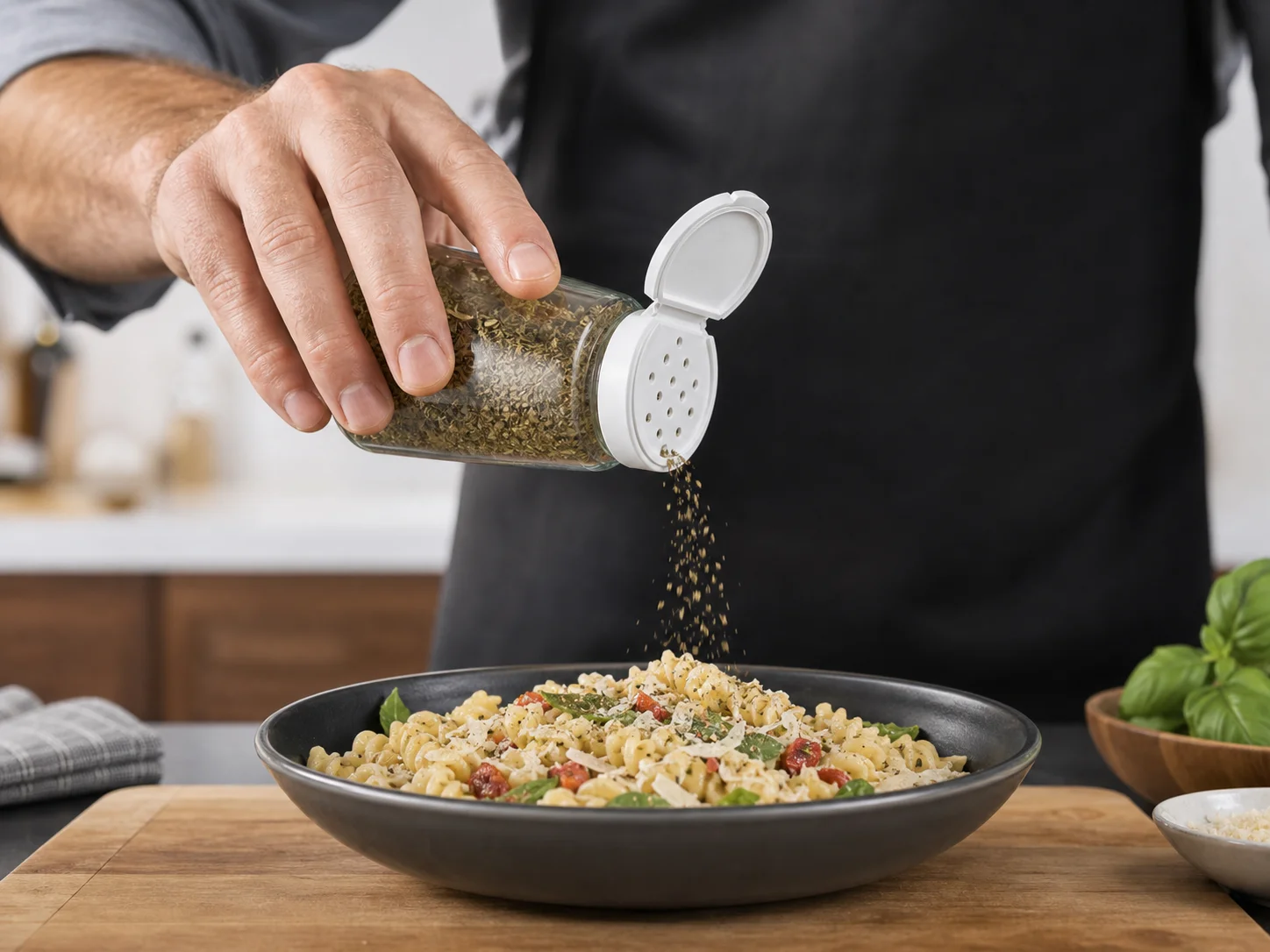
The same cap suits fine table salt and cracked pepper very differently. Three large holes pass flakes and coarse grinds that would bridge over an eleven-hole deck; eleven small holes meter fine powders that would pour out of three. Since most brands run several grinds through one jar, the practical answer is to sample the coarsest and the finest product through the same deck.

03

Decide between an integral deck and a separate fitment

One-piece caps mold the deck and door together, which is cheaper per unit and quicker to apply. A separate sifter fitment snaps into the jar finish under a plain cap, which lets one cap serve several hole patterns and lets the fitment be changed without new closure tooling. Line speed favors the first; a broad product range usually favors the second.

04

The door has to survive a drawer, not a laboratory

Flapper hinges are opened with a thumbnail while the other hand holds a pan, then thrown into a drawer where other jars press on them. What fails is rarely the hinge web itself but the catch that holds the door closed, which wears until the door drifts open and the contents empty into the drawer. Catch retention is worth cycling with the door loaded sideways.

05

Line a spice cap only when the pack needs it

Pressure-sensitive foam discs are available and give a sealed pack for shipping, but the customer removes and discards the disc on first use, after which the deck alone stands between the spice and the air. Where aroma retention matters over months rather than weeks, the useful barrier is the jar and an induction membrane below the cap, not the shaker deck.

06

Expect powders to find the hinge

Ground spice migrates into the hinge slot and the door seat, where it packs down and stops the door seating flush. Decks with a raised land around the perforations and a door that closes onto that land rather than onto the flat panel keep the seat clear for longer. It is a detail that shows up only after a jar has been used for a few weeks.
Application guide

The hole pattern decides how much comes out.

A shaker cap is defined by its perforations: their size, count and layout determine whether a single shake seasons a dish or ruins it. Everything else about the cap is secondary. These are development directions confirmed with the actual product.

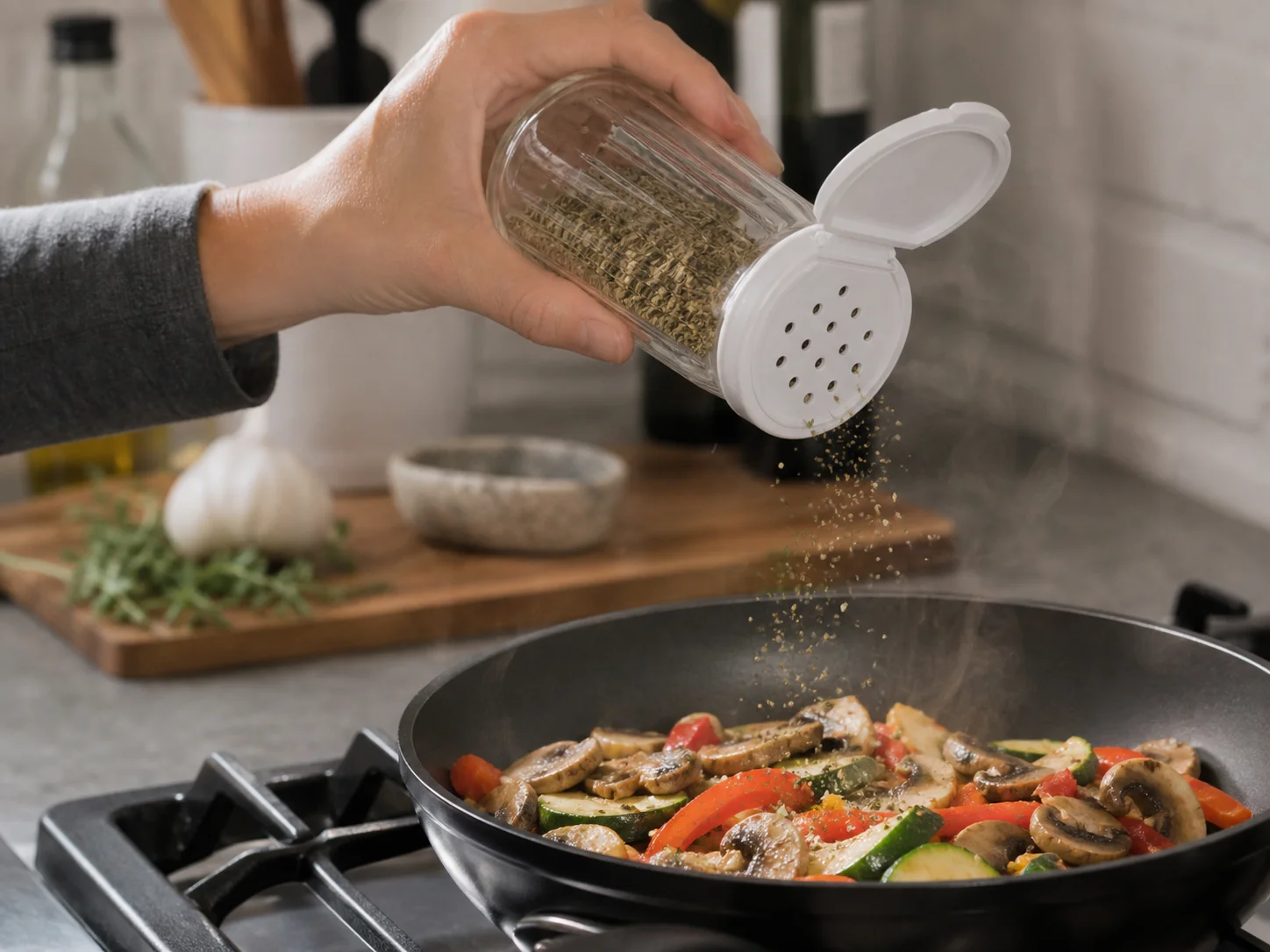
Shaker Cap used for spices shaken over food while cooking in a kitchen seasoning setting

Kitchen seasoning

Spices shaken over food while cooking

For a jar picked up one-handed over a pan and shaken two or three times. Hole size has to suit the particular grind, since a pattern that works for fine salt lets a coarse pepper jam and one sized for flakes dumps powder in a heap.

  • Match hole size to the grind
  • Test two or three shakes over a pan
  • Confirm coarse product does not jam
Shaker Cap used for a cover opened and closed constantly in a hinged lid setting

Hinged lid

A cover opened and closed constantly

The flip cover is operated every time the jar is used, often with greasy fingers, and the hinge is the part that fails first. Cycle life, whether the lid stays open while shaking and whether it clicks shut reliably all matter more than appearance.

  • Cycle the hinge to assess wear
  • Confirm the lid stays open when shaking
  • Check it closes securely with greasy hands
Shaker Cap used for seasoning shaken into rising steam in a over a hot pan setting

Over a hot pan

Seasoning shaken into rising steam

For the cook who holds a shaker directly over something simmering, which is where steam gets into the holes and where damp powder starts to cake. Whether the cover keeps that out between uses, and whether the jar needs a liner in the cupboard, decides how long the product stays usable.

  • Test the cover against kitchen steam
  • Confirm powder does not cake
  • Consider a liner for storage

Applications describe package-development directions. Flow, portioning, closure performance and regulatory outcomes are confirmed for the selected program.

Common questions

Shaker Cap questions

The questions that decide a spice closure before any artwork is drawn.

How many holes should the deck have?

Take it from the coarsest and the finest product that will go into the jar rather than from the spice name. Three large holes let flakes and cracked grinds through that would bridge over eleven small ones; eleven small holes meter fine powders that would flood out of three. Most brands run several grinds through one closure, so sample both extremes on the same deck.

Integral deck or a separate sifter fitment?

A one-piece cap molds the deck and door together, costs less per unit and applies faster. A snap-in fitment sits in the jar finish under a plain cap, so one closure can serve several hole patterns and a pattern change needs no new cap tooling. A single high-volume product favors the one-piece; a broad range usually favors the fitment.

Why does the door stop closing properly after a few weeks?

Ground spice works its way into the hinge slot and the door seat, packs down, and holds the door a fraction proud. Decks that raise a land around the perforations, with the door closing onto that land rather than onto the flat panel, keep the seat clear far longer. Cycle a filled jar for a few weeks before signing off on a hinge design.

How should the flip door be tested?

In a drawer, not on a bench. The door is opened one-handed while cooking and then slid about among other jars, so the qualification has to cover repeated use plus abrasion rather than a clean cycle count on a rig. Test it the way the kitchen will.

Next step

Send us the Shaker Cap brief.

Tell us the product, fill volume, closure preference and destination market. We will come back with the matching drawings, available configurations and a sample plan before anything is quoted.

  • 01Send the briefProduct, volume, closure and market
  • 02Get the optionsMatching drawings and configurations
  • 03Approve the sampleConfirm the pack before production