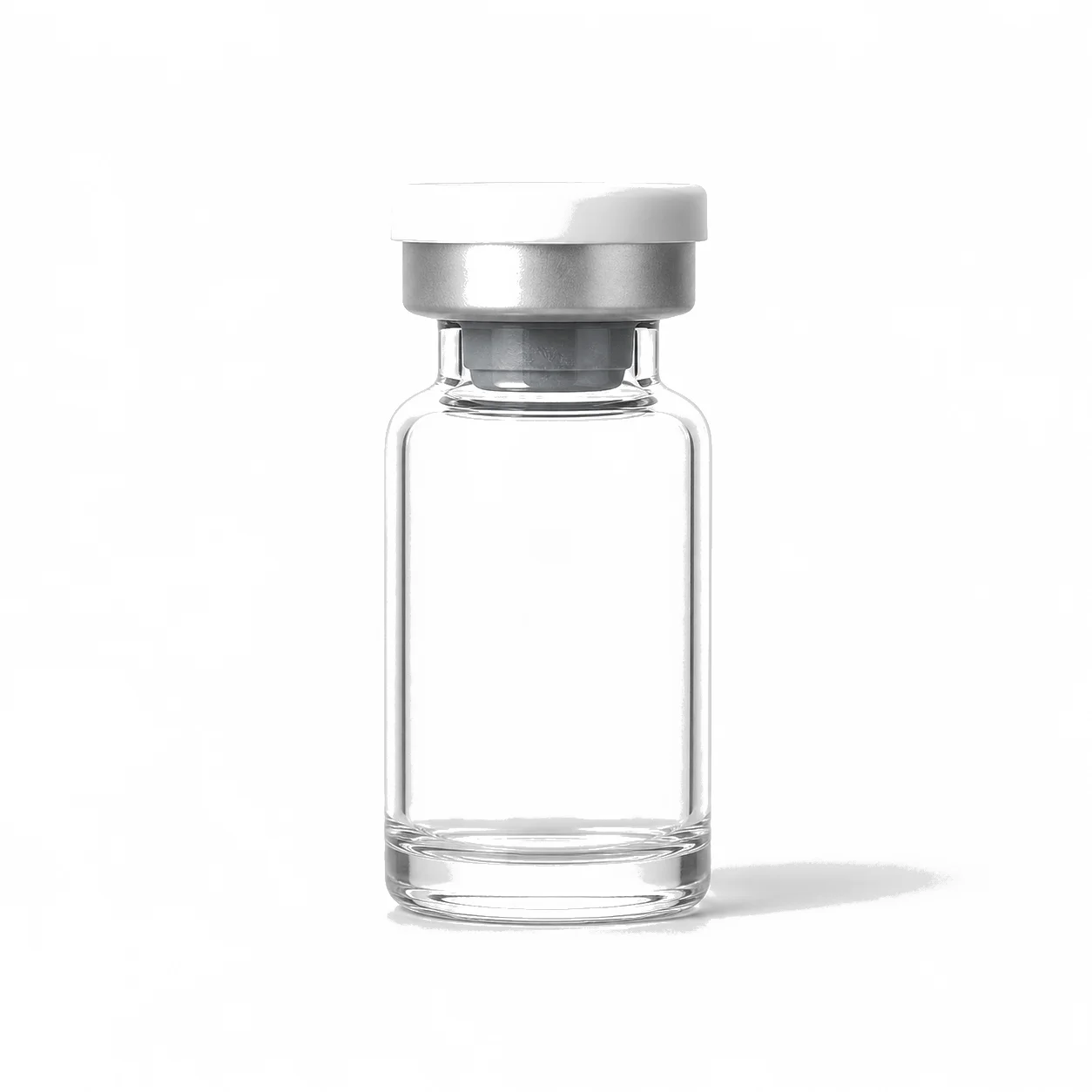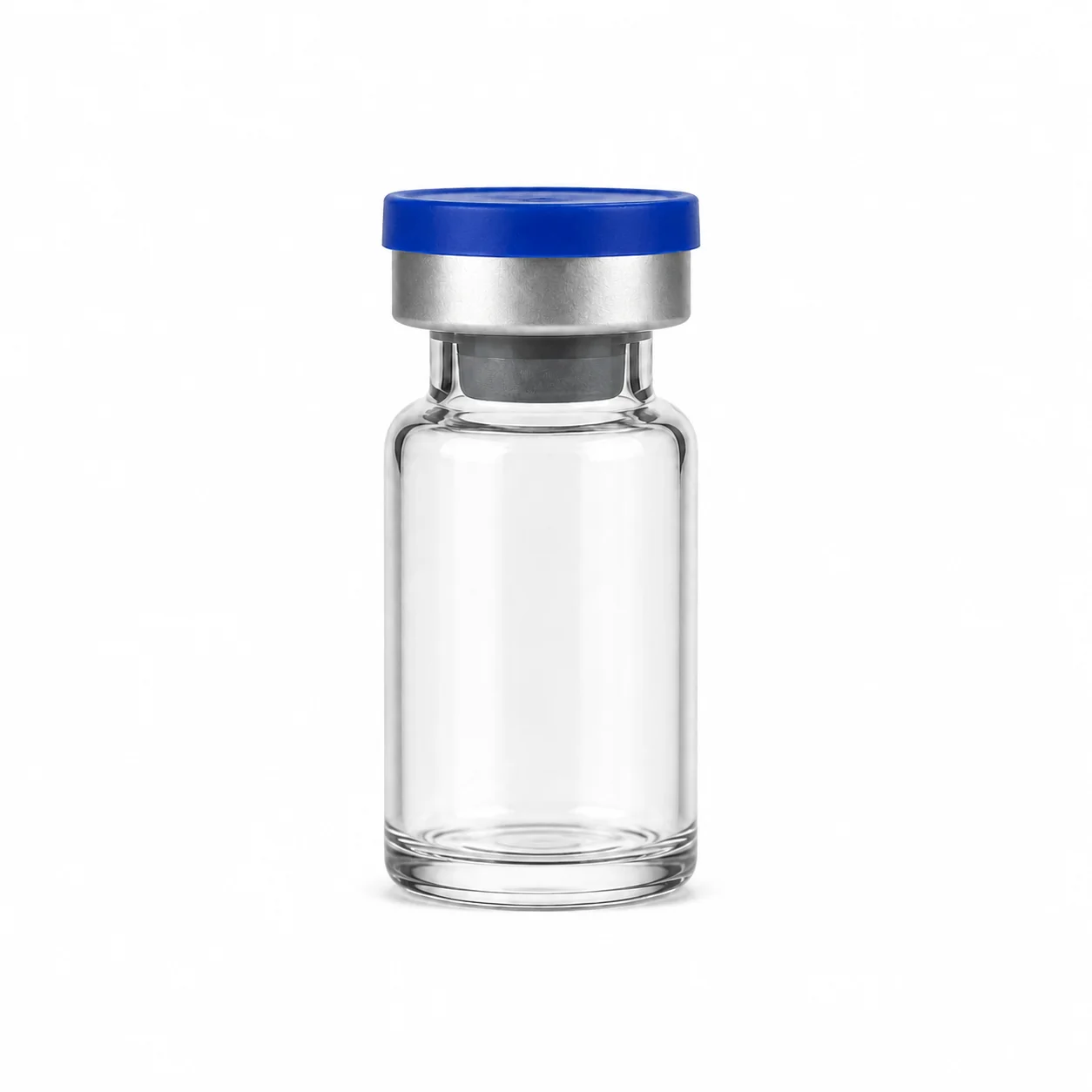
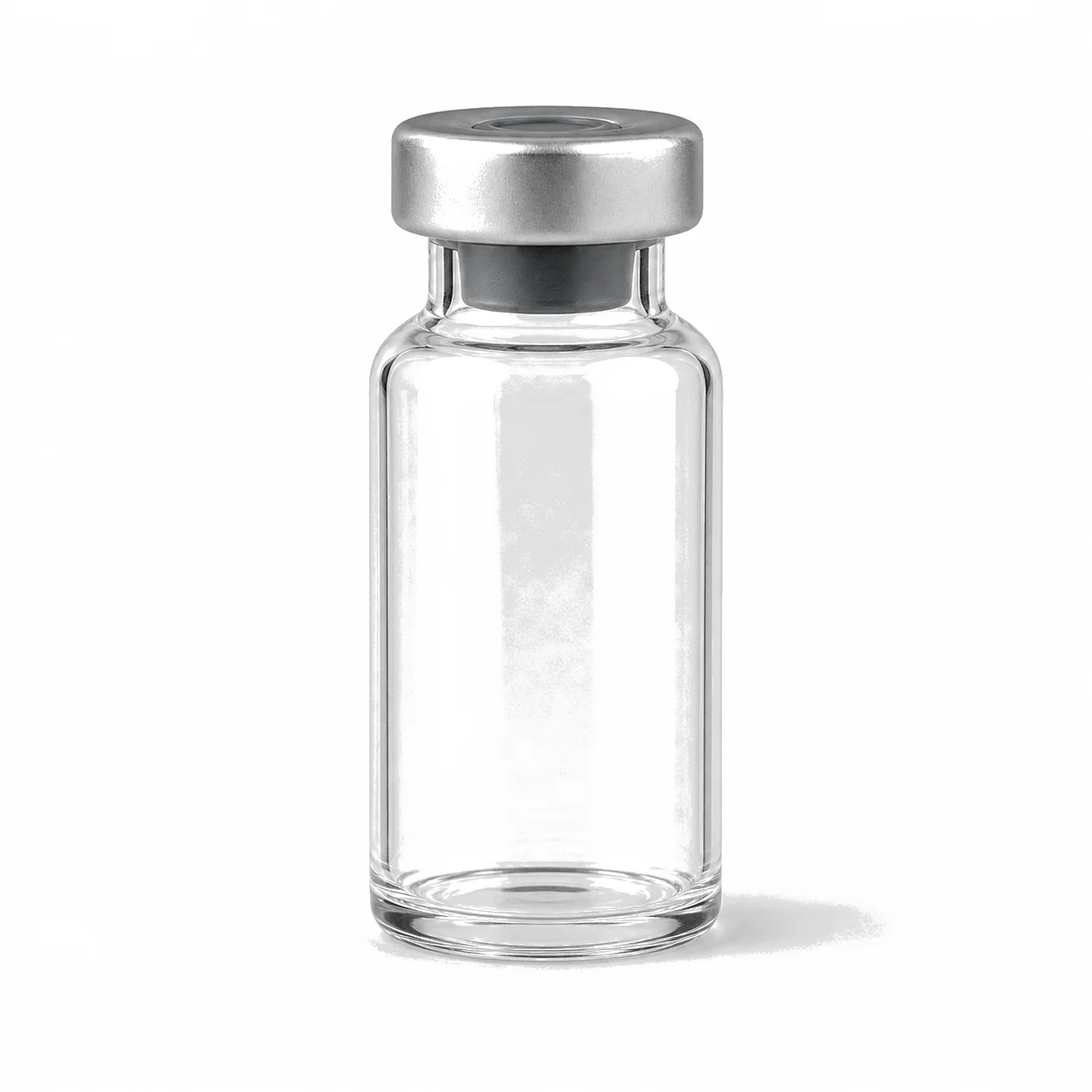
Straight-walled clear vial with a gray stopper held by a crimped silver seal
Shown configuration · vial with stopper and seal / product, label and flip cap not shown

Injection containers

Injection Bottle

A multi-dose injection vial closed by a rubber stopper under a crimped aluminum seal, so a needle can enter repeatedly and the closure reseals behind it.

Stopper plus aluminum sealRepeated needle entry13 mm and 20 mm finishes
Stock status
In stock
Lead time
2–3 weeks
FOB price / pc
$0.75 - $1.10
MOQ
10,000 pcs

Final availability, dimensions, materials, assembled components and commercial terms are confirmed against the selected drawing and approved sample.

Three parts, one closure

Glass, stopper and seal qualified together

Reseals after every entry

Elastomer closes behind the needle

Coring is the failure to watch

Fragments cut from the stopper face

Injection Bottle profile

The vial is the easy part. The closure system is where the qualification work lives.

Closure integrity, coring & multi-dose use

Five aspects of a container that is opened many times on purpose.

A multi-dose vial is glass, an elastomeric stopper and an aluminum seal that holds the two together under permanent compression. It has to stay sterile through repeated needle entries, resist moisture and gas exchange for a shelf life, and give up none of its own chemistry into the product. Only one of those three components is glass.

01

The crimp supplies the sealing force, permanently

An aluminum seal is rolled over the stopper flange and the glass finish, compressing the elastomer against the sealing surface for the life of the product. Crimp force is set on the actual vial and verified by residual seal force, because a loose crimp lets the stopper relax over months and a tight one distorts the flange and can crack the finish.

02

Coring is a stopper and needle problem together

Each needle entry can cut a small disc from the septum face and carry it into the product. Stopper formulation, septum thickness, needle gauge and bevel, and the angle of entry all contribute. It is tested by repeated penetration on the actual combination, and it is one of the reasons a multi-dose closure is qualified rather than selected from a catalog.

03

Multi-dose implies a preservative decision

A container entered several times over days needs antimicrobial protection that a single-dose ampoule does not, which brings preservative compatibility into the packaging conversation. Preservatives are also among the substances most prone to sorption into elastomers, so the stopper can quietly reduce the concentration that protects the product across a shelf life.

04

Elastomer choice is a moisture and extractables balance

Bromobutyl and chlorobutyl formulations resist moisture transmission and give low extractables, which is why they dominate injectable closures. Coatings and laminated barrier films go further where a molecule is particularly sensitive. Every one of those choices changes the stopper's mechanical behavior on the line, so the closure is selected with the filling equipment in view.

05

Flip caps are a use feature, not a seal

The colored plastic disc over the seal keeps the septum clean and identifies the product, and it removes with a thumb to expose the stopper for wiping. It contributes nothing to container closure integrity. Treating an intact flip cap as evidence that a vial is sealed is a misreading that shows up in complaint investigations more often than it should.

06

Stopper seating is checked before the crimp goes on

A stopper sitting proud, cocked or on a fragment of glass will crimp down to something that looks correct and leaks. Inline detection of stopper position before capping is where this is caught, because after the crimp there is no external sign of the fault at all.

Application guide

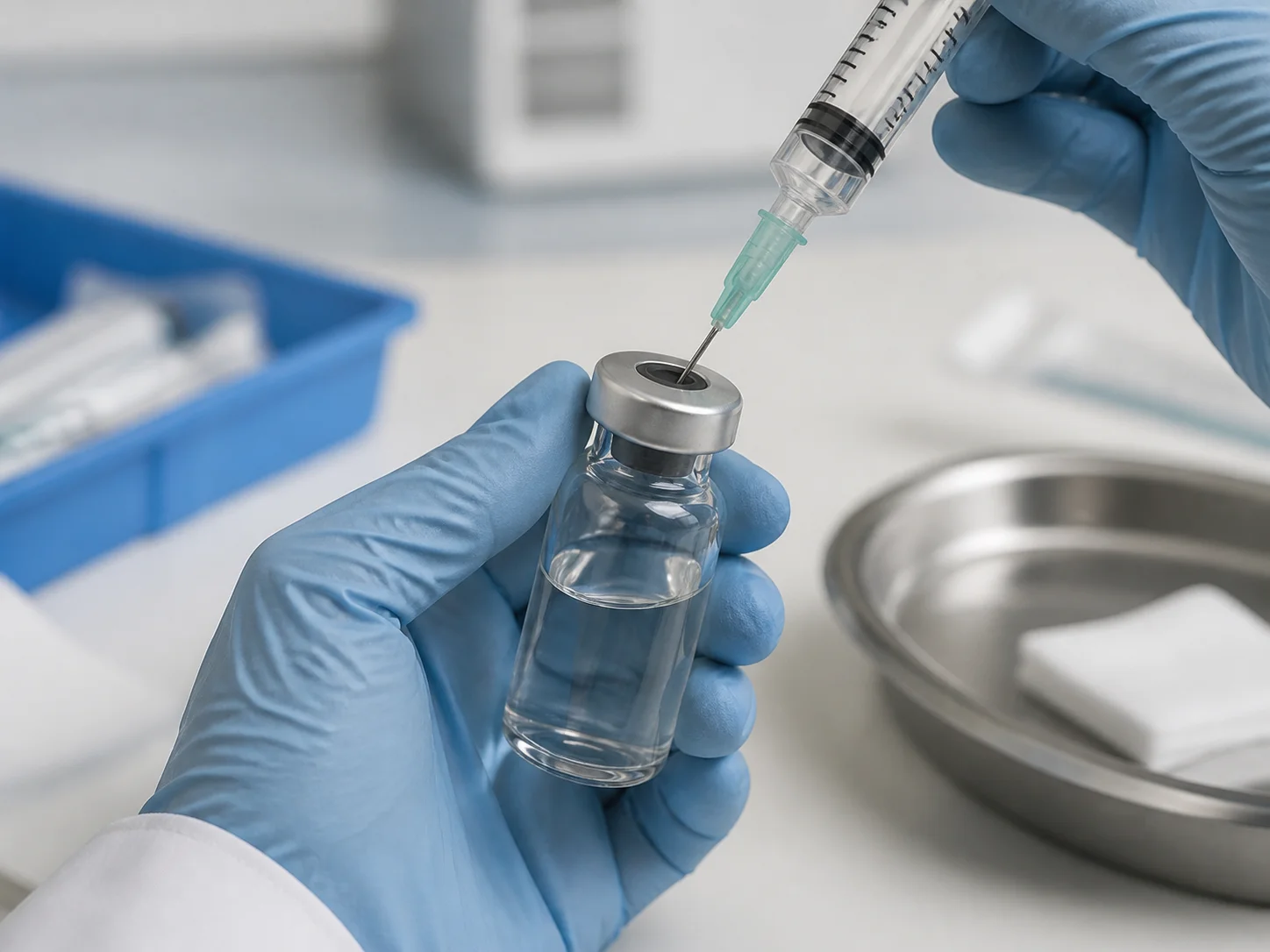
A needle goes through this closure and has to reseal behind it.

An injection vial is defined by what happens at the septum: a needle penetrates, product is withdrawn and the closure has to close again without shedding fragments into the liquid. These are development directions confirmed with the qualified process.

Injection Bottle used for vials accessed with a syringe in a parenteral products setting

Parenteral products

Vials accessed with a syringe

For products drawn up by a clinician immediately before administration, where the vial may be entered once or several times depending on the presentation. The stopper has to reseal after each penetration, and coring that drops rubber fragments into the product is the failure this interface exists to prevent.

  • Test the septum for coring
  • Confirm resealing after penetration
  • Match the stopper to the needle gauge
Injection Bottle used for a setting an operator is not free to adjust in a sterile suites setting

Sterile suites

A setting an operator is not free to adjust

For the crimping station at the end of an aseptic line, where the aluminum seal has to hold a stopper against glass for years. Too loose and integrity is gone; too tight and the finish cracks under the collar, so the setting is qualified and locked rather than nudged by whoever is on shift.

  • Qualify the crimp force setting
  • Inspect finishes after crimping
  • Confirm compression holds over time
Injection Bottle used for vials pulled and inspected years later in a stability shelves setting

Stability shelves

Vials pulled and inspected years later

For the samples an analyst takes down at twelve, twenty-four and thirty-six months and holds against a light looking for flakes. The product has been in contact with the inner wall the whole time, so glass type and surface treatment are chosen against that formulation and its pH, not against category habit.

  • Select glass against the formulation pH
  • Monitor for delamination over time
  • Confirm particulate limits are met

Applications describe development directions. Injection suitability, sterility, integrity, dose and regulatory outcomes are confirmed for the selected program.

Common questions

Injection Bottle questions

Multi-dose containers are qualified as systems. These questions are the system's weak points.

How do we control coring?

By testing the actual combination. Each needle entry can cut a disc from the septum face and carry it into the product, and stopper formulation, septum thickness, needle gauge, bevel and entry angle all contribute. Repeated-penetration testing on the vial, stopper and needle you will use is the only meaningful assessment; catalog data does not transfer.

Does multi-dose mean we need a preservative?

Generally yes, since a container entered repeatedly over days needs antimicrobial protection a single-dose ampoule does not. That brings a packaging consequence with it: preservatives are among the substances most readily sorbed into elastomers, so the stopper can lower the protective concentration across shelf life. It is assessed on stored samples rather than assumed.

Which stopper elastomer should we specify?

Bromobutyl or chlorobutyl for most injectables, because they resist moisture transmission and give low extractables. Coated and laminated barrier stoppers go further for particularly sensitive molecules. Each of those choices alters how the stopper behaves on the filling line, so the closure is chosen with the equipment represented rather than on chemistry alone.

What has to be checked before crimping?

Stopper seating. A stopper that is not fully home cannot be corrected by a harder crimp, and the fault is hidden once the cap is on. Verify seating in line before the crimping station rather than testing for it afterwards.

Next step

Send us the Injection Bottle brief.

Tell us the product, fill volume, closure preference and destination market. We will come back with the matching drawings, available configurations and a sample plan before anything is quoted.

  • 01Send the briefProduct, volume, closure and market
  • 02Get the optionsMatching drawings and configurations
  • 03Approve the sampleConfirm the pack before production