Field limits, carriers & the conical tip
Six rules that keep glass tubes out of the rotor wall.
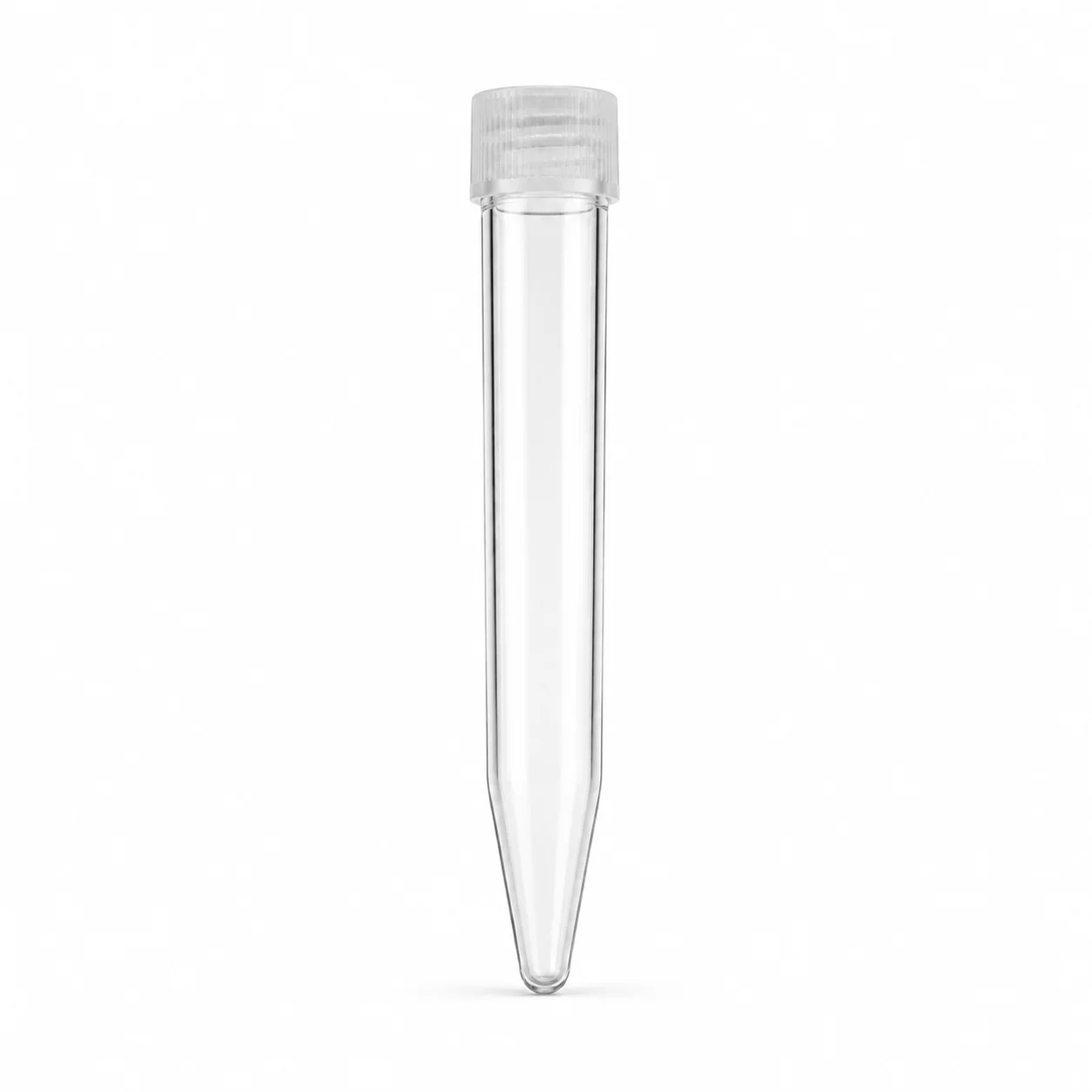
A centrifuge tube spends its working life under a load that no other laboratory vessel sees. The conical tip concentrates a pellet where it can be read and drawn off; the heavy wall and the cushioned carrier are what let glass survive the field. Getting the field, the carrier and the balance right is the whole discipline.
Relative centrifugal field, not rpm, is the number that matters
The load on a tube depends on rotational speed and on radius, so the same rpm in two rotors produces very different forces. Tube ratings are given as relative centrifugal field for that reason. A method quoting rpm alone is only meaningful with the rotor named alongside it, and transferring such a method between instruments is a routine way to break glassware.
Glass tubes are rated well below plastic ones
Polypropylene conical tubes are commonly rated to fields that glass cannot approach. Glass is chosen instead for optical clarity, for solvent resistance and where a sample must not touch plastic, and it is accepted that the speed ceiling comes down. Substituting glass into a protocol written for plastic, at the same field, is a predictable failure.
The carrier does as much as the tube
A glass tube must sit in a cup that supports its full length with a cushion at the bottom, so the load transfers into the carrier rather than onto the tip. A missing rubber cushion, a carrier of the wrong size or debris in the bottom of the cup all concentrate stress at one point. Most glass failures in a rotor start there rather than in the glass.
Balance is by mass, opposite, every time
Tubes are filled and weighed in pairs and placed opposite one another, and an odd sample is balanced with a blank of matching mass. An unbalanced rotor stresses the drive and can throw a tube, and it is worse with glass because glass gives no warning by deforming first. This is procedure rather than equipment, and it is the procedure that gets skipped when time is short.
The cone is a reading device
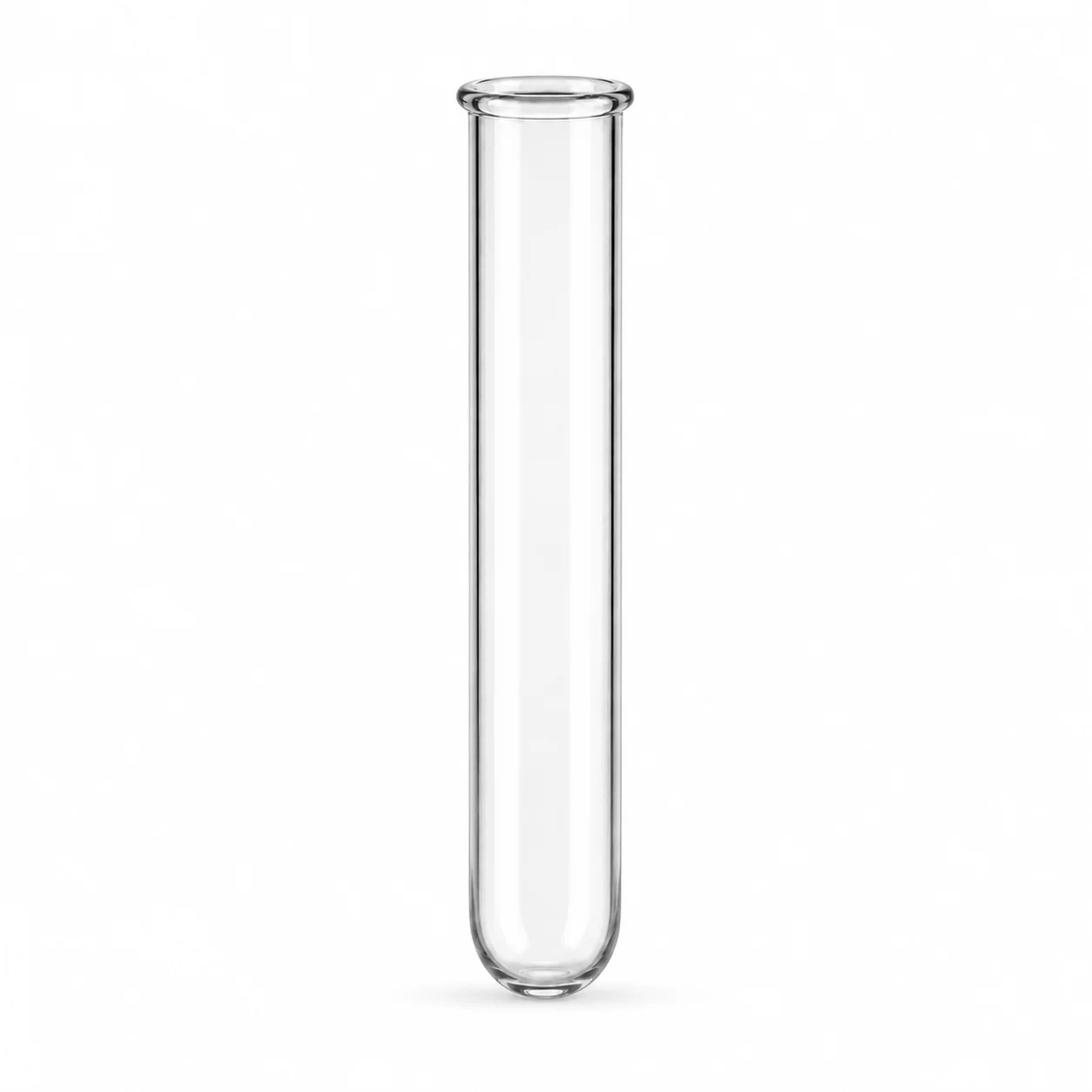
Tapering to a point concentrates a small pellet or a low-volume phase into a short column where graduations can resolve it, which is why the format survives for sediment volume work and for recovering a pellet with a pipette. Round-bottom tubes resuspend more easily and read pellets poorly; the two are chosen for opposite reasons.
The closure is what fails, not the glass
At full field the liquid presses outward against the cap with a force nothing on the bench ever applies, and a closure that seals perfectly at rest can weep into the rotor under load. Caps are chosen and torqued for that condition, and a rotor is inspected for residue after a run rather than assumed clean.